Visa

A borough worth planning on its own terms
The Bronx gives a New York visit a different balance: major gardens and wildlife attractions, residential streets with distinctive architecture, a food district around Arthur Avenue and waterfront scenery on City Island. Those experiences are spread across the borough. A day that works well around the Grand Concourse will not necessarily leave time for an unhurried garden visit and a seafood meal across the other side of the Bronx.
The geographical distinction matters for relocation, too. The Bronx is a borough of New York City and corresponds to Bronx County, as NYC311’s borough and county information explains. It is not an independent city with a separate immigration system. Citywide housing, school and transport resources apply, while the usefulness of a particular home depends heavily on its own location and connections.
Choose one main reason for each visiting day, then add a nearby meal or walk. If considering a move, begin with the workplace or study address rather than a broad promise of an easy Manhattan commute. The New York City guide supplies the wider context; this guide concentrates on decisions specific to the Bronx.
Reading the borough through the Grand Concourse
The Grand Concourse is a useful place to connect the Bronx’s history with its everyday streets. Construction began in 1897 and the boulevard opened in 1909, with a southward extension following in the 1920s. The Landmarks Preservation Commission’s walking tour explains the street plan and the apartment buildings that grew around it. Its mapped route provides a more informative walk than simply looking for a single landmark.
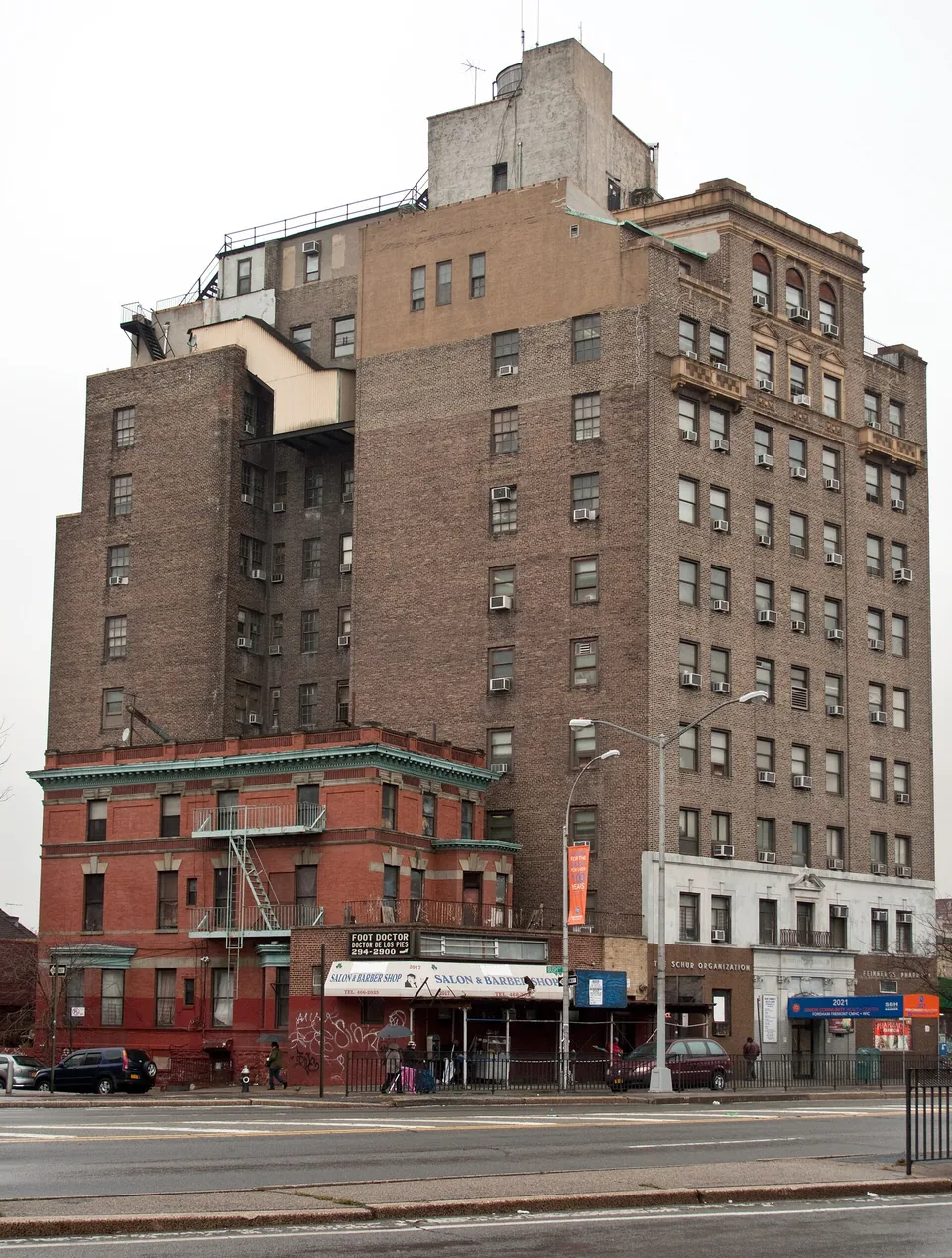
The architecture changes as you move along the streets. Earlier revival-style apartment buildings sit alongside Art Deco designs associated with the growth that followed the arrival of the IND subway in 1933. Look at entrances, courtyards and the relationship between buildings and the boulevard, while remembering that many of these are occupied homes rather than visitor attractions.
The historic district is only part of the longer Grand Concourse. Give the mapped walk enough time, use crossings carefully and treat its suggested duration as a starting point. A museum visit can complement the walk when opening hours line up. For a prospective resident, revisit the same area during an ordinary weekday to assess the surroundings of an actual available apartment.
Choosing between the borough’s different areas
For a visit built around art and architecture, the Grand Concourse provides a clear focus. The Bronx Museum is on the boulevard, while Yankee Stadium offers another reason to spend time in the surrounding part of the borough. Consult the Yankees’ official tour information for availability before planning around a stadium visit.
Belmont and Arthur Avenue make sense for a food-led outing, with the retail market providing a practical starting point. The nearby zoo and botanical garden can be combined with a meal, but each major attraction deserves a substantial block of time. Sharing a general area does not make two complete visits fit comfortably into one afternoon.
Riverdale offers a different plan centred on Wave Hill and the Hudson River outlook. City Island has its own maritime history and a waterfront setting. The Bronx Tourism Council’s overview is useful for identifying these different interests, rather than treating the borough as a single uniform neighbourhood. Compare the exact stop, entrance and onward journey when choosing where to spend time. For accommodation or housing, a district name should begin the search rather than substitute for checking the individual address.
New York Botanical Garden: choose the right ticket
The New York Botanical Garden is a reason to allocate a generous part of a day to the Bronx. Decide whether your visit is mainly about outdoor collections or whether the conservatory and current exhibitions are essential. Those choices affect the ticket you need, and an attractive headline about free access can be misleading without the conditions.
The official admission page lists weekday All-Garden adult admission at $35 and weekend admission at $39. This product includes daytime exhibitions, the Enid A. Haupt Conservatory, the Tram Tour and outdoor collections. The separate Grounds Access Pass excludes the conservatory, special exhibitions and tram. On Wednesdays, grounds admission is free for NYC residents throughout the day and for other visitors entering between 10 and 11 a.m. A ticket is still required.
Check the garden’s current arrival guidance before travelling. Metro-North’s Harlem local trains serve Botanical Garden station opposite the Mosholu Entrance. During the station’s 2026 accessibility work, its pedestrian overpass is closed; the operator’s visitor guidance advises allowing an extra ten to fifteen minutes for the southbound-platform detour. Build that margin into the return journey rather than assuming the station crossing is available.
Bronx Zoo: plan a visit around time and energy
Bronx Zoo admission uses flexible pricing, so a quoted minimum is not a promise for every date. At review, the official ticket page lists adult admission starting at $28.95, with the actual price depending on the chosen visit. Select a date and read the included attractions before comparing it with another ticket product. Limited Admission excludes Star Attractions, which cost extra.
The zoo also has seasonal hours and attraction availability. During its published winter period beginning November 1, 2026, closing time is 4:30 p.m.; last entry is normally 45 minutes before closing. Holiday Lights dates have a different daytime admission cutoff, so check the calendar if your trip is near that event. Wednesday reduced admission requires advance tickets released on the preceding Monday, rather than simply turning up for a free visit.
Use the zoo’s transport guidance to choose an entrance that matches your route. The arrival and accessibility information recommends Southern Boulevard for the most level access and electric convenience vehicle rentals. Reserve energy for walking inside the grounds, and avoid combining the zoo with an equally ambitious garden programme unless you are comfortable seeing only a selection of each.
Free art on the Grand Concourse
The Bronx Museum provides a useful indoor counterpoint to a neighbourhood walk. Its current visitor guide lists free admission, with regular public hours from Wednesday through Sunday, 11 a.m. to 6 p.m. Exhibition changeovers and holiday closures can interrupt that pattern, so look at the visit notice as well as the general weekly hours.
The south wing is under renovation. While work continues, the museum directs visitors to its north entrance on Grand Concourse toward East 166th Street. Public areas are wheelchair accessible, and complimentary wheelchairs are available on a first-come basis. These are more useful planning details than the renderings of the future entrance, which should not be mistaken for the current arrival point.
Travel light: the museum does not currently provide a coat or bag check, and luggage and large items are not allowed in galleries. A visit can fit well before or after an architectural walk when your route and the opening hours align. Leave time to look at the current exhibitions rather than treating free admission as a reason to rush through another stop.
Wave Hill and a different pace in Riverdale
Wave Hill combines gardens and a cultural programme with views toward the Hudson River and Palisades. It is a useful choice when you want a slower day outside, especially if the rest of your trip has involved crowded indoor attractions. Explore the garden rather than expecting a single brief viewpoint to represent the whole visit.
The official visitor page lists standard adult admission at $10, with free admission on Thursdays except for organised groups. Special event and premium weekend prices can differ. Regular opening is Tuesday through Sunday, 10 a.m. to 5:30 p.m., with last admission half an hour before closing; individual indoor spaces close earlier.
The arrival page is particularly important. Complimentary hourly shuttles operate Thursday through Sunday from specified transport stops. They do not run on every regular opening day. Metro-North’s Hudson Line serves Riverdale station, while the 1 subway terminates at Van Cortlandt Park–West 242nd Street. Choose the connection around the shuttle timetable, walking requirements and your group’s needs. A pleasant garden afternoon should not end with an unexpected wait because the return shuttle has already finished.

Accommodation: the address matters more than the borough label
Choose accommodation by matching the entrance to your actual itinerary. A Bronx address may be convenient for a particular attraction or appointment while requiring a different journey for evening plans elsewhere in New York. Compare the nearest useful subway or rail station, the walking route and the last connection you expect to use. A hotel’s straight-line distance from an attraction is less useful than the journey to its correct visitor entrance.
For a short sightseeing trip, compare a Bronx stay with a Manhattan base and planned day visits. Staying locally becomes more attractive when several appointments, family visits or activities are concentrated nearby. Check the total room price, cancellation terms, accessibility arrangements and whether luggage can be stored before check-in or after departure.
For a longer scouting visit, ask about laundry, cooking facilities and workspace. Those practical features help you test a routine rather than spend every day as a tourist. Use a temporary stay to inspect possible homes and trial the commute before making a longer commitment. Verify the accommodation’s own terms; this guide does not establish that an individual short-term rental is lawful or suitable.
Arthur Avenue, food shopping and a budget that fits your plans
Arthur Avenue provides a clear starting point for a food-focused visit. The Belmont Business Improvement District’s market information places Arthur Avenue Retail Market at 2344 Arthur Avenue and describes its food merchants. Browse before deciding whether you want a prepared meal or ingredients to take back to accommodation with a kitchen. Individual vendors keep their own operating hours, so the market’s general opening window does not guarantee that a particular stall is trading.
City Island offers another food-led outing with a waterfront setting, identified by the Bronx Tourism Council for seafood. Check a restaurant’s current menu, opening hours and booking arrangements directly rather than assuming every waterside business offers the same experience or price. Leave time for the journey as well as the meal.
The City Island Nautical Museum’s history resource places the community beyond Pelham Bay Park, surrounded by western Long Island Sound and Eastchester Bay. That setting makes it a distinct outing rather than an extension of the Grand Concourse walk. Check the return connection before lingering over dinner, and distinguish a waterfront view from access to a private marina or boat facility.
Build the budget around tickets you will actually use. A weekday $35 adult All-Garden pass and $10 standard Wave Hill admission total $45 before travel and food; the zoo’s flexible price requires a separate date-specific quote. Free museum admission and neighbourhood walks can balance paid attractions. Compare any package with your chosen dates and interests rather than buying solely because it advertises a discount.
Airport journeys: plan the final connection
LaGuardia and JFK involve onward travel through the city rather than an airport train delivering you directly to every Bronx neighbourhood. Choose the route to your accommodation’s actual address, taking luggage and station access into account. A low-cost journey can involve several transfers; a car service avoids those transfers but remains subject to traffic and its own charges.
The MTA’s LaGuardia guidance describes the M60 Select Bus Service connection through uptown Manhattan, including stops along 125th Street. Its regular fare is $3, with the usual eligible subway-to-bus transfer conditions. The free Q70 serves airport terminals B and C through Queens; Terminal A requires an airport shuttle connection. These are different routes, and the better choice depends on the onward journey.
For JFK, the MTA’s airport guide lists AirTrain at $8.75 in addition to subway or railroad travel. The standard subway-and-AirTrain combination totals $11.75. Metro-North travellers can connect through Grand Central to an LIRR train stopping at Jamaica, but that introduces separate railroad costs. Check the terminal, elevator status and current service before departure, and leave a margin beyond the route planner’s ideal journey time.
Local transport and testing a commute
The subway, local buses and Metro-North provide different ways to move around the Bronx and connect with the rest of New York. Choose the service that fits the destination rather than assuming a rail station is automatically the best arrival point. Attraction guidance can identify a useful entrance, while MTA’s live information supplies current service and accessibility details.
The current MTA fare page lists $3 for regular subway and local bus journeys and $7.25 for express buses. Using the same contactless card, device or OMNY card earns a $35 cap over a seven-day period for eligible subway and local bus travel. One eligible transfer is free within two hours. Commuter-rail tickets are separate, and switching between a physical bank card and its phone version can prevent travel from being counted together.
For relocation, test both directions of the commute at the hours you will actually travel. Include the walk, transfers and any late-evening wait. If considering a car, add parking arrangements and insurance to the household budget rather than comparing only driving time. A home that suits a daytime sightseeing route may serve an early shift or evening class quite differently.
Moving here: assess the home as well as the neighbourhood
Begin with available homes that fit the household’s commute and budget, then inspect the building and the lease. Check heating, ventilation, lift access where needed, laundry, storage and the arrangements for deliveries. Ask which utilities are included and whether individual meters serve the apartment. In shared accommodation, agree how bills, visitors and common spaces will be managed before committing.
Use NYC’s Tenant Bill of Rights to understand the general framework, while verifying the particular apartment’s status. Rent-stabilised homes have additional protections, and Good Cause Eviction provisions depend on coverage; these categories should not be assumed from the building’s age or a listing’s wording alone. Keep written records of the advertised terms, the agreed rent and any promises about repairs.
For an apartment where you are responsible for an individual energy account, Con Edison’s service page explains starting, moving and stopping service. Have the address and intended dates ready, and coordinate the handover with the lease. Compare the full recurring cost, including commuting and services, before deciding that a lower advertised rent makes one location the better choice.
Schools, daily services and settling into a routine
Families should confirm enrolment arrangements for the child’s grade and needs before choosing a home around a presumed school place. NYC Public Schools’ Family Welcome Centers provide an official starting point for enrolment support. A nearby school is not, by itself, proof that a particular programme or admission route is available to your child.
The New York Public Library’s card information is another useful household resource. Check eligibility and identification requirements directly before applying, especially if you are visiting temporarily or have only recently arrived. Include branch access, grocery shopping and laundry in a trial of everyday life rather than judging a neighbourhood entirely through its major attractions.
Healthcare arrangements deserve the same preparation: ask about insurance, providers accepting new patients and continuity for existing prescriptions before arrival. For a home viewing, note whether essential errands are manageable at your usual times and with your household’s mobility needs. These details can make a better basis for a relocation decision than a single pleasant weekend spent nearby.

Seasons and a workable three-day itinerary
Choose dates around the experience you want. Gardens change through the year, while the zoo publishes different seasonal hours and closes some attractions seasonally. An outdoor-heavy day benefits from a forecast check and an indoor alternative. For summer visits, consider the amount of exposed walking and plan pauses; for a winter garden or waterfront outing, allow for shorter opening hours and bring suitable layers. Check the National Weather Service’s New York resources for weather information rather than treating seasonal averages as a forecast.
For a first visit, this editorial itinerary separates the larger attractions. Spend day one on the Grand Concourse, combining the official architectural walk with the Bronx Museum when it is open. Add a stadium tour only if the booked time fits. On day two, choose the zoo or botanical garden as the main event and leave room for a meal around Arthur Avenue. Trying to cover both attractions fully can turn the day into a sequence of deadlines.
Use day three for Wave Hill if its opening and shuttle arrangements suit your dates, or for a City Island outing. A longer stay can give the zoo and garden separate days. Anyone considering relocation should replace one sightseeing day with viewings and a trial commute, including the return journey after work or study.
Immigration: visiting and moving require different planning
Permission to enter or remain in the United States is a federal matter, separate from choosing a Bronx neighbourhood. The official visitor visa guidance distinguishes tourism and limited business activities from employment, academic study and permanent residence. A visit to investigate the area should not be treated as automatic permission to begin working or settle permanently.
Eligible Visa Waiver Program travellers normally need ESTA approval and may visit for up to 90 days under the programme’s conditions. Approval does not guarantee admission. For employment, review the official work visa categories; for study, consult the student visa requirements and the institution’s international office. Permanent relocation needs an applicable immigrant route. A signed lease does not establish immigration status.
Use VisaWand’s USA country guide and consultant listings as planning starting points, while checking applications and eligibility with official resources. Bring your intended activity and dates to any consultation so the discussion addresses the actual purpose of your trip.
Other parts of New York worth comparing
The Bronx works well as part of a wider New York stay, but choosing a base should follow your actual itinerary. The Manhattan guide is useful when comparing a central sightseeing base with planned Bronx day trips. The Queens guide offers another borough to assess, particularly when the trip involves activities on that side of the city. The Brooklyn guide adds a further comparison for neighbourhood stays and visiting plans.
For relocation, compare available homes and door-to-door journeys across those options rather than assuming one borough is uniformly cheaper, quieter or more convenient. For a holiday, leave enough time to experience the Bronx’s chosen attractions properly. A focused visit to a garden, a museum or a food district can be more satisfying than crossing several boroughs to collect a long list of brief stops.
Official planning resources
Reviewed 13 October 2026. Use the official resources linked throughout this guide for admission, transport, housing and immigration decisions. Prices, services and rules can change; confirm the details relevant to your dates. Photography illustrates the locations and is not a live view.
View all official resources
- NYC boroughs and counties
- Grand Concourse official architectural walking tour
- Yankee Stadium public tours
- Bronx Tourism Council overview
- NYBG tickets and hours
- NYBG transport and station-access notices
- Bronx Zoo official ticket conditions
- Bronx Zoo public transport connections
- Bronx Zoo arrival and accessible entrance guidance
- Bronx Museum visitor guide
- Wave Hill admission and visitor information
- Wave Hill transport and shuttle timetable
- Arthur Avenue Retail Market visitor information
- City Island Nautical Museum history resource
- MTA LaGuardia airport connections
- MTA JFK airport connections and fares
- MTA subway and bus fares
- NYC Tenant Bill of Rights
- Con Edison start, move and stop service
- NYC Public Schools Family Welcome Centers
- New York Public Library card information
- National Weather Service New York climate resources
- US Department of State visitor visas
- US Visa Waiver Program conditions
- US employment visa categories
- US student visa requirements
- US immigrant visa routes
Plan the next part of your journey
Explore the United States guide, browse other cities or compare consultants for your travel and relocation questions.