Visa
A waterfront city with reasons to stay
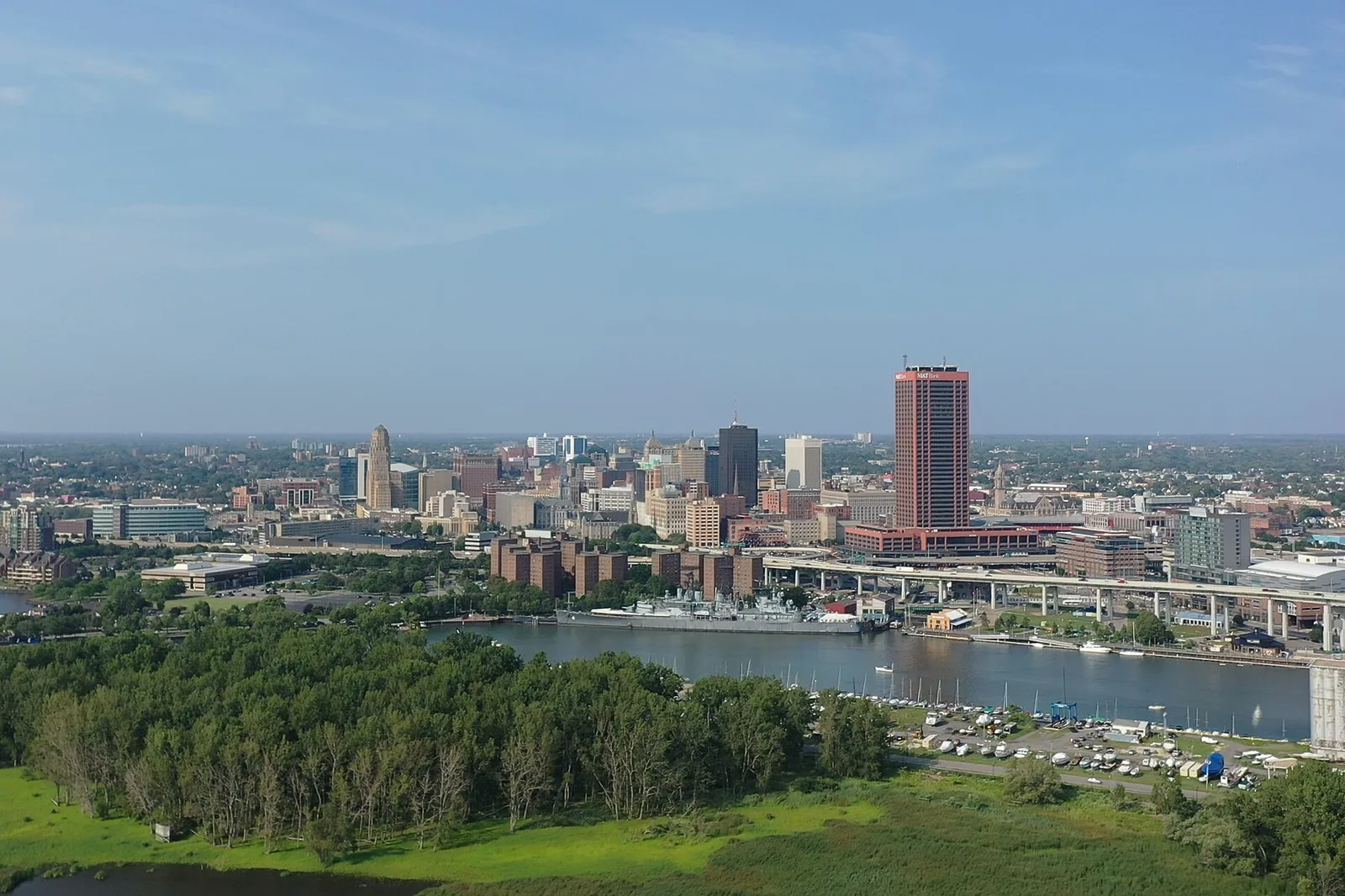
Buffalo offers more than a convenient stop on the way to Niagara Falls. Its waterfront, substantial art museum and architectural landmarks can anchor a visit in their own right. A good trip moves between these settings: downtown and Canalside for the water and canal story, then the cultural attractions around Delaware Park and the shops and restaurants of nearby neighbourhoods.
This guide concerns Buffalo, New York, in Erie County. The wider visitor region includes separate communities, so a hotel or home advertised as being in the Buffalo area needs an exact-address check. East Aurora, Williamsville and Niagara Falls should not be mistaken for neighbourhoods within the city.
For visitors, the central question is how to combine worthwhile stops without spending the day travelling between them. For prospective residents, it is whether an address works for employment, schools and daily needs throughout the year. Start with VisaWand’s United States country guide, then use the verified local information below to make that comparison concrete.
Downtown, Elmwood Village and the wider region
The tourism board’s neighbourhood overview identifies several distinct settings. Elmwood Village offers shops and places to eat; Allentown brings together galleries, restaurants and nightlife. Parkside has historic houses and access to the Delaware Park area. Five Points offers another cluster of independent businesses.
Downtown is useful for a visit focused on the waterfront and urban architecture. An Elmwood-area base may suit a trip with more museum time. Compare the actual walk, bus route or vehicle journey from a property to the places on your shortlist rather than treating these labels as guarantees of convenience.
The visitor board also covers communities beyond Buffalo itself. Its directory is helpful for discovering alternatives, but the location of a restaurant, attraction or hotel still matters. For a move, inspect the surrounding streets and test your own commute before drawing conclusions from a neighbourhood’s visitor appeal.
Canalside and time beside the water
Canalside’s official visitor information describes free public access, with daily hours from dawn to dusk. Entrances are off Marine Drive and Main Street; 44 Prime Street is a useful navigation address. The boardwalk, lawns and waterfront views make this a natural first stop when conditions favour being outdoors.
Free access to the public space does not include every attraction, rental or event. Check individual operators before building a day around a boat trip, a children’s attraction or a particular programme. Bike rentals are seasonal, and the waterfront page lists the Queen City Ferry season as Memorial Day to Labor Day. An October visit should not depend on that summer crossing.
Keep an indoor alternative and read parking signs carefully. Nearby ramps, surface lots and metered streets have their own arrangements. For a family, the useful decision is which paid activity adds enough to the day, rather than assuming every waterfront stop must be included.
Buffalo AKG: paid galleries and a free public building
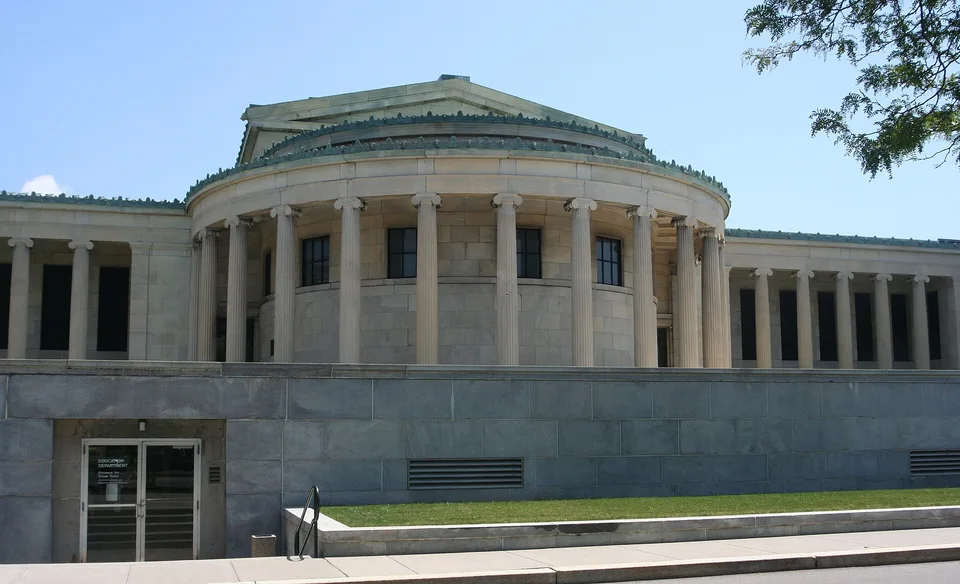
The Buffalo AKG’s current hours and admission page lists adult admission at $24, seniors aged 62 and over and college students at $20, and youth aged 5–18 at $10. Children aged four and under enter free. These current prices supersede older reopening announcements.
Regular opening is Monday and Thursday 10am–5pm, Friday 10am–8pm, Saturday 10am–6pm and Sunday 10am–5pm. Tuesdays, Wednesdays and specified holidays are closed. Allow at least two hours if the galleries are a priority rather than treating the museum as a quick stop between meals.
The museum’s visitor FAQ distinguishes the free Knox Building from the paid galleries elsewhere. On the first Friday of each month, general admission is pay-what-you-wish, purchased onsite; advance ticketing is unavailable for that offer. Check the programme because some activities have separate charges. Public garage parking costs $12 for three hours, then $2 for each additional hour; garage hours differ from museum hours.
Choosing the right Martin House tour
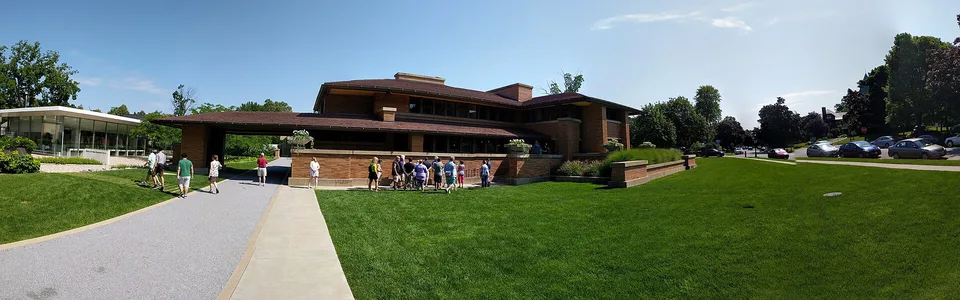
Frank Lloyd Wright’s Martin House is best approached as a booked visit. The operator’s tour descriptions distinguish the 75-minute standard tour from the longer Plus tour. The standard adult price is $25 and covers the main house’s first floor, pergola, conservatory and carriage house. It does not include every residence on the estate.
The two-hour Plus tour costs $50 for adults and adds areas including the main house’s second floor, the Barton House and Gardener’s Cottage, subject to any posted changes. It involves stairs, walking and standing, and is not wheelchair accessible. Choose by the spaces and access requirements that matter to you, rather than buying the longest option automatically.
Reserve a ticket for every person in the party, including anyone eligible for a free ticket. Advance purchase is required for the standard guided tour, and popular dates can sell out. Consult the calendar for the particular day; a seasonal evening or audio-tour listing does not mean that format operates whenever you arrive.
History Museum and Waterway of Change
The Buffalo History Museum’s current visit page lists its main building at 1 Museum Court. It offers pay-as-you-wish admission, with $12 per person recommended. The recommendation is not a compulsory standard ticket price. Regular opening is Wednesday–Saturday 10am–5pm and Sunday noon–5pm, with Monday, Tuesday and national-holiday closures.
Its public parking lot is complimentary during museum hours and special events. The operator identifies the number 20 Elmwood bus stop at Elmwood and Nottingham. Research access is separate: the library and archives are closed for appointments through October 2026, with appointments scheduled to resume in November. Confirm arrangements before travelling specifically for research.
Waterway of Change is a different museum experience at Canalside’s Longshed, 44 Prime Street. General entry is free. Published autumn hours are Thursday–Saturday 10am–5pm and Sunday noon–5pm, with a Sunday sensory hour from 11am–noon. Check current details directly before a visit; do not confuse its schedule with the main museum’s.
A base that suits your itinerary
Choose downtown accommodation when the waterfront, architecture and evening meals are the main focus. Compare the final price, including parking and any mandatory charges, with the journeys it saves. Confirm the route on foot to the places you intend to visit; a broad downtown description may conceal a less useful position.
For a museum-focused stay, look at accommodation in relation to Elmwood Avenue and the Delaware Park area. For an early flight, an airport-area property can be useful, but ask about shuttle hours, reservations and charges. A shuttle advertisement does not establish service for every departure or arrival.
For a relocation visit, spend time around the proposed workplace and residential shortlist. Ask about kitchen equipment, laundry, minimum stays and cancellation terms for longer accommodation. The best room for sightseeing may not provide a realistic test of the neighbourhood where you would live. Accessibility requirements deserve direct confirmation from the property before booking.
Airport buses and other arrival choices
The NFTA airport-service page identifies route 24 Genesee between downtown and Buffalo Niagara International Airport. There is also a weekday limited-stop 24L, without an additional charge. Route 78 Cheektowaga Express is a more restricted rush-hour option, so it should not be assumed available throughout the day.
Use the current route 24 timetable for your arrival date and direction. It has separate weekday, Saturday and Sunday or holiday tables. Service intervals vary; a general description of daytime frequency is not a promise about the final bus after a late flight. Allow time to reach the stop and retain a backup if the flight is delayed.
The airport’s rideshare directory lists Uber and Lyft. Compare an actual booking with the bus journey, luggage requirements and onward connection. Do not assume an app-based fare or vehicle availability in advance. Verify pickup instructions through the airport and the chosen provider rather than relying on an unconfirmed terminal-door number.
Paying for Metro and planning the whole journey
NFTA Metro’s current fare information lists a $2 regular single ride, with children under ten travelling free. MetGo fare capping allows regular-fare riders to travel free after spending $5 in a day, $25 in a week or $75 in a calendar month under the system’s rules.
Cash remains accepted on buses, but a cash bus fare is a single ride and does not qualify for fare capping. A $5 day pass is another option. Reduced fares require eligibility; do not assume a visitor can claim them simply because another transport system provides a discount.
With Token Transit, activate the purchased ticket when ready to ride and scan its QR code at the bus farebox or rail gate. Use the current bus and rail schedule directory for the whole journey, including transfers and the return trip. Proposed rail expansion is not an existing service to rely on for accommodation or commuting decisions.
Food, shopping and costs worth comparing
The tourism board’s food and dining directory introduces Buffalo staples including wings and beef on weck, alongside global cuisines, coffee shops and markets. Use it to find possibilities, then check individual menus and hours. A regional listing can be outside the city, and an appealing photograph cannot establish dietary suitability or a current meal price.
Elmwood Village, Allentown and Five Points provide different settings for browsing independent businesses. Combine shopping with a nearby activity rather than adding a separate cross-city journey for every stop. Groceries and household essentials need their own practical search if you are considering a move.
For an adult choosing standard AKG admission and the standard Martin House tour, admission totals $49. Add a $5 Metro day pass for a $54 admission-and-local-transport example, excluding meals, accommodation, parking and any other activities. Pay-as-you-wish opportunities can change specific costs when their dates fit; they do not establish that the whole trip will be inexpensive.
A canal port and an architectural legacy
The National Park Service’s Buffalo chronology records the Erie Canal’s completion in 1825 and the city’s incorporation in 1832. The canal made Buffalo a western terminus linking Lake Erie with an important route east. Later industry, rail connections and electricity transmitted from Niagara Falls helped shape the city’s development.
That growth left buildings and landscapes worth considering together. The chronology records Frederick Law Olmsted’s commission to design parks in 1868, and Theodore Roosevelt’s inauguration here in 1901 after President McKinley was shot at the Pan-American Exposition. These events give context to a city visit that moves beyond isolated architectural photographs.
The same source records the city’s subsequent decline as a port and rail centre after the St. Lawrence Seaway opened in 1959. Buffalo’s story includes changing transport networks and economic fortunes as well as celebrated design. Exploring the waterfront and neighbourhoods can make those changes more tangible without assuming every historic building is open to visitors.
Seasons, snow and sensible flexibility
The National Weather Service’s Buffalo climate narrative describes the Great Lakes’ strong influence on local conditions. Winters are cold and snowy but changeable, with thaws and rain as well. Lake-effect snow is localised: the direction of the wind affects where bands develop, so conditions across the region can differ substantially.
Summer allows more scope for waterfront time, although warm, humid spells and rain still require flexibility. Spring can feel slow near the cold lake. Early autumn can work well for a mix of walking and indoor attractions; later autumn requires closer attention to forecasts and seasonal operating calendars.
Choose dates by what you want to do, then check the forecast shortly before travel. In winter, allow spare time between transport and timed bookings and follow official advisories. For a prospective resident, ask how snow clearance, heating and parking work at the particular home. Those arrangements influence everyday comfort and commuting more than a general impression of the season.
A realistic weekend in Buffalo
On Saturday, make Buffalo AKG the main morning outing, allowing enough time for the galleries. Continue with a meal and browsing around Elmwood Village. If architecture is a priority, reserve a Martin House tour for a time that leaves a comfortable transfer; otherwise keep it for a separate day rather than compressing both visits.
On Sunday, begin downtown with Canalside and the waterfront when weather permits. Waterway of Change opens for general visiting at noon under its published autumn schedule. Alternatively, visit the main History Museum after its Sunday noon opening, recognising that it is a different destination with its own journey.
For a third day, choose between a booked architectural visit and a regional excursion. Do not put Niagara Falls into a spare hour simply because it appears alongside Buffalo in tourism material. On a relocation trip, use that extra day for property viewings, service enquiries and a commute test. Keep one indoor option available throughout the weekend.
Housing and the costs behind the rent
Compare homes using a complete monthly budget. Ask which utilities are included, whether parking or laundry adds a charge, and how heating is controlled. Inspect windows, signs of moisture, storage and the route into the building. Establish who clears snow from the entrance, paths and parking area.
The New York Attorney General’s tenant guide explains that a security deposit is limited to one month’s rent. Its 14-day deposit-return provisions concern non-rent-regulated units and include itemised charges for money retained. Keep the lease, payment records and dated condition photographs; check the rules applicable to the property before treating a general summary as an answer to a dispute.
Verify the identity and authority of anyone offering a home, especially during a remote move. Get mandatory fees, pet conditions and maintenance arrangements in writing. Visit the surrounding streets and test recurring journeys. An appealing interior or a visitor-friendly neighbourhood cannot establish that the household’s complete schedule will work there.
Schools, commuting and essential services
Buffalo Public Schools’ current registration requirements specify in-person submission after completing the registration packet and application. Required records include proof of age, guardianship, parent or guardian identification, two address proofs, academic records and immunisation information. Accepted address documents have different date requirements; prepare the appropriate evidence rather than assuming every document has the same validity period.
The district also explains enrolment arrangements for families with uncertain or temporary housing. Contact admissions about your circumstances and verify the district serving a prospective address. A Buffalo-area mailing label does not establish the school assignment or admission to a preferred school.
For commuting, check shift times, transfers and the journey from the stop to the workplace. Ask Buffalo Water customer service about account arrangements for the property, and clarify responsibilities with the landlord. Electricity, gas and internet require separate address-based checks. Arrange essential services before arrival and retain written confirmations, especially where a move depends on working from home.
Healthcare and a household’s first week
Before a move, establish how health coverage will work from the arrival date. Ask an employer when its plan begins and check whether your chosen doctors, medicines and pharmacies are covered. A premium alone does not show the cost of consultations, prescriptions or other care. Confirm the relevant deductibles and charges in the plan documents.
New York has its own official health-insurance marketplace. Check eligibility, enrolment opportunities and the evidence required for your circumstances. Moving and a short holiday are different situations; do not assume a visitor can enrol simply by booking accommodation. A household arriving from abroad should resolve coverage and medication arrangements before travel.
For the first week, put essential tasks in a workable order: collect keys, confirm utilities, locate groceries, establish communications and attend any necessary appointments. Keep identity, housing and school documents accessible during the journey. If a service needs an appointment, book it before committing the day to other errands. A little coordination avoids spending the whole arrival week travelling back and forth.
Giving Niagara Falls enough time
The official Niagara Falls State Park website is a useful starting point for a separate excursion on the United States side. Walking into the park to see the falls is free; budget separately for any paid attractions and the journey there. Review the facilities and attractions relevant to your dates, then build the transport and return journey around that visit. A park outing does not automatically require a Canadian border crossing.
Use VisaWand’s Niagara Falls location page to investigate the destination, recognising that a directory page is not a completed travel guide. For another city comparison, Rochester’s location page can help frame an alternative visit or move. Compare the work location, housing and household journeys that matter to you rather than relying on a shared western New York label. Keep the Buffalo itinerary focused if adding another destination would make both visits hurried.
Immigration permission comes before relocation commitments
A visit, a course of study, employment and permanent relocation require different immigration planning. The State Department’s visitor-visa guidance explains temporary visitor travel and activities requiring other categories. A property viewing or hotel booking does not grant permission to work or establish permanent residence.
Travellers considering visa-free travel should consult the official Visa Waiver Program guidance and, where applicable, the official ESTA application portal. Check eligibility and the permitted activities before booking. Travel authorisation does not guarantee admission at the border.
For education, use the official student-visa information and the institution’s international office. For an employment move, review temporary-worker visa categories with the employer and a qualified adviser. Permanent plans require the separate immigrant-visa resources. VisaWand’s consultant listings can help identify assistance. Confirm the scope and fees of any advice, and establish the lawful route before making commitments that depend on living or working in Buffalo.
Nearby choices and a Canadian border crossing
Niagara Falls can be considered as a separate outing, with time for the journey and the specific attractions you intend to visit. Buffalo’s museums and architecture can also justify staying in the city for the whole trip. Choose according to your interests rather than assuming a regional landmark must appear in every itinerary.
A crossing into Canada requires separate preparation. Consult Canada’s official visitor-entry resources for the documents and permission relevant to your nationality and means of travel. Check your ability to return to the United States as well. Review the State Department’s explanation of entry to the United States before arranging a return journey. A visa allows travel to a port of entry and a request for admission; it does not guarantee entry.
Use VisaWand’s United States location directory to investigate alternatives and distinguish a location page from a completed guide. The United States destination page provides broader consultation context. A useful shortlist connects each destination to a verified address, travel purpose and realistic budget, leaving uncertainties visible until you can resolve them.
Official planning resources
Reviewed 13 October 2026. Use the official resources linked throughout this guide for admission, transport, housing and immigration decisions. Prices, services and rules can change; confirm the details relevant to your dates. Photography illustrates the locations and is not a live view.
View all official resources
- Visit Buffalo neighbourhoods and surrounding communities
- Buffalo Waterfront Canalside access and seasonal activities
- Buffalo AKG current hours and admission
- Buffalo AKG visitor questions and access
- Frank Lloyd Wright Martin House tour types and reservations
- Buffalo History Museum current visiting information
- NFTA airport bus service options
- Current Route 24 Genesee timetable
- Buffalo Niagara airport rideshare information
- NFTA Metro current fares and payment
- NFTA Metro current route schedules
- Visit Buffalo food and dining information
- National Park Service Buffalo historical chronology
- National Weather Service Buffalo climate narrative
- New York Attorney General residential tenant protections
- Buffalo Public Schools current registration requirements
- Buffalo Water customer service
- New York State of Health official marketplace
- Niagara Falls State Park visitor attractions
- U.S. visitor visas
- Official Visa Waiver Program requirements
- Official ESTA application
- U.S. student visas
- U.S. temporary worker visas
- U.S. immigration routes
- Canada official visitor requirements
Plan the next part of your journey
Explore the United States guide, browse other cities or compare consultants for your travel and relocation questions.