Visa
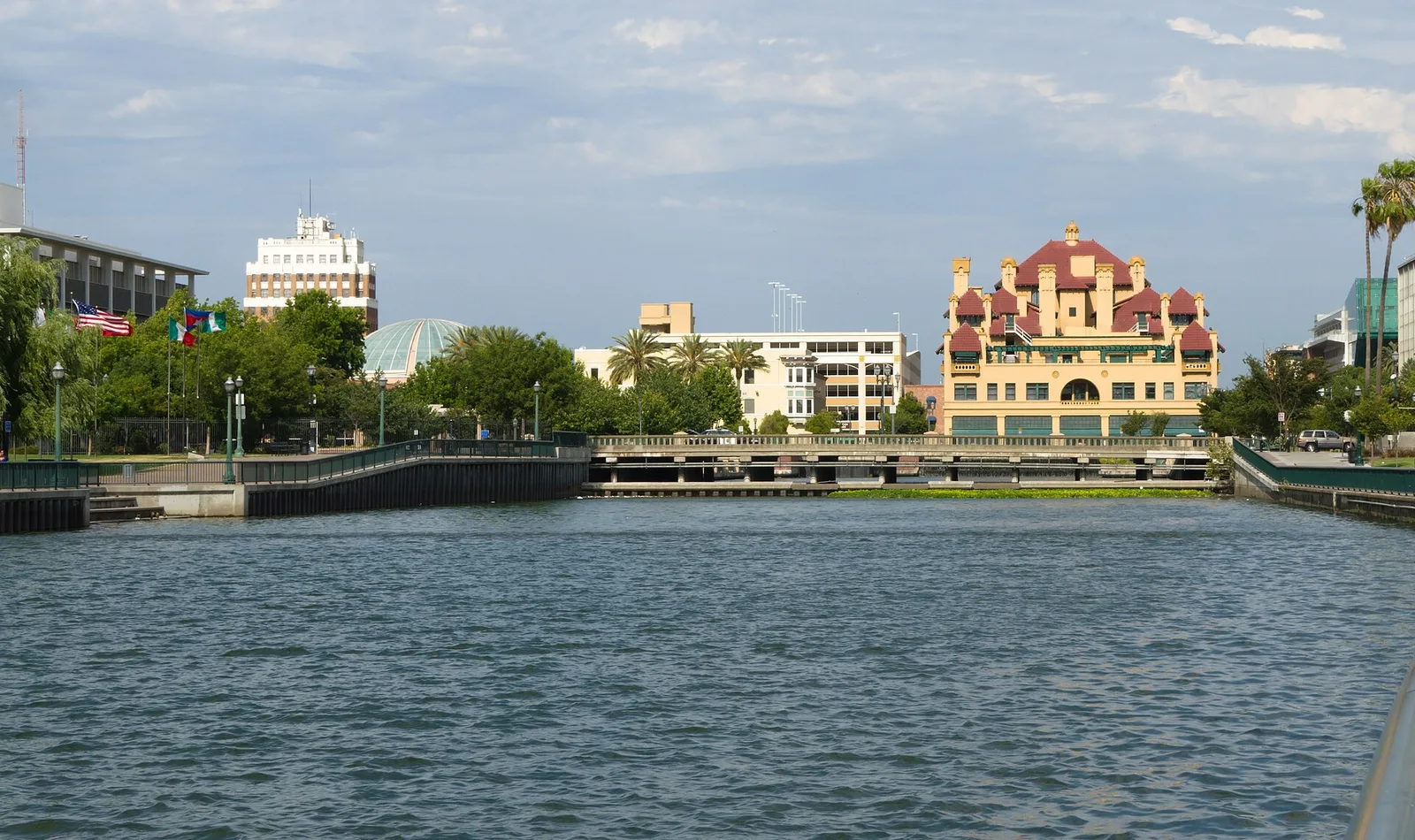
A waterfront city in the Central Valley
Stockton's waterfront can surprise first-time visitors: ships, bridges and a working inland port in the middle of California's agricultural country. The city rewards a trip built around a few purposeful stops—a museum afternoon, a theatre performance, a baseball game or a university visit—rather than a hurried attempt to collect every attraction in the valley.
This is Stockton in San Joaquin County, California, a separate destination from the Bay Area and Sacramento. Its downtown channel belongs to the Delta's network of waterways; it is not an oceanfront resort. For prospective residents, the same geography raises practical questions about commuting, flood maps, summer cooling and the location of schools. Treat a weekend visit as a chance to test those routines alongside the cultural stops.
Gold Rush connections and a working port
Before the modern municipality, Northern Valley Yokuts communities lived in the region, a history acknowledged by the Haggin Museum. Stockton developed as a supply and transport gateway for Gold Rush mining communities, then expanded its role in processing and moving agricultural goods. The city's incorporation dates to July 23, 1850. That municipal date should not be confused with the beginning of local human history.
The tourism board's historical overview explains the shift towards flour mills, foundries, shipyards and agricultural manufacturing. The Port of Stockton's history resources add the industrial story of Rough and Ready Island. The modern deep-water port opened in 1933, extending the commercial role of the channels. Downtown's older buildings and transport infrastructure make more sense against that background than as isolated photographic landmarks.
Downtown: the channel, events and older streets
The Stockton waterfront overview is a useful starting point for the marina and promenade. Walk a manageable section of the channel, then choose an event or indoor stop according to the day's programme. A waterside stroll can fit around arrival or departure without demanding a full day; a concert or ballgame needs its own timetable, parking plan and ticket.
Downtown also contains civic buildings, historic commercial architecture and reminders of earlier communities. The Downtown Stockton Alliance's history pages discuss Chinatown's surviving landmarks, including Chung Wah Lane and the Chinese Benevolent Society building. Do not expect every historic district to survive intact or every significant building to offer public interiors. The industrial port is a different site from the downtown leisure waterfront, with its own access arrangements.
Miracle Mile and smaller neighbourhood centres
Stockton's Miracle Mile district centres on Pacific Avenue between Alpine and Harding, with an additional stretch of Harding Way. Shops, restaurants and everyday services sit beside residential streets, making it useful both for visitors browsing and for people assessing a potential neighbourhood. The district lists free street and marked public-lot parking; check the space's signs rather than applying that rule across the city.
Yosemite Street Village is a smaller commercial and community pocket around the 900 block of Yosemite Street, between Acacia and Poplar. It has no geographical connection to Yosemite National Park. Compare these areas with the university surroundings or northern shopping corridors according to your plans. A pleasant shopping street and an affordable available home may be different addresses; investigate the block, transport and services you would actually use.
Haggin Museum: art alongside local history
Haggin Museum is the strongest starting point for a visitor who wants Stockton's story and an art collection in one afternoon. It occupies Victory Park at 1201 North Pershing Avenue. General admission is $8 for adults aged 18–64, $7 for seniors aged 65 and over and military visitors, and $5 for youths aged 10–17 or students with school identification. Children under ten enter free with an adult.
Hours shape the itinerary: Wednesday through Friday, 1:30–5 p.m.; Saturday and Sunday, noon–5 p.m.; and the first and third Thursdays until 9 p.m. Mondays, Tuesdays and specified holidays are closed. All visitors enter free on the first Saturday of the month. Free surrounding street parking and an accessible south entrance with elevator access help with planning, but allow time to find the appropriate approach. Combine the visit with a short park break rather than arriving just before closing.
A theatre evening or a waterfront game
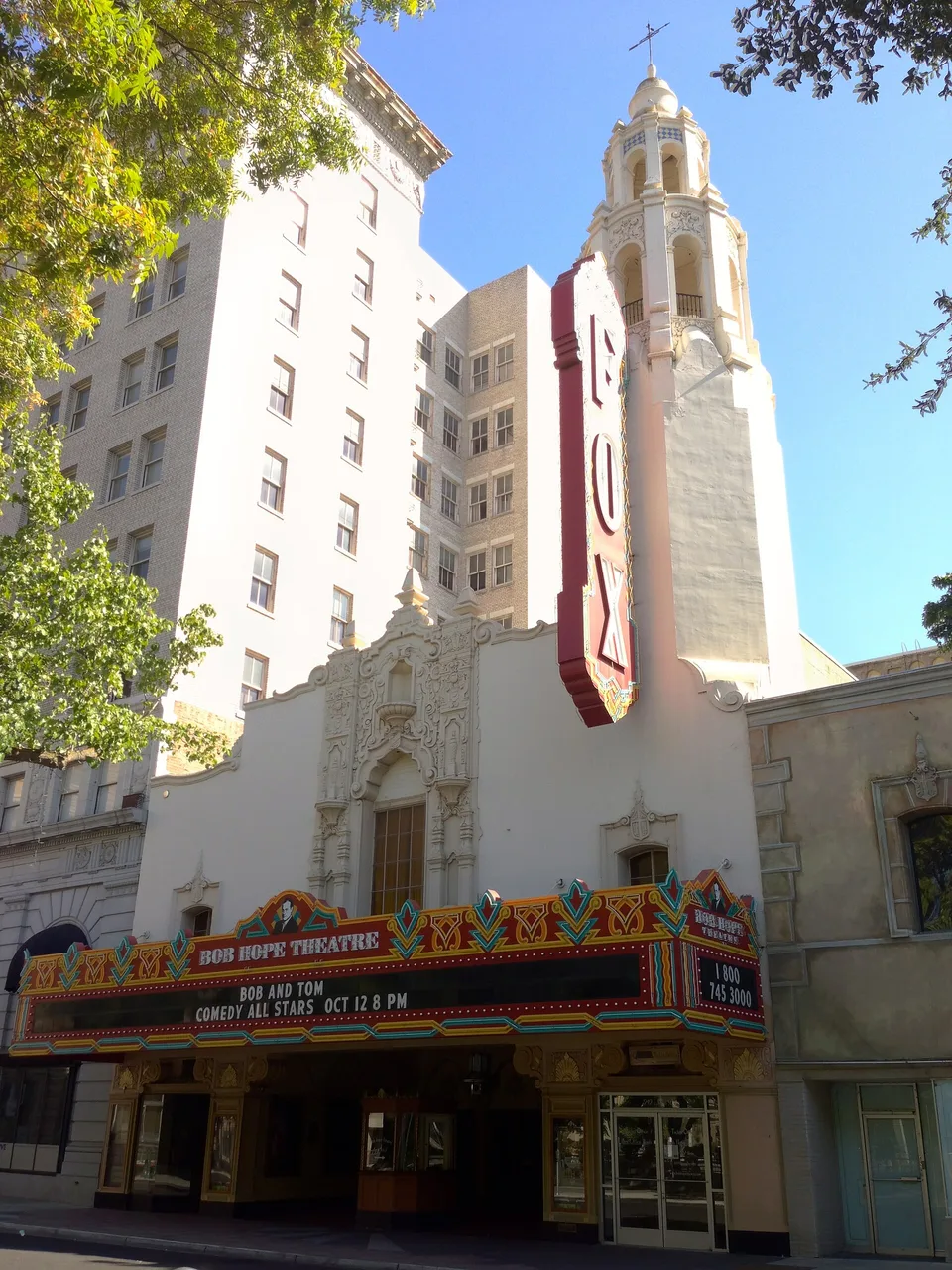
The Bob Hope Theatre's official venue page is the place to check performances and tickets. Its distinctive Fox sign and decorated exterior make a downtown walk worthwhile, but seeing the inside normally requires an actual event or advertised access opportunity. Choose a performance first, then arrange dinner and a return journey that still works after the show.
Sports and larger arena events provide another reason to stay overnight. Consult the appropriate calendar rather than assuming there is a game whenever you visit. The Stockton Live visitor rules distinguish the arena's no-bag policy from the theatre's smaller permitted bags. Stockton Ports baseball has different ballpark rules, including clear bags and cashless payments for the 2026 season. Check the event's latest instructions; a bag acceptable at one venue can be refused at another.
The Children's Museum suits a family visit
The Children's Museum of Stockton at 402 West Weber Avenue offers an indoor outing for families with children. Regular hours are Wednesday through Sunday, 9 a.m.–4 p.m., with Mondays and Tuesdays closed. Current general admission is $10 per person aged one and older; infants under one enter free. Count accompanying adults when budgeting rather than treating the price as a child-only ticket.
Adults cannot enter unaccompanied, and children must visit with a parent or guardian. This makes it a family attraction rather than an alternative museum stop for a solo adult. The museum also publishes a reduced-admission programme requiring a physical EBT card and valid identification. Confirm eligibility before relying on it. If travelling with several generations, consider whether everyone wants the same outing, or whether a separate Haggin visit works better for part of the group.
Visiting University of the Pacific
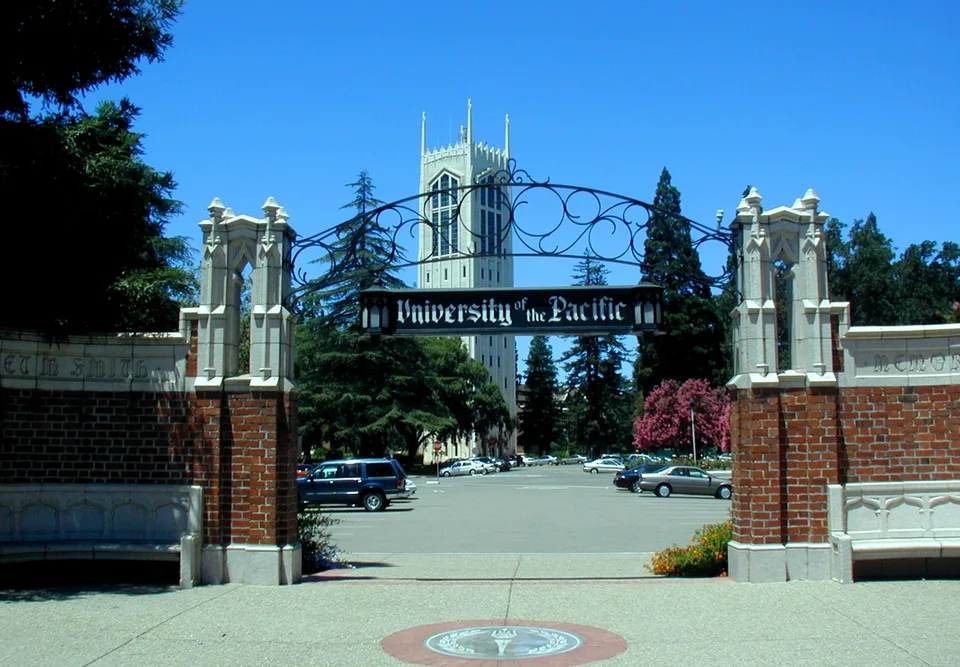
University of the Pacific's official visits page helps prospective students organise a purposeful campus tour. Its Stockton address is 3601 Pacific Avenue; the university also has Sacramento and San Francisco campuses, so verify where your programme is taught before booking accommodation. Stockton University in New Jersey and Pacific University in Oregon are different institutions.
The Stockton campus overview describes its residential setting, facilities and cultural spaces, including Reynolds Gallery. For a casual visit, check current access and any exhibition hours rather than assuming teaching buildings are open to everyone. For a study decision, use the tour to test the surrounding grocery trip, transport and housing arrangements as well as the campus itself. Ask admissions about visitor parking and the exact meeting point when reserving a tour.
Food and an early Saturday market
Stockton's food reflects its communities and the agricultural valley around it. The Golden Villa Farmers' Market offers a particularly useful Saturday introduction to produce, herbs and foods associated with several Asian communities. The current tourism-board listing describes an early-morning, year-round Saturday market under the Crosstown Bridge at Washington Street. It lists cash-only trading; arrive early and confirm current hours rather than planning a late lunch around a morning market.
For restaurant meals, use Miracle Mile, downtown or another district as the starting point, then check individual menus and opening times. Match the meal to your transport and dietary needs. A specific restaurant reservation can anchor an evening, while a flexible daytime meal leaves room for market browsing. Avoid assuming a cultural label tells you whether a dish is vegetarian, allergen-free or suitable for a particular religious diet.
Shopping for a visit or a household
The official shopping directory includes Miracle Mile, Lincoln Center, Weberstown, Sherwood Place and Stonecreek Village. These are different retail settings, so choose according to the purpose: browsing independent businesses, finding a particular shop or buying ordinary household supplies. Check the business you need directly; a shopping-centre listing does not establish every tenant's current hours.
Residents should assess weekly needs as carefully as visitor purchases. Walk or drive the route from a prospective home to groceries, a pharmacy and laundry facilities, including crossings and parking. If you plan to live without a car, try carrying a realistic shopping load on the relevant bus. For purchases that must travel internationally, confirm baggage limits and import restrictions before buying food, plants or bulky objects on the assumption that everything can go home with you.
Choosing an airport and arranging the final transfer
Stockton Metropolitan Airport, SCK, can be convenient when its actual flight schedule suits your origin. Consult the airline for routes, fares, luggage charges and operating dates. Compare other regional airports using the whole journey, including transfer cost and arrival time; a lower airfare can be offset by a longer ground trip.
The airport's current FAQ states that there are no rental-car concessions on site. Arrange an off-airport collection or another transfer before arrival if you need a vehicle. The terminal has a parking lot in front for short and overnight stays, but obtain current charges rather than relying on an old free-parking claim. For late flights or a household arriving with substantial luggage, confirm who will collect you and where. Airport dining and ticket-counter availability are tied to limited hours, so do not assume a full-service terminal at every time of day.
Two Stockton stations: check the one on your ticket
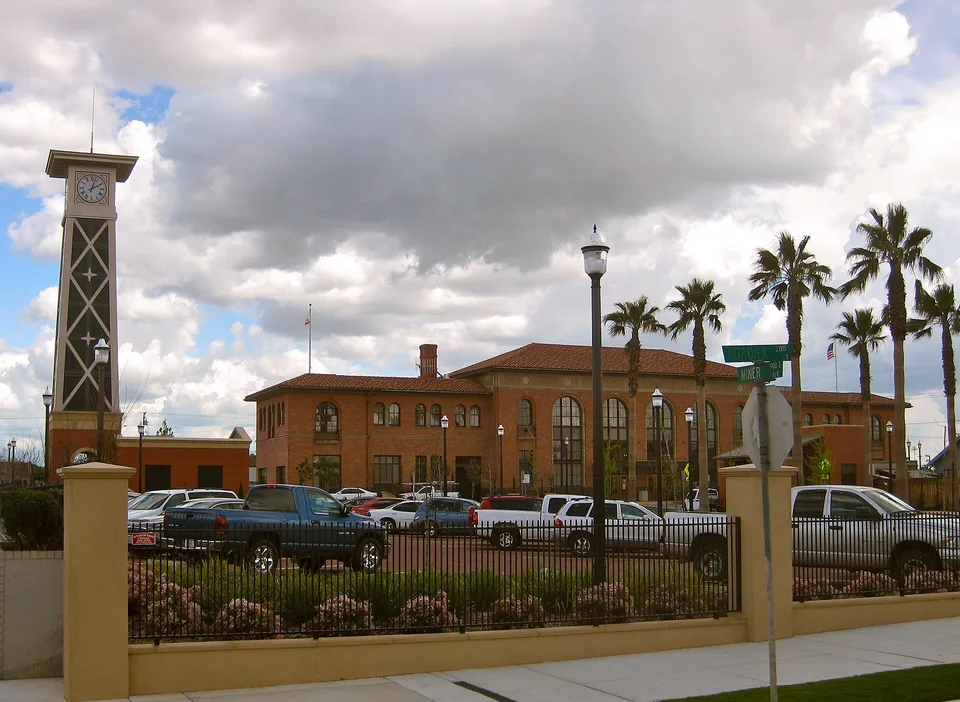
Stockton has two active passenger rail stations, and choosing the wrong one can disrupt the journey. Amtrak's San Joaquin Street station information places that station, code SKN, at 735 South San Joaquin Street. Gold Runner trains between Oakland and Bakersfield use it; Sacramento–Bakersfield trains use Robert J. Cabral Station, code SKT, farther northeast.
Gold Runner's official travel information covers the regional trains and connecting Thruway buses. Check whether your booked itinerary includes a bus as well as a train. Cabral Station also serves ACE, the Altamont Corridor Express towards San Jose. Use the current ACE timetable for your travel date and shift pattern; special-event trains and older weekend announcements are not proof of a convenient regular return. Map the correct station to your accommodation before booking the final local transfer.
Local buses and regional commuting
San Joaquin RTD operates local, Express and Hopper services, with routes and day-specific timetables on its official route pages. Current regular local fare information lists $1.50 for a ride, $4 for a day pass and $65 for a 31-day pass. Exact cash is required when paying at the farebox, which does not give change; the Vamos Mobility app offers another ticket option.
Commuter routes have separate prices. RTD lists $7 one-way for Route 150 from Stockton to Dublin BART and Route 163 from Stockton to Sacramento. Neither should be confused with an unlimited local ticket or a direct airport transfer. For a relocation decision, test the complete journey to the actual worksite, including connections and the last service home. A train or bus to the right city does not necessarily match an early shift, a late finish or weekend employment.
Where to stay: waterfront or a road-access base
Downtown accommodation suits a visit centred on the waterfront, a performance or nearby civic appointments. Verify the entrance, overnight parking, room access and the route back after an evening event. An attractive waterfront view can be worth paying for if it is part of your stay, but it should not replace checking noise, facilities and cancellation terms.
March Lane and the Interstate 5 corridor offer another accommodation pattern, useful for travellers who expect to drive between destinations. The official visitor listing for Residence Inn describes an all-suite option on West March Lane; compare kitchen and laundry facilities with a conventional hotel room for a longer visit. University appointments may favour a different address again. Price the room, taxes, parking and transport together. For accessible accommodation, ask about the exact room and route rather than relying on a general accessibility label.
Practical budgets with specific examples
Begin with dated hotel and transport quotations, then add the outings you will actually take. Two regular adults at Haggin pay $16 in general admission; a family of two adults and two children aged one or older pays $40 at the Children's Museum. These are different experiences and admission policies, not interchangeable family packages.
Four local bus boardings at the regular $1.50 fare total $6, so a $4 day pass may be useful when your route requires several paid journeys. Event tickets can add booking fees, parking and refreshments, while a market visit needs cash for purchases. Include restaurant taxes, any chosen gratuity and a contingency for missed connections. Free park time or a waterfront walk can balance a paid attraction day, but do not budget for free museum admission unless your dates or eligibility actually meet the published conditions.
Seasons, heat and winter conditions
Stockton's Central Valley setting means warm-season heat deserves more attention than coastal travel advice suggests. Plan longer exposed walks early, leave room for an indoor museum afternoon and confirm that accommodation has suitable cooling. The county's severe-weather assessment addresses heat, winter fog and storms; these are practical travel and household considerations rather than reasons to abandon a visit.
Spring and autumn can work well for walking mixed with cultural outings. Winter requires more flexibility for wet weather, fog and transport disruption. Consult National Weather Service climate resources for context and the current forecast for your dates. A climate average describes a long period, not tomorrow's temperature or visibility. If smoke or a heat warning affects the area, change the day's activity and consider the needs of children, older travellers and anyone with a health condition.
A realistic three-day plan
Day one: arrive, settle in and take a short downtown waterfront walk. Add a performance or event only if tickets and your arrival time make it comfortable. Leave a delayed flight some breathing room rather than making a prepaid evening booking the first obligation of the trip.
Day two: on a Saturday, start with the early market, then choose Haggin Museum during its afternoon opening window. Include a park break or a shorter Miracle Mile browse instead of another full attraction. Day three: families can choose the Children's Museum, while prospective students can use a booked university visit. Other travellers might explore a neighbourhood they missed or make a separate regional excursion. Swap the order around Monday and Tuesday museum closures, event calendars and departure time; this plan is a suggested sequence, not a promise that everything opens daily.
Housing: compare the actual address
For a move, compare available downtown apartments, established residential streets and newer homes using the same household requirements. List space, total monthly cost, parking, cooling, laundry, grocery access and commute. Inspect the unit and immediate block at the times you expect to use them; a weekend afternoon alone gives an incomplete picture of daily life.
Ask which appliances are provided, how repairs are requested, what utilities are included and whether parking is allocated. Compare real listings with similar size and condition rather than relying on a supposed citywide average rent. Obtain the lease and all recurring charges in writing, and verify the person or company offering the property before sending money. A temporary hotel or furnished stay can buy inspection time, provided you understand its extension costs and the household's realistic moving budget.
Read California's official tenant resources before signing, especially the sections on deposits, repairs and eviction protections. Coverage and exemptions depend on the property and tenancy. Keep a written inventory and move-in photographs, and retain notices and payment receipts. If a charge or notice is disputed, obtain timely advice using the applicable rules rather than assuming another city's rent protections apply in Stockton.
Flood maps and insurance are address-specific
Stockton's waterways and levees make flood information an essential housing check. The San Joaquin Area Flood Control Agency (source unavailable) explains the local protection programme and relevant contacts. Look up the actual property on the FEMA Flood Map Service Center, ask about previous water damage and discuss suitable coverage with an insurer before committing to a home.
A February 2026 official announcement (source unavailable) reports a flood-map revision for the Smith Canal area, removing that area from a Special Flood Hazard Area after the gate project. This is not a citywide declaration that flood risk has disappeared. A changed mandatory-insurance requirement and the decision to carry voluntary cover are different questions. Check the present map, mortgage conditions and policy terms for your address; do not infer them from another neighbourhood's levee project.
Household services and school boundaries
Water service is not supplied by one provider throughout every Stockton-area address. The city's utility-provider guide identifies municipal service and Cal Water, alongside PG&E for gas and electricity and different waste operators. Confirm the correct provider and account arrangements with your landlord or seller. For a Cal Water address, its start and stop service page explains the district-based process. Include connection timing and any account requirements in the move plan.
Families should check the exact school district and assignment before choosing housing. Stockton Unified's enrollment page provides a locator and online or in-person options; the city name on an address does not establish every school's catchment. Assemble enrollment documents and ask about transport, childcare and programme eligibility. Arrange health coverage, a pharmacy and ordinary internet access alongside utilities so the first weeks do not depend on solving every essential service after arrival.
Studying, working or making a permanent move
International students considering Pacific should follow its admitted-student guidance, including financial documentation and the appropriate I-20 process. Confirm the campus, programme, tuition and living costs directly. An admission offer, a campus tour or a rental agreement does not by itself grant immigration status or permission to work.
VisaWand's USA country guide provides a starting point, while federal rules determine eligibility. Use the official visitor visa guidance for a tourism visit and the official ESTA application with CBP programme information when eligible. Degree study follows the student visa process; employment requires the relevant worker category and authorization. Permanent relocation uses separate immigrant visa routes. VisaWand's consultant listings can help you compare assistance, but check qualifications, written scope and fees before engaging a professional.
Nearby alternatives and a longer California trip
Lodi is a nearby option for a separate wine-country or small-city outing; organise a return driver or transport before tasting. The Sacramento guide helps compare a capital-city stay, while Oakland and San Francisco offer different Bay Area bases. Allow for the actual road or rail journey rather than presenting them as neighbourhood extensions of Stockton.
Use VisaWand's USA location directory and USA destination page to compare other places. Yosemite requires a separate, carefully planned journey, with transport and park conditions checked for your dates. A Stockton base can suit family, university or regional business plans, but its value depends on your main purpose. Give the city time for its own museum, waterfront and community districts, then choose another base when the trip's focus changes.
Official planning resources
Reviewed 13 October 2026. Use the official resources linked throughout this guide for admission, transport, housing and immigration decisions. Prices, services and rules can change; confirm the details relevant to your dates. Photography illustrates the locations and is not a live view.
View all official resources
- Stockton historical overview
- Port of Stockton history
- Stockton waterfront visitor information
- Downtown Stockton cultural history
- Miracle Mile district and parking
- Yosemite Street Village community
- Haggin Museum admission and hours
- Bob Hope Theatre events
- Stockton Live venue entry rules
- Stockton Ports ballpark visitor rules
- Children’s Museum admission and hours
- University of the Pacific campus visits
- University of the Pacific Stockton campus
- Golden Villa Farmers’ Market
- Stockton shopping areas
- Stockton airport transport and visitor FAQs
- Stockton’s two passenger rail stations
- Gold Runner train and bus journeys
- ACE current train schedules
- San Joaquin RTD route timetables
- San Joaquin RTD fares and passes
- March Lane all-suite accommodation
- San Joaquin County severe-weather guidance
- National Weather Service regional climate resources
- California tenant rights and legal resources
- San Joaquin Area Flood Control Agency (source unavailable)
- FEMA property flood-map lookup
- Smith Canal February 2026 flood-map change (source unavailable)
- Stockton utility-provider directory
- Cal Water start and stop service
- Stockton Unified school enrollment
- Pacific admitted international-student guidance
- U.S. visitor visas
- Official ESTA application
- CBP ESTA explanation
- U.S. student visas
- U.S. temporary worker visas
- U.S. immigration routes
Plan the next part of your journey
Explore the United States guide, browse other cities or compare consultants for your travel and relocation questions.