Visa
About "Ion Ionescu de la Brad" Iasi University of Life Sciences
Agricultural origins and a life sciences identity
Ion Ionescu de la Brad Iași University of Life Sciences, commonly abbreviated IULS, is an institution in northeastern Romania with a history rooted in agricultural education. Its official historical presentation recalls agricultural lectures delivered by Ion Ionescu de la Brad in Iași during the 1840s. It identifies 1912 as an important institutional milestone, when an agricultural sciences department was established within the city's university science faculty.
Later developments included the creation of an agronomical institute in 1948 and a move to its Copou location in 1951. Veterinary medicine became part of the institute in 1961, alongside the development of agriculture, horticulture, and animal husbandry education. Several subsequent reorganizations and name changes preceded the adoption of the University of Life Sciences name in 2021. The current name therefore marks a more recent expression of a much longer educational tradition, rather than the beginning of the university's work in agricultural and biological subjects.
Sources: About IULS: historical presentation ↗

Education and research across living systems
The university's published mission brings together teaching and advanced research in plant, animal, and food resources, environmental engineering, biology, and veterinary medicine. It emphasizes the preparation of specialists who can connect scientific and technical knowledge with wider social responsibilities. Its description of academic work includes bachelor's, master's, and doctoral education, supported by teaching and research infrastructure.
The main university website presents four principal faculty areas: agriculture, horticulture, animal and food resources engineering, and veterinary medicine. It connects their work with applications in agriculture, the food industry, environmental protection, and animal health. The institution also describes innovation and technology transfer as part of its purpose. This combination gives the life sciences title a practical meaning: knowledge about living systems is developed alongside the engineering, production, environmental, and professional questions involved in applying that knowledge.
A range of agricultural and environmental study routes
The official undergraduate study listing shows the variety within the university's agricultural provision. Its agriculture-related options include agriculture, mountain-area agriculture, machinery and installations for agriculture and the food industry, agricultural business engineering and management, agricultural product processing, consumer and environmental protection, and biology. These subjects extend from primary production to the equipment, management, and processing activities that support it.
The same university listing identifies horticulture, landscape design, environmental engineering, and agricultural biotechnology as other undergraduate directions. Animal science, food product control and expertise, public catering and agritourism management, and veterinary medicine complete a wider picture of the institution's academic interests. Taken together, the program names show that the university's work spans the production of food and biological resources, their quality and use, and the environmental and organizational settings in which these activities take place.
Sources: Undergraduate study areas ↗
Landscape study connects plants, design, and urban space
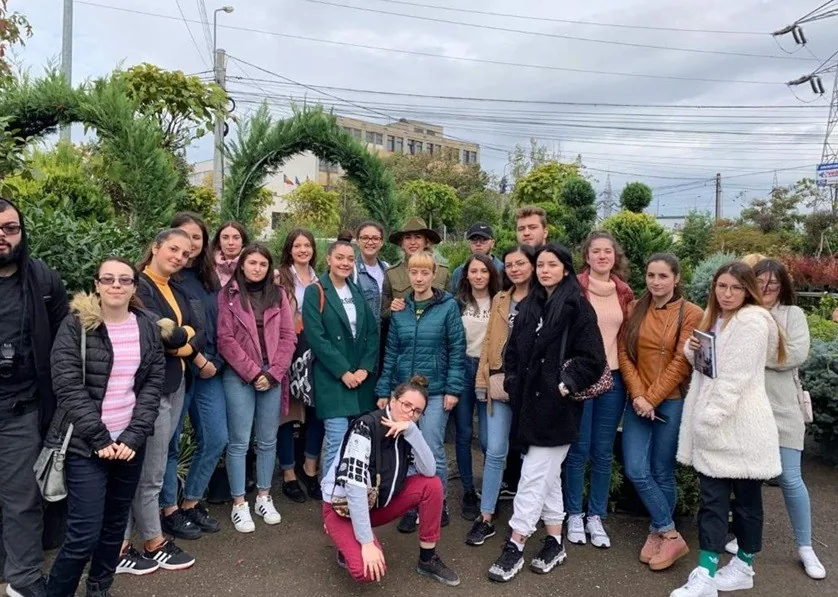
The Faculty of Horticulture's landscape design page provides a detailed example of the university's applied teaching. It describes a four-year program combining foundational subjects such as botany, plant physiology, and plant protection with specialist work in computer-assisted design, three-dimensional modeling, urban planning, landscape restoration, ornamental plants, and landscape construction techniques.
Its published 2026–27 curriculum also includes ecology and environmental protection, biochemistry, topography, digital skills, landscape representation, and practical training. Optional subjects include thematic gardens, green roofs, garden history, and ornamental horticulture. The mixture illustrates how this pathway draws on both biological understanding and the design of places used by people. Plants are studied as living organisms, while spatial representation and planning provide tools for working with gardens, parks, and wider urban or territorial landscapes. The faculty presents practical activity as part of that academic formation.
Sources: Landscape Design specialization ↗
Animal and food resources at several academic levels
The Faculty of Animal and Food Resources Engineering describes itself as the continuation of the animal husbandry faculty founded in 1951. It adopted its present faculty name in 2021. Its undergraduate offerings include animal science, food product control and expertise, and engineering and management in public catering and agritourism. The published range connects animal production with the quality of food and the management of services built around food and rural activity.
The faculty also lists master's subjects concerned with food quality and safety, aquaculture enterprises, animal production, animal nutrition, reproduction and genetic improvement, hospitality management, and agro-food projects and entrepreneurship. Doctoral study is identified in animal science. These different levels show how a historic animal husbandry focus has developed into a broader academic organization, incorporating specialist biological questions, production systems, food-related knowledge, and management topics within the same faculty.
Veterinary education and the circulation of research
The veterinary faculty's mission describes responsibilities extending from animal diagnosis and treatment to public health, food hygiene, animal welfare, and environmental protection. It also stresses ethical responsibilities, critical evaluation of evidence, communication, teamwork, and continuing professional learning. This account presents veterinary education as a combination of scientific knowledge, clinical judgment, and responsibility toward animals, owners, and society.
Research activity is visible elsewhere in the university as well. The horticulture faculty publishes information about scholarly outputs and projects, including plant protection, fruit growing, grapevine genetic resources, and the use of horticulture in urban settings. Its project listings include knowledge transfer and collaboration with organizations outside the university. These examples connect the institution's teaching subjects with continuing investigation and practical application, demonstrating how agricultural and life sciences education is supported by work on specific biological resources and the changing environments in which they are managed.
Sources: Faculty of Veterinary Medicine mission ↗ · Horticulture research and projects ↗