Visa
About Academia Romana Filiala Cluj-Napoca
A research academy in Cluj-Napoca
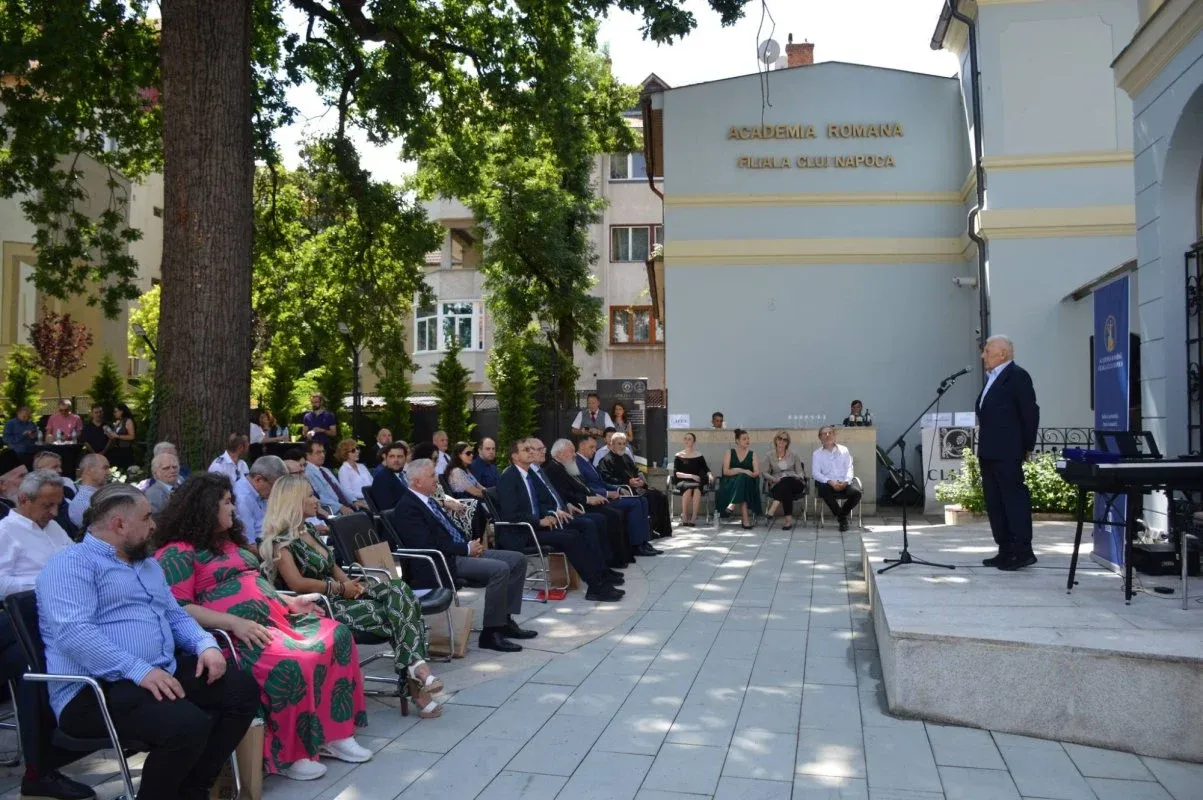
Academia Română, Filiala Cluj-Napoca is the Cluj-Napoca Branch of the Romanian Academy, a centre for scientific research and cultural scholarship in Transylvania. Its headquarters stand at 9 Republicii Street. The branch brings together research institutes, scientific teams, archives and library resources across the humanities and sciences. Fundamental and advanced research form its central mission, with projects organised within the Romanian Academy’s research plans. Academic consultation, scholarly publications, scientific meetings and support for doctoral research accompany that work.
The branch took shape during the reorganisation of Romanian academic institutions in 1948–1949. Linguist Emil Petrovici became its first president, while mathematician Tiberiu Popoviciu served as secretary. Founding participants included chemist Raluca Ripan, historian David Prodan and other figures from science and culture. The institution’s history therefore connects several disciplinary traditions. Its research has encompassed history, literature, linguistics, folklore, mathematics, geography, astronomy, archaeology and studies of underground environments, alongside other fields.
Sources: History of the Cluj-Napoca Branch ↗ · Mission ↗
Institutes and specialist research
The George Barițiu Institute of History combines historical investigation with research in the social sciences and humanities. Its history department addresses national history, world history and international relations. A separate department covers philosophy, psychology, education, sociology, economics and legal studies. The Sextil Pușcariu Institute of Linguistics and Literary History organises work in lexicology and lexicography, dialectology and onomastics, literary history, and philology and editions. These distinct teams study language and literature through complementary methods.
The Institute of Archaeology and Art History lists research groups for prehistory, the Roman period, migration and early medieval periods, and art history. Scientific work also includes the Emil Racoviță speleology structure, whose interests centre on caves and karst environments. The Tiberiu Popoviciu Institute of Numerical Analysis addresses numerical computation, approximation theory, optimisation and numerical modelling. The branch’s institute directory additionally includes the Gheorghe Șincai Institute for Social Sciences and Humanities in Târgu Mureș and the Folklore Archive, with literary folklore, ethnomusicology and dance research.
A library preserving research collections
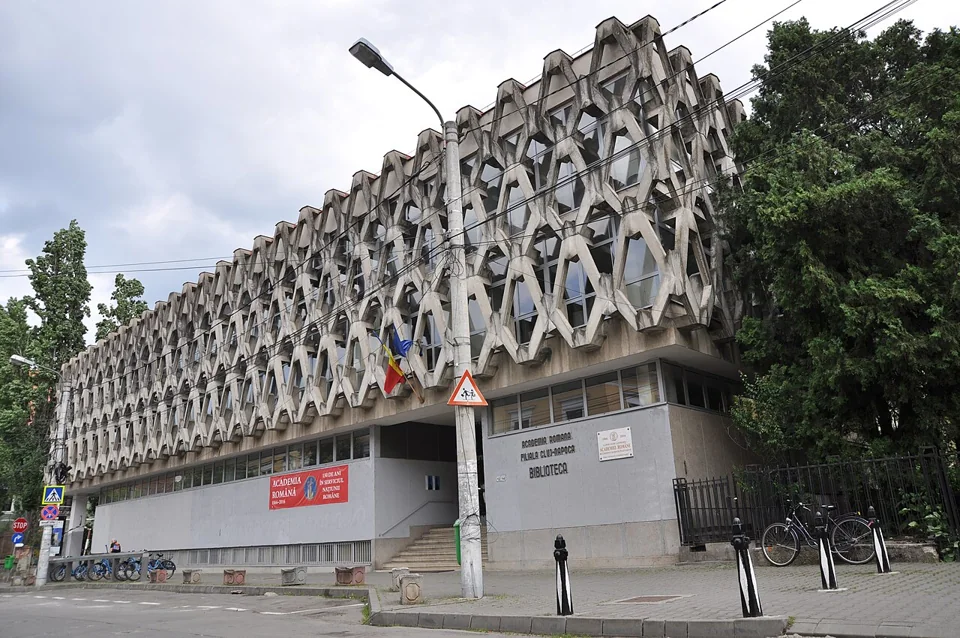
Founded in 1950, the Romanian Academy Library in Cluj-Napoca developed collections of manuscripts, early printed books, periodicals and scientific literature. Its role combines documentary support for researchers with the preservation of Romanian and European cultural heritage. The library is located at 12–14 Mihail Kogălniceanu Street, a different address from the branch headquarters. Its special collections and bibliological work place the history of books alongside the practical needs of academic readers.
The library’s organisation includes a service for collection development, organisation and international exchange, a special collections and bibliology service, and a laboratory for conservation and reconditioning. Its listed structures also include libraries in Năsăud and Blaj. Together, these functions cover acquiring and organising materials, maintaining international exchanges, studying rare holdings and protecting physical collections. They make documentary care a continuing part of the branch’s research infrastructure.
Sources: Romanian Academy Library in Cluj-Napoca ↗ · History of the Cluj-Napoca Branch ↗
Doctoral research through SCOSAAR
The Romanian Academy organises doctoral studies through its School of Advanced Studies, known by the Romanian abbreviation SCOSAAR. The Cluj-Napoca branch has a departmental presence within this framework. Its advanced-studies page identifies the George Barițiu Institute of History and the Sextil Pușcariu Institute of Linguistics and Literary History as affiliated institutes. This places doctoral activity within specialist research environments and the Academy’s wider structure for advanced study.
SCOSAAR describes its objective as preparing highly qualified specialists for academic research, university teaching, and administrative and managerial activity. At branch level, support for doctorates sits alongside interdisciplinary projects and cooperation with other Academy institutes and partners in Romania and abroad. The educational dimension is consequently closely connected to sustained investigation, scholarly supervision and the production and discussion of research.
Sources: SCOSAAR advanced studies and doctoral research ↗ · Mission ↗
Scholarly publishing across disciplines
The branch’s periodicals directory shows how its research reaches readers in several disciplines. The archaeology and art history institute publishes Journal of Ancient History and Archaeology, Ephemeris Napocensis and Ars Transsilvaniae. The George Barițiu institute’s yearbook has separate Historica and Humanistica series, reflecting its historical and wider humanistic interests. The Romanian Journal of Economic History is another listed publication, jointly edited with the Academy’s social sciences and humanities institute in Sibiu.
Language and literary scholarship appears in Dacoromania, Dacoromania litteraria and Caietele Sextil Pușcariu. Other titles include the Journal of Numerical Analysis and Approximation Theory, Anuarul Arhivei de Folclor and Transylvanian Review. The directory also lists specialist journals in speleology and astronomy. This range gives the branch’s publication activity a clear disciplinary breadth, extending from mathematical methods and physical environments to language, historical interpretation and cultural memory.
Sources: Academic periodicals ↗
Academic events and public visits
The 2026 programme for Cluj Academic Days presents the event’s thirty-ninth edition, with an opening scheduled for 9 October at Babeș-Bolyai University and a sequence of meetings extending into November. Its programme includes conferences, symposia, round tables and forums. Topics range from minorities and institutions to literary memory, geographical research, numerical analysis and archaeology. The edition also marks 160 years since the founding of the Romanian Academy as a national institution.
The branch offers guided visits for pupils, students, teachers and other interested visitors. Tours require advance confirmation and are described as lasting approximately 45–60 minutes, with groups of five to twenty recommended. Available languages include Romanian, English, French and German. The proposed route introduces branch history, library collections, the Sextil Pușcariu institute and the Folklore Archive, subject to access on the day. Topics include early books, oriental collections, dictionaries, linguistic atlases and the preservation of folklore.
Sources: Cluj Academic Days 2026 programme ↗ · Guided visits ↗