Visa


About 1 December University of Alba Iulia
A public university shaped by its historic setting
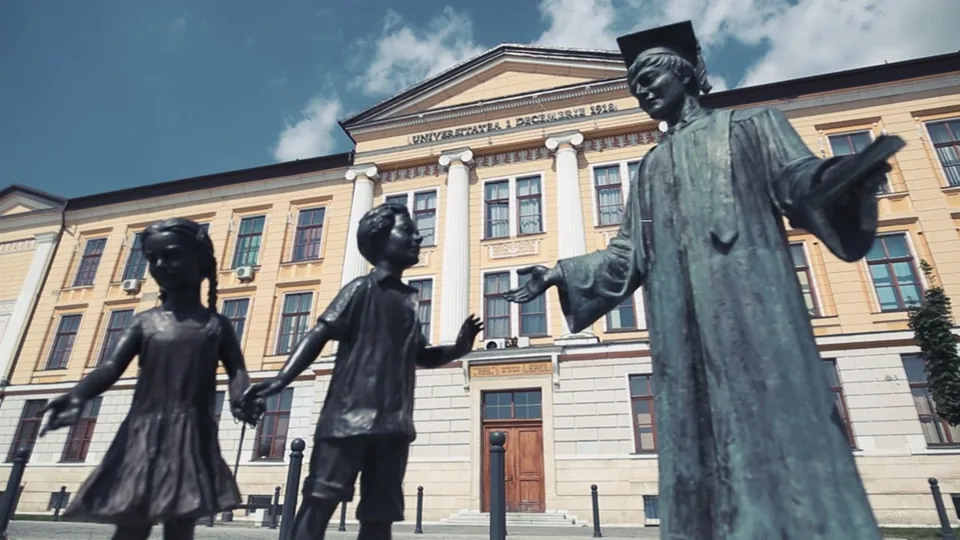
1 Decembrie 1918 University of Alba Iulia, also known as UAB, is a public higher education institution in Romania. Established in 1991, it describes its mission in relation to the historical and cultural significance of Alba Iulia and its surrounding region. Its official introduction connects education, research, and the creation of cultural value with the preservation of identity and participation in a wider European academic environment.
The university's activities span humanities, economics, technical subjects, law and social sciences, and Orthodox theology. Its institutional presentation also identifies doctoral study in history, philology, accounting, and theology, alongside continuing education and teacher preparation. This combination gives UAB a broad academic character while retaining strong connections with its setting. Its role is presented through both the education of students and the development and circulation of knowledge, rather than through a single professional subject or narrowly specialized school.
Sources: About UAB ↗
Economics, business, and accounting education
The Faculty of Economics dates its operation as a distinct faculty to 2014, while its official account traces economics programs within the university to 1995. Its undergraduate subjects include business administration, finance and banking, accounting and management information systems, marketing, and the economics of trade, tourism, and services. Business administration is also listed in an English-language version.
At master's level, the faculty describes pathways in areas such as company audit and control, financial markets, tax law and financial management, regional development, marketing, and the use of accounting information in managerial decisions. Doctoral study is offered in accounting. The faculty's organization includes business administration and marketing as well as finance and accounting departments. These subjects connect the analysis of organizations and markets with the practical information and management systems used in business, providing several levels at which students can develop an interest in economic and commercial activity.
Sources: Faculty of Economics ↗
Computing and engineering with regional connections
The university's informatics and engineering faculty describes its development in response to local and regional needs involving computerization and technical problem solving. Its published introduction identifies undergraduate and master's provision in computer science, applied electronics, geodetic engineering, and environmental engineering. It also emphasizes research projects, innovation, and multidisciplinary collaboration as parts of its academic work.
Connections with regional companies are a recurring theme in that account. The faculty describes an intention to align the skills developed through study with the requirements of employers and to connect students, researchers, and practitioners. Its Center for Innovation and Relations with the Socio-Economic Environment is presented as one mechanism for those relationships. This gives the technical side of UAB a clear applied dimension: education and scientific work are discussed alongside the technological questions and professional communities found beyond the university itself.
History, archaeology, and the study of language
Humanities education provides another important part of the university's identity. Its published program descriptions include archaeology and language and literature studies, connecting historical investigation with the interpretation and communication of cultural knowledge. The history-related descriptions emphasize the critical use of sources, the placement of events in context, and the construction of coherent historical arguments.
The university also describes graduate-level interests in Romanian and English language, literature, and culture. Its account connects master's study with the deepening of earlier academic work and the possibility of continued doctoral research. These subjects draw attention to skills that are central to humanities scholarship: careful interpretation, effective expression, methodological awareness, and openness to discussion with related social and human sciences. Within UAB, they sit alongside professional and technical subjects, adding a substantial cultural and interpretive dimension to the institution's educational range.
Sources: Humanities study programs ↗
A library developed alongside the university
The UAB Library has operated since 1991, the same year as the university's foundation. Its official presentation explains that the collection grew through purchases, publication exchanges, and donations. The library describes a broad publication fund that includes the Archdiocese Library, together with periodicals from Romania and abroad. It consults teaching staff, faculty representatives, and students when making acquisitions.
Electronic resources are also part of this academic support. The library reports that access to specialist databases has been provided since 2008 to help meet the documentation needs of different disciplines. Its services are available to undergraduate, master's, and doctoral students, teachers, researchers, and other eligible readers. These resources support the university's varied subjects by giving students access to both the established literature of their fields and more specialized material needed for independent study, assignments, and research projects.
Sources: UAB Library ↗
Institutional support for research and projects
UAB maintains a Center for Scientific Research serving departments and research centers across the institution. Its published description emphasizes improving the quality of scientific work and coordinating activity with the university's strategic and research plans. This provides an institutional framework around the research carried out within individual subject areas.
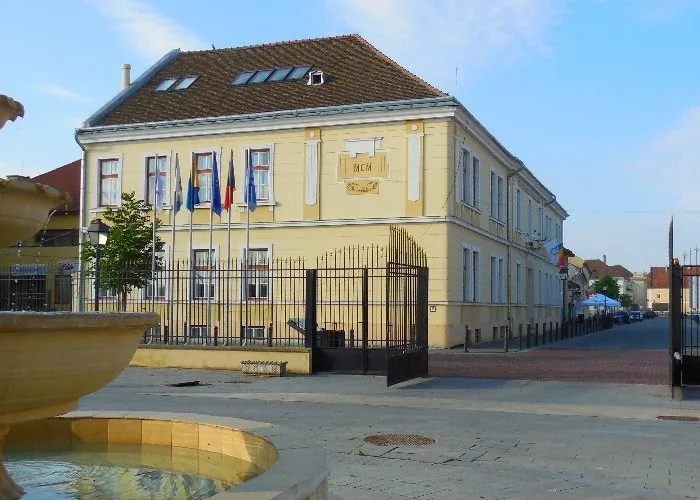
A separate Center for Project Management, located in the Apor Palace building, supports access to national and international funding. The center describes consultancy and technical assistance for the development and implementation of research, technological development, and innovation projects. Its remit includes work with structural funds as well as other project funding sources. Together, these centers show how the university supports the organization of research beyond individual teaching departments, connecting academic ideas with the planning, resources, and administrative processes needed to put substantial projects into practice.
Sources: Center for Scientific Research ↗ · Center for Project Management ↗