Visa
About Art College kobe
A specialist college in Kobe
Art College Kobe is a specialist vocational college in Kobe, Hyōgo Prefecture, Japan. Its published address is in Kōyōchō-naka, Higashinada Ward. The college's educational outlook connects personal interests with the skills and approaches needed to develop them professionally. Its About page emphasizes understanding what people and organizations need and learning how to respond through practical work. It places this approach in the context of changing technologies and working environments. Rather than treating creative interests as separate from professional development, the college presents immersion in a subject and the ability to produce useful work as connected parts of its educational purpose.
Sources: About Art College Kobe ↗
Digital transformation and business
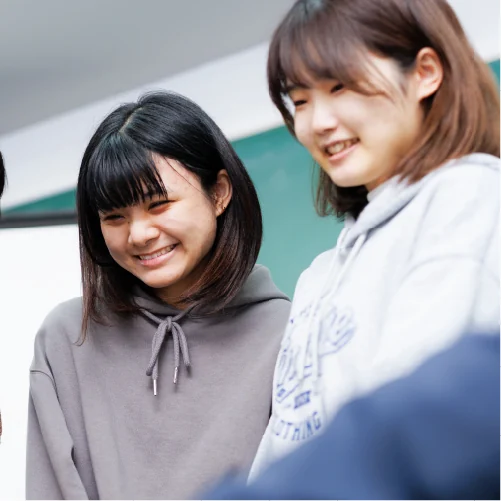
The DX Business department examines how digital technologies can change organizations and the ways they work. The college's description emphasizes planning backwards from a desired goal, identifying the steps involved and communicating effectively to carry them out. Practical exercises and case studies are presented as important parts of this learning process. One highlighted class uses WebPerformer, a low-code platform for developing web systems, through collaboration with Canon IT Solutions. The programme description connects such work with application development and data analysis. Its broader focus is on understanding both organizational needs and technical possibilities, including the skills needed to communicate between business managers and technical specialists. Digital transformation is therefore approached as an organizational and practical challenge alongside the use of software.
Sources: DX Business ↗
Illustration and design practice
The Illustration Design department introduces several ways in which visual work is developed and used. Its course highlights include animation production, digital illustration and graphic design. Drawing foundations and the use of digital tools are part of the published description, with attention to both basic functions and more advanced applications. The department discusses illustration, graphic design, manga and web design as possible professional directions. Its account of graphic design includes work for magazines, advertisements, posters and packaging, emphasizing the ability to respond to a concept and cooperate with other contributors. Manga is described as involving visual expression, structure and the use of tools as well as drawing. Across these examples, the programme connects individual visual interests with the practical process of developing and completing work.
Sources: Illustration Design ↗
Esports and team-related learning
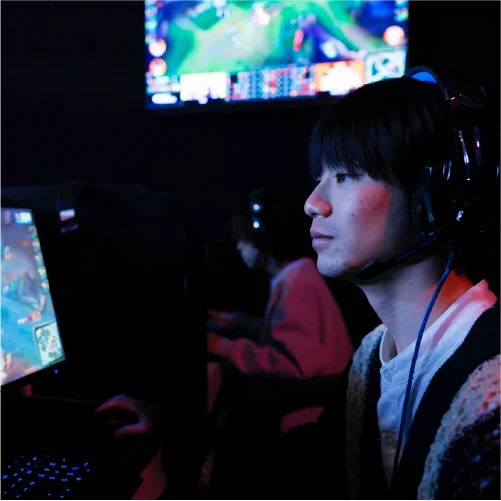
The college's esports department describes a professional-player course and an esports-management course. Its curriculum is developed in connection with the professional team V3Esports. The published account includes teaching and advice from team members and opportunities to encounter the wider work involved in operating a team. Management study is presented as a way of developing knowledge and skills beyond competitive play itself. The college also describes internship opportunities connected with team operations and gaming-house environments. These are features of its educational approach and opportunities described by the department, rather than assurances that students will become professional players.
Sources: Esports ↗
Learning through correspondence
A separate correspondence department provides esports, illustration and design, and DX Business options. Its description explains that students can work on assignments away from campus, with remote instruction and feedback forming part of the learning arrangements. The illustration and design option emphasizes studying in a setting and at a pace suited to the learner. The esports description includes coaching and interaction with professional players, alongside sessions in a gaming-house environment. This provision extends the college's subject areas into formats that combine study at home with guided learning and specified practical activities.
Sources: Correspondence Department ↗
Support for professional preparation
The college's career-support description sets out several forms of preparation. Career seminars led by teachers with career-consulting expertise help students consider their goals and approach job searching systematically. Portfolio guidance begins with organizing and keeping coursework from the first year, then learning to present it effectively. Students can also receive guidance tailored to their circumstances on résumés and interviews. Internships offer opportunities to experience work in companies, while industry-linked projects involve producing work in response to actual commissions. The college describes these activities as ways of learning how professional production develops from a brief into an outcome. Its account connects the development of ideas and practical work with the communication and presentation involved in entering a field.
Sources: Career Support ↗
International communication
The International Communication department is designed around the learning needs of international students. The college describes a curriculum informed by the expectations of companies that employ international workers, including Japanese-language ability, cooperation and understanding organizational environments. Classes are grouped according to Japanese proficiency, with materials and teaching approaches adapted to different groups. Repeated work on the foundations of business and communication supports gradual progression. Individual coaching addresses learning methods and difficulties, while résumé and interview practice forms part of career guidance. The department also describes support for students considering university study. This includes preparation for the Japanese-Language Proficiency Test and the Examination for Japanese University Admission for International Students, together with opportunities to attend university information sessions on campus.
Sources: International Communication ↗
Tourism and service communication
The Tourism department combines tourism-related knowledge with Japanese, English and service skills. Its stated focus extends from customer-facing work to planning services and presentations for visitors to Japan. The programme description refers to tourism in Hyōgo, Kobe and the wider Kansai area, connecting regional settings with an international outlook. Students learn about hospitality practices and forms of respectful communication, alongside the language skills needed to interact with visitors from different backgrounds. Preparation for job searching begins in the first year and includes self-assessment and individual advice. The college also describes its participation in the Kansai Tourism Education Consortium, linking its tourism education with a network that includes universities active in the field.
Sources: Tourism ↗