Visa

About Advanced Institute of Industrial Technology
A Tokyo professional graduate institution
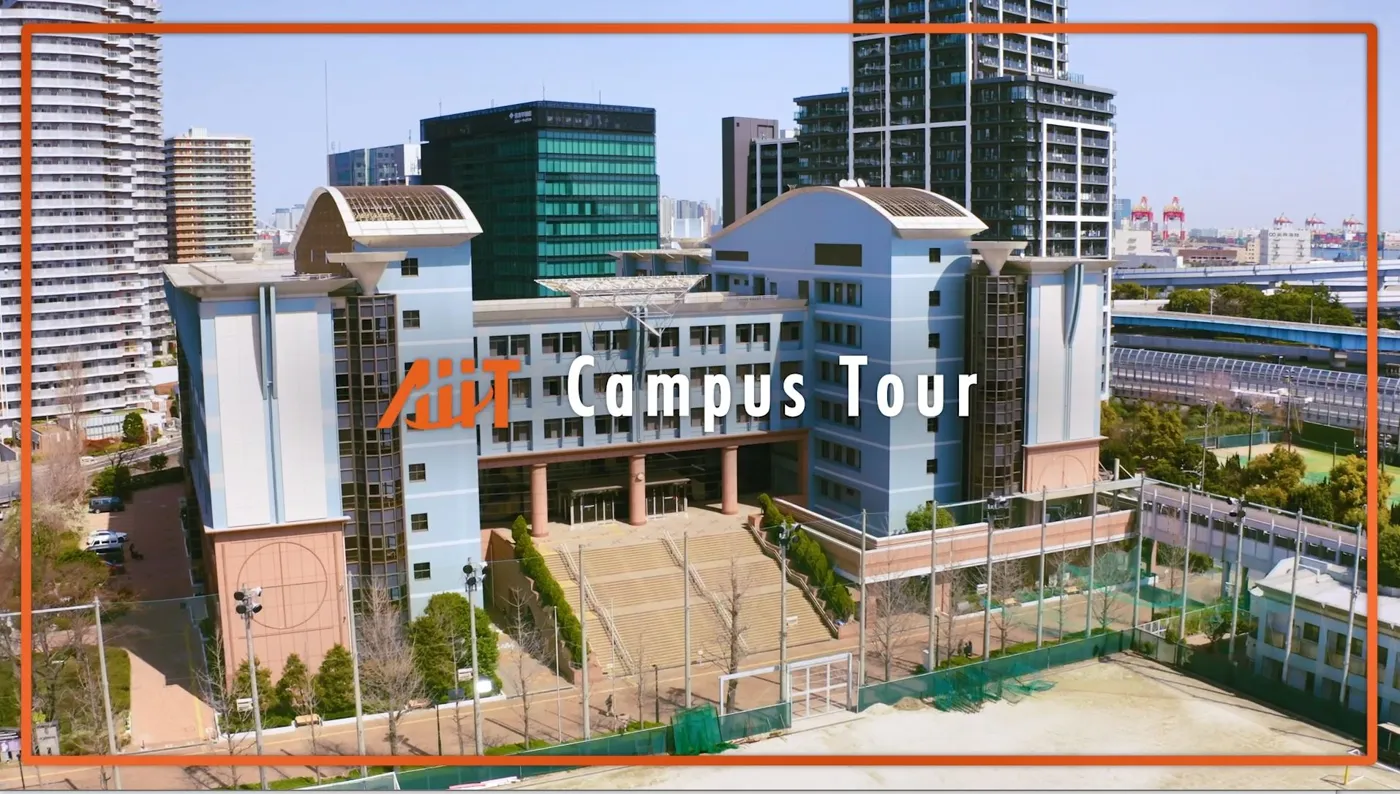
The Advanced Institute of Industrial Technology, or AIIT, is a professional graduate institution in Tokyo, Japan. It opened in April 2006 and is operated by the Tokyo Metropolitan Public University Corporation. Its address is in Higashi-Ooi, Shinagawa, where its Shinagawa Seaside Campus supports graduate-level education for industrial and professional practice. AIIT's academic structure comprises three courses within its Master Program of Industrial Technology: Business Systems Design Engineering, Information Systems Architecture, and Innovation for Design and Engineering. Their degree titles are Master of Technology in the respective fields. The institution places particular emphasis on applying specialist knowledge, connecting academic study with the decisions, coordination and practical work involved in professional projects.
Sources: Institutional profile ↗ · Professional graduate school framework ↗
Business systems and innovation
The Business Systems Design Engineering Course approaches the creation of business value through starting enterprises, establishing new ventures and business succession. Its first-year curriculum introduces the ideas and methods behind these activities before students apply their knowledge in second-year projects. Published subjects include business startup strategy, accounting and finance engineering, service science and leadership. Other areas address technology management, regional economic analysis, product development organizations and technology venture roadmaps. The course also includes e-commerce planning, decision science, market creation and business continuity management. This combination connects the development of an initial idea with the organizational, financial and strategic questions involved in putting a business into operation and sustaining it.
Information systems architecture
The Information Systems Architecture Course covers both technical implementation and the management of information systems. Its first-year teaching ranges from programming and networks to business analysis and project management. The published curriculum lists subjects in database theory, information security, open-source software, data intelligence, big-data analysis and cloud infrastructure. Software development subjects include secure programming, agile methods, frameworks and collaborative development. Enterprise-related study considers information-system modeling, business processes, intellectual property and communication. Management teaching extends to service management, organizational finance and risk. In the second year, project-based exercises give students an opportunity to bring this body of knowledge together, developing their ability to carry out tasks rather than treating individual technologies as isolated subjects.
Design, engineering and making
The Innovation for Design and Engineering Course combines product development, industrial design and digital technology. Its first year establishes knowledge for professionals engaged in monozukuri, or making things, before project work develops the application of that knowledge. The curriculum includes human-centered design, design management, intelligent systems and global communication. Product innovation subjects cover prototyping, engineering integration, service engineering, quality and reliability. Industrial design teaching includes materials, product design, communication design and digital design practice. Embedded systems, machine learning, data science and artificial-intelligence-driven design appear in the digital technology group. Practical team design and prototyping exercises connect these subjects, bringing together the technical, visual and human considerations involved in developing a product or service.
Projects as a central degree requirement
Project-based learning, usually abbreviated PBL, is central to AIIT's approach. Students establish knowledge and skills during the first year and undertake sustained team projects during the second. The institute describes PBL as the degree requirement serving the role that a conventional master's thesis has elsewhere. Its published framework allocates twelve of the forty completion credits to this work. Teams define goals, prepare plans, manage schedules and produce deliverables while their activities and results are evaluated. Students also keep records of their individual contributions and assess their progress. Groups bring together people with different occupations, ages and experience, while external experts periodically review projects. Learning therefore includes coordinating work and applying knowledge under practical constraints.
Sources: Project-based learning ↗
Study arrangements for working adults
AIIT organizes its educational environment with working students in mind. Its flexible-learning page describes weekday evening and Saturday classes, with all Information Systems Architecture classes scheduled within those periods. The quarter system divides the year into four terms, allowing concentrated study of individual subjects. Recorded lectures and online learning materials support preparation and review, while blended learning combines recordings with classroom exercises and group work. The Academic Credit Bank enables non-degree students to accumulate eligible credits that can subsequently be recognized after regular enrollment. AIIT also describes a long-term study arrangement for students whose work or family responsibilities make the standard two-year period difficult. These systems offer several ways to organize study alongside other commitments.
Sources: Flexible learning environment ↗
Spaces for practical graduate work
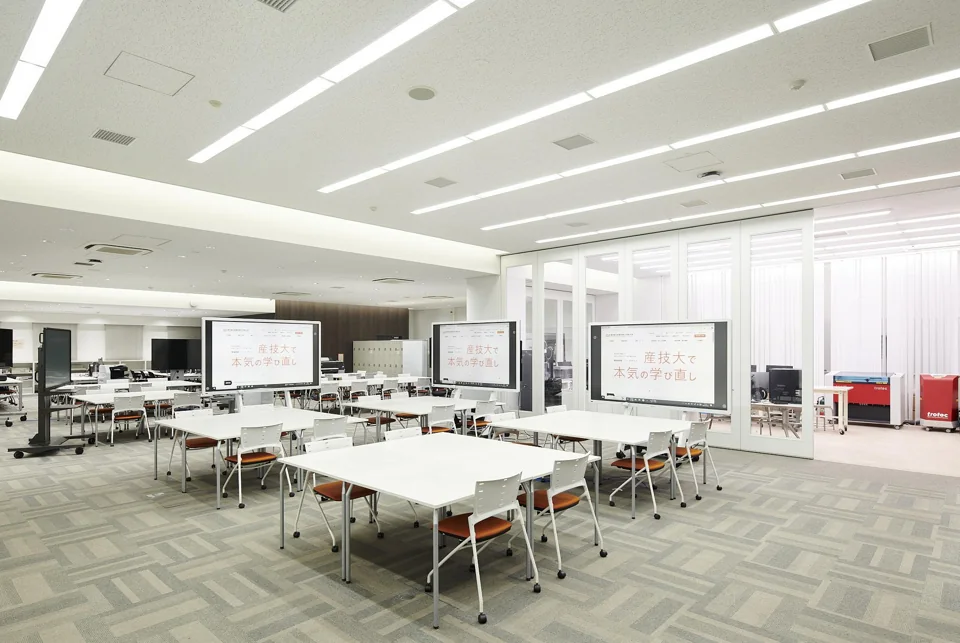
The facilities presented in AIIT's 2025–26 brochure support both independent study and collaborative work. Tokyo Yumekobo combines meeting booths, large monitors and workshop facilities with equipment including three-dimensional printers, a laser cutter, an NC machine and a large-format printer. The PBL laboratory supplies spaces for presentations, team meetings and project practice, together with lockers for project teams. A server experiment room allows students to work with rack-mounted servers when building networks and databases. Classrooms provide wireless networking and power outlets for students' laptops. Computer and CAD rooms, individual study space and rooms for group use extend the range of settings available for designing, discussing and testing project work.
Sources: AIIT 2025–26 English brochure, facilities spread, printed pages 18–19 ↗
Library and specialist information
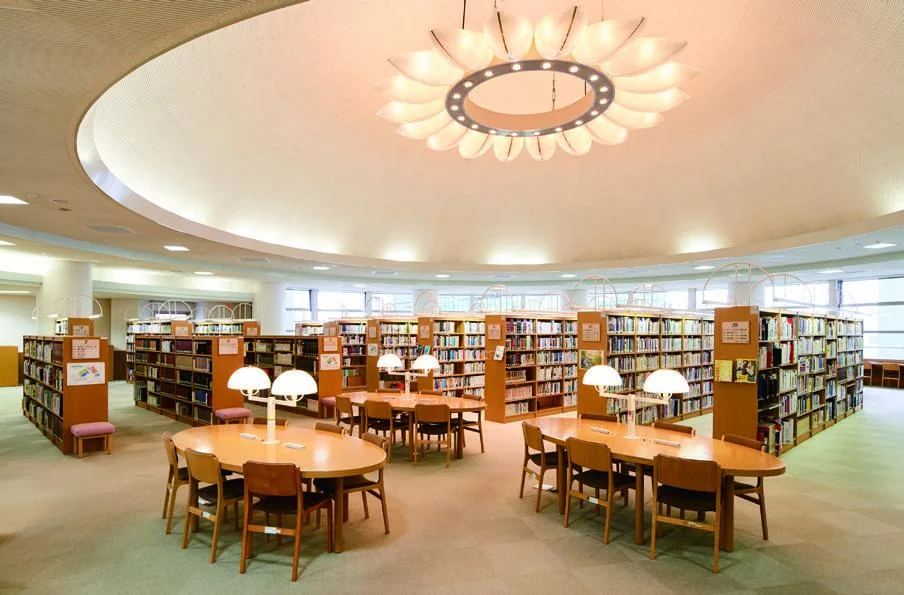
The AIIT Library supports study through print and digital resources in fields related to its courses. These include information technology, business administration, management, engineering and design. Its online catalogue enables users to search for books over the internet. The library's institutional page describes its work in collecting, organizing, preserving and providing academic information, alongside support for literature searches. It serves students and graduates as well as engineers working in Tokyo and the neighboring Keihin area. The reading space shown in the institute's brochure contains study tables and open bookshelves, providing another setting for the individual investigation that accompanies classes and team projects.
Sources: AIIT Library ↗ · AIIT 2025–26 English brochure, facilities spread, printed pages 18–19 ↗