Visa
About Aeronautical Safety College
A national centre for aviation safety training
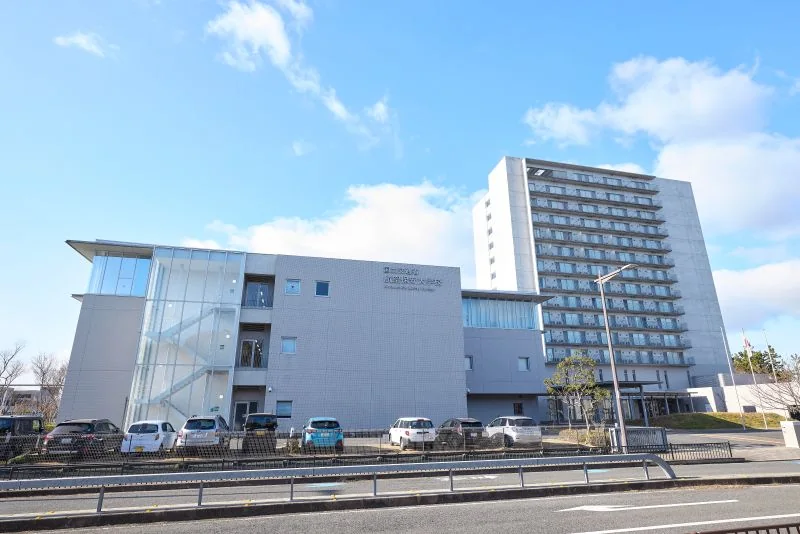
Aeronautical Safety College is an educational and training institution of Japan's Ministry of Land, Infrastructure, Transport and Tourism. Its main campus is in Rinku Town, Izumisano, Osaka Prefecture. The college prepares personnel whose work supports civil aviation, including air traffic controllers, aeronautical information officers and technical specialists. Its educational philosophy connects professional knowledge with responsibility, sound judgement, cooperation and continued learning. These qualities reflect the demands of work in which people must use complex systems while responding carefully to changing circumstances.
The institution's history includes controller training that began in 1952 and the establishment of an aviation personnel training institute at Tokyo International Airport, Haneda, in 1959. It adopted the Aeronautical Safety College name in 1971. A branch opened beside Sendai Airport in Iwanuma in 1974, later becoming the Iwanuma Training Centre. The main college moved from Haneda to Izumisano in April 2008. Iwanuma provides advanced and practical training for personnel developing their capabilities after assignment to operational workplaces. This history links initial preparation with continuing professional development.
Sources: College overview, philosophy and history ↗
Preparing air traffic controllers
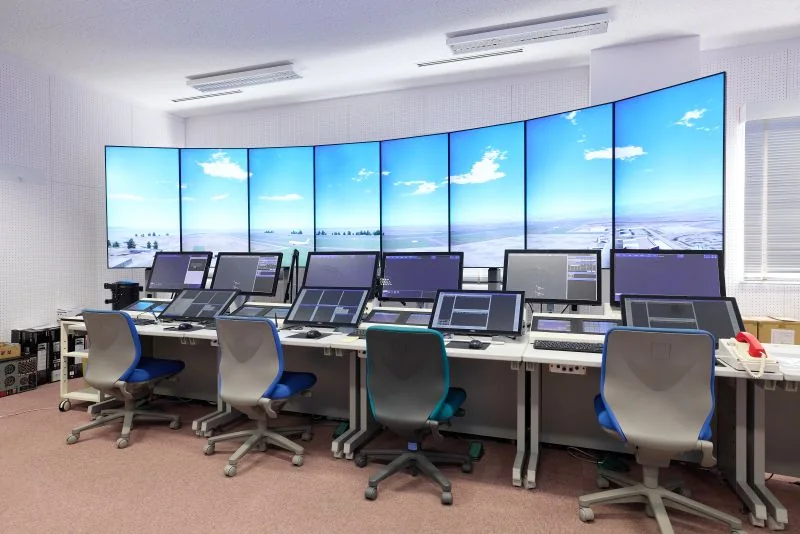
The air traffic control course provides eight months of foundational training. Its academic subjects include aviation English, air traffic control principles, aerodrome control, approach control, en-route control, aviation meteorology and international aviation regulations. Practical work uses simulators of the kind employed at operational aviation offices. Students therefore encounter both the knowledge underpinning control and simulated situations requiring its application.
Training facilities represent different working environments, including airport towers, terminal radar control and en-route control. Simulations reproduce aircraft movement and the characteristics of high-altitude traffic. In radar exercises, trainees can also take the role of pilots, adding another perspective to communication practice. The college describes residence life and visits to aviation workplaces as further opportunities to develop teamwork and responsibility. Its course explanation makes clear that completion of this foundational stage is followed by specialised training and qualification at the assigned workplace.
Sources: Air traffic control course ↗
Aeronautical information and operational support
The aeronautical information course extends over two years. During the first year, students study general subjects such as mathematics and physics alongside aviation regulations, flight planning, aviation meteorology and air-ground assistance. The second year places greater emphasis on practical work in flight operations assistance, aerodrome information, wider-area assistance and control communications. Communication and cooperation develop through both lessons and shared residential life.
The course's practical environments include simulated computer systems connecting aviation information users and a training installation modelled on Nanki-Shirahama Airport. Students practise supplying information relevant to aircraft operations, including aerodrome conditions, weather and surrounding traffic. Other exercises involve entering flight plans and communicating information to pilots and operational personnel. These activities distinguish the information officer's role from that of the controller while showing how both contribute to the wider aviation system.
Sources: Aeronautical information course ↗
Aviation electronics and ground systems
The two-year aviation electronics course develops knowledge of systems used in aviation operations and air traffic services. Mathematics, English, physics, electromagnetism and radio engineering provide foundations for specialised study. Students then examine communications, navigation, landing and surveillance systems, together with air traffic control information-processing technology. Practical subjects connect these topics with equipment and software used for aviation safety functions.
Dedicated rooms contain communications equipment, navigation installations and surveillance radar systems. Learning includes equipment structure, operation, measurement and maintenance-related concepts. The course also addresses how ground systems are used by aircraft, while keeping its principal technical focus on ground infrastructure. The college describes operational monitoring, maintenance, data analysis, system evaluation and development-related work among the professional activities associated with this field. Workplace training continues after the college stage, and advanced short courses at Iwanuma support further technical development.
Sources: Aviation electronics course ↗
A campus organised around practical learning
The main teaching building has three floors, with classrooms on the third floor and practical training rooms on the lower levels. Its facilities include integrated training rooms and a language laboratory. The library occupies a high-ceilinged corner space with large windows, sofas and tables suitable for group learning. The college identifies it as an internal resource rather than a public library.
A gymnasium also serves as an assembly space for entrance and completion ceremonies and lectures. Residential accommodation provides individual rooms with separate bath and toilet facilities, together with desks, beds and other furnishings. Shared amenities include laundry facilities, refreshment spaces and a sky lounge. These facilities place study, practical exercises and everyday living within a residential training environment. The college's descriptions show how its physical setting supports several different forms of learning and interaction during the training period.
Sources: Campus and training facilities ↗
Specialist training beyond the main courses
Other provision includes foundational training for systems specialists, newly recruited aviation technical personnel and aviation lighting and electrical staff. The systems specialist course lasts nine months and combines knowledge of aviation services with programming, networks, databases, project management and data analysis. Participants undertake simulated information-system development and practise communication, presentations and facilitation.
A separate three-month technical foundation course serves newly recruited personnel entering through a different recruitment pathway from the two-year electronics course. It combines classroom subjects, practical equipment work and visits to aviation workplaces. Lighting and electrical training addresses the standards, structures and maintenance of airfield lighting and aviation power systems. Together, these courses demonstrate the college's wider role in preparing people for distinct technical responsibilities and supporting learning across different stages of an aviation career.
Sources: Other specialist training ↗