Visa


About Arab Open University
Blended higher education in Jordan
Arab Open University in Jordan is based in the Tareq area of Amman. Its educational approach combines open learning with blended study, placing access to higher education and lifelong learning at the centre of its institutional purpose. The Jordan branch’s published introduction presents this model as a way to reach people whose circumstances do not fit a conventional pattern of university attendance.
The introduction identifies several groups within that educational community: people with busy work schedules, learners living in more remote parts of Jordan, adults returning to education after missed opportunities, and younger students seeking an open approach to study. It links these aims with the wider Arab Open University vision initiated by Prince Talal bin Abdulaziz. Community and communication between students and staff also form part of the branch’s account of its educational environment.
Accounting education and postgraduate study
The Jordan branch’s business studies page provides a specific account of the development of its Accounting Department. Established in 2014, the department began by offering a bachelor’s programme in accounting. A master’s programme followed in 2016, with thesis and comprehensive examination routes. These milestones describe a local development within the branch’s academic provision.
The department brings together faculty with qualifications in different accounting specialisations. Its published account describes periodic review of both undergraduate and postgraduate curricula, connecting that work with changes in the subject and the needs of the surrounding community. Accounting study concerns the measurement and analysis of financial information used within organisations and by decision-makers. The postgraduate routes provide different forms of academic completion within that field, while curriculum review remains an ongoing part of departmental work.
Sources: Jordan Faculty of Business Studies ↗
Learning materials and library facilities
The Learning Resources Department supports teaching through printed materials and audiovisual resources. Its responsibilities include helping students with educational materials and assisting with learning aids connected with applied curricula. It also coordinates the practical work needed to make materials available during the academic year.
Those tasks include requesting resources specified in academic plans, maintaining inventories, communicating with suppliers and arranging distribution to students and faculty. The published description also identifies facilities within the Learning Resources Unit: a multimedia hall, a virtual library, a traditional library hall, an audiovisual equipment hall and a materials distribution centre. Together, these spaces and services connect the supply of course materials with opportunities to use them. The department’s role therefore includes both administrative coordination and direct support for the learning process.
Sources: Learning resources ↗
Research support and institutional inquiry
The Jordan branch’s research introduction describes scholarly activity as part of university life and faculty development. It identifies support for research and conference participation as ways to help academic staff pursue their interests and maintain professional growth. Research is also connected with decisions concerning faculty progression.
A Research Committee provides an organisational framework for that work. Its published functions include formulating research policy, building research capacity, identifying relevant topics and allocating university resources. The committee also encourages faculty to pursue specialist interests and promotes a research culture across the institution. Institutional research is another stated concern, linking academic inquiry with understanding the university itself. This structure gives research support both an individual dimension, through faculty projects, and an organisational dimension through policy, priorities and resource decisions.
Sources: Research at the Jordan branch ↗
Student affairs and communication
The Student Affairs Department provides a point of contact for practical support, activities and communication with the branch administration. Its published responsibilities cover social, cultural and personal aspects of student life, alongside coordination with academic work. A medical clinic and counselling and guidance provision appear among the services it describes.
Students can submit complaints, enquiries and suggestions electronically. The department receives and organises those submissions before referring proposals to branch management for action. It also supports cultural, sporting and social activities, volunteering and cooperation with local organisations. Other duties include graduation arrangements, university identification documents, coordination for students with disabilities, and activities involving the student council and scientific societies. These responsibilities connect individual student needs with participation in the wider university community and provide formal routes for feedback about the study experience.
Sources: Student life and student affairs ↗
A local centre for inclusion
A branch report published on 18 October 2026 describes a visit by the chairman of Arab Open University’s Board of Trustees and the university’s regional leadership. The visit included a meeting with academic and administrative staff in Jordan, during which institutional achievements, challenges and proposals for development were discussed. Digital transformation and the integration of artificial intelligence also formed part of the conversation.
The report additionally records the inauguration of the “Happiness Makers” Center. Its stated purpose is to support the participation of persons with disabilities, encourage awareness of their rights and reinforce equal opportunity and social inclusion. This gives the branch’s account of community responsibility a concrete institutional example alongside its academic and administrative development.
Sources: Leadership visit and Happiness Makers Center ↗
Sharing experience through AOUers Talk
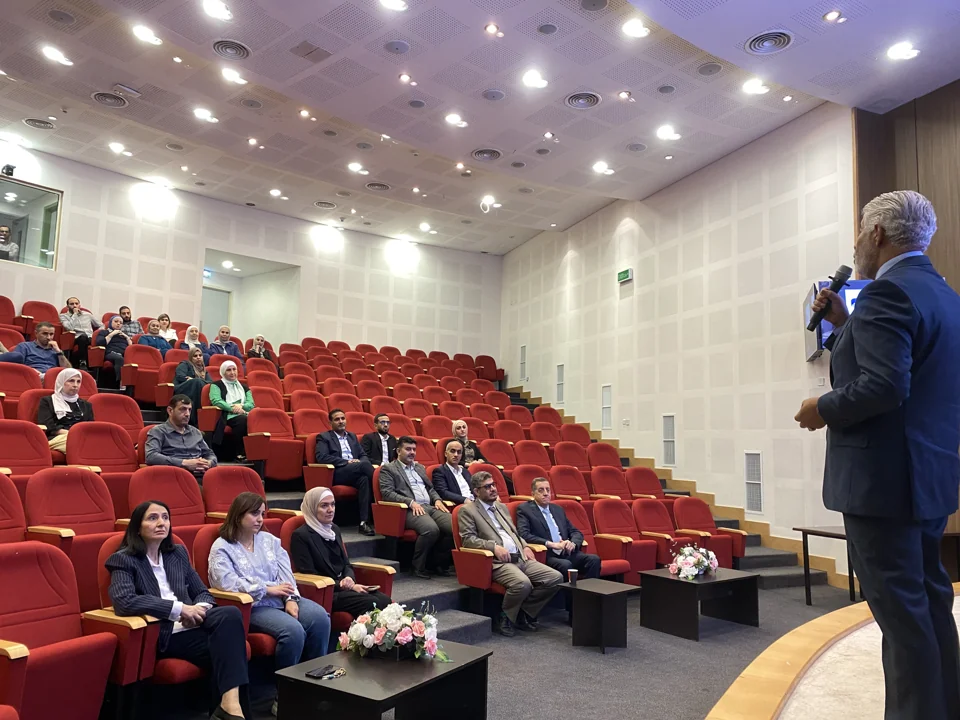
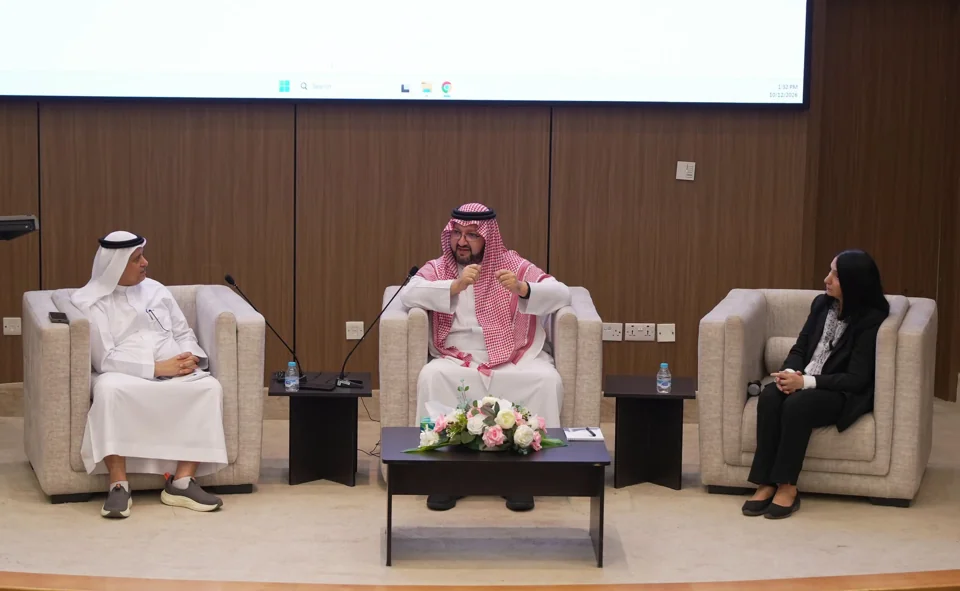
The AOUers Talk series provides another setting for exchange within the Jordan branch. A report published on 30 September 2026 describes a session featuring the dean of the Faculty of Media and Communication, who discussed experiences from media, education and academic work. The event was presented as part of an organisational culture initiative.
The series brings professional and personal experience into dialogue across the university community. Its stated range includes education, work and travel, allowing participants to hear perspectives that extend beyond their own immediate responsibilities. In the reported session, reflection on a career in media and teaching supplied the basis for that exchange. The initiative connects continuing learning with communication among academic and administrative colleagues.
Sources: AOUers Talk session ↗