Visa
About Al-Balqa Applied University
A public applied university in Jordan
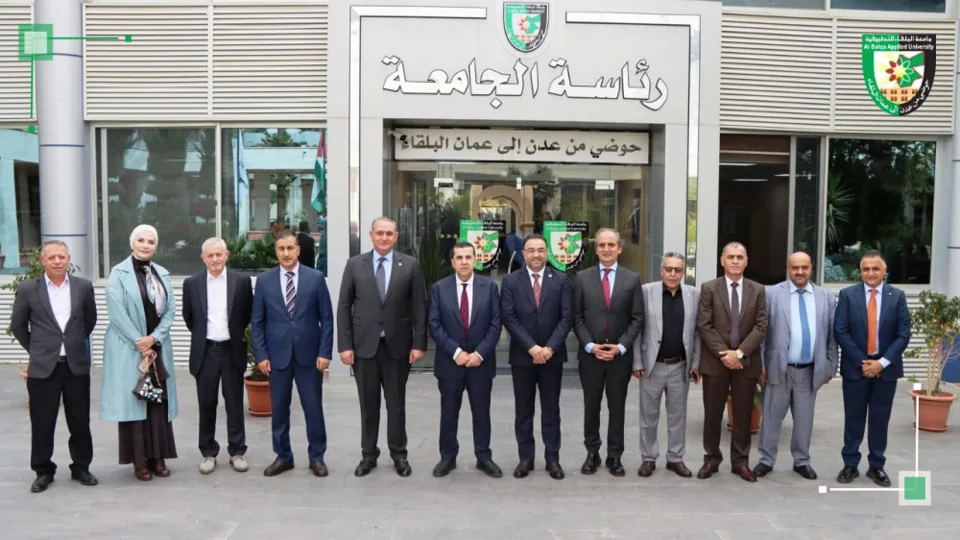
Al-Balqa Applied University is a Jordanian public university whose main campus is in the city of Salt, in Balqa Governorate. It was established by royal decree on 22 August 1996. Approval of its university law followed in March 1997, and teaching began in the 1997–1998 academic year. Its educational purpose emphasizes applied learning at university and intermediate university levels.
The institution extends beyond its Salt campus through university colleges across Jordan. Its role also includes academic, educational and technical supervision of intermediate colleges belonging to different public, private, military and other educational bodies. The university describes a semester-based credit-hour system and provision spanning intermediate university qualifications, bachelor’s study and postgraduate education. This distributed structure is central to understanding its national applied-education role.
Sources: University establishment and academic structure ↗
Applied learning and public purpose
The university’s mission brings together applied and technical education, research and development, innovation and entrepreneurship. It presents these activities as contributions to sustainable development and a knowledge-based economy. Its principles also address educational opportunity and lifelong learning, including access to applied and technological training across different age groups.
Engagement with local communities is another stated priority. The university identifies advisory participation and cooperation with organizations involved in production as ways of connecting curricula with practical needs. Academic freedom, fairness, integrity, equal opportunity, community service, partnership, teamwork and dialogue appear among its values. These commitments provide a framework for both its academic programmes and its relationships beyond the campus.
Sources: Mission, principles and values ↗
Engineering education
The Faculty of Engineering was established in 1997. Bachelor’s teaching began in 1998–1999 with materials and metallurgical engineering and surveying and geomatics engineering. Computer engineering followed in 2002–2003, while subsequent expansion included architecture, civil engineering and electrical power engineering. Its history records later departmental reorganization, including changes involving civil and electrical engineering in 2020–2021. Teaching in electrical power engineering began in the 2013–2014 academic year, marking another stage in the faculty’s expansion.
Postgraduate engineering study forms another part of this development. The faculty’s materials and metallurgical engineering master’s programme graduated its first cohort in 2004–2005, and admission to a geomatics engineering master’s programme began in 2020–2021. The faculty describes an educational approach concerned with students’ scientific and practical capabilities alongside the development of their wider abilities.
Sources: Engineering faculty ↗
Supporting scientific research
Research administration initially formed part of the College of Graduate Studies and Scientific Research following a 1999 board decision. In 2006–2007, the scientific research deanship became independent as university-supported and externally supported research activity expanded. The current unit is presented as the Deanship of Scientific Research and Innovation. The original board decision establishing the research unit was issued on 7 July 1999.
Its responsibilities include providing the Scientific Research Council with information needed to consider support for research projects. The council examines proposals and makes decisions under the university’s research instructions. This gives the deanship an organizational role in connecting researchers, research proposals and institutional funding decisions, alongside its wider support for innovation and academic development.
Water, environment and energy
The International Research Centre for Water, Environment and Energy was founded in 2009 through cooperation involving the university, UNESCO and the United Nations fund supporting the Millennium Development Goals. Its applied research interests include surface water, groundwater, treated wastewater, greywater and rainwater harvesting. Environmental studies, assessment of engineering projects, alternative energy and climate change also fall within its stated remit.
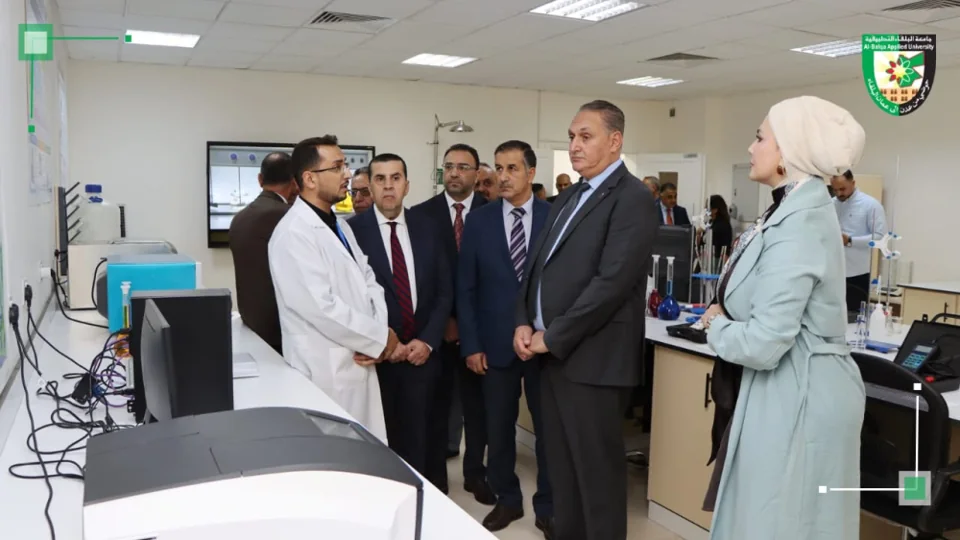
An October 2026 university report records the opening of specialist laboratories associated with the centre. These comprise chemical analysis and microbiology laboratories addressing water, environmental and agricultural applications. The report describes their role in supporting researchers, university staff and students, as well as providing testing and analytical services for relevant institutions and the local community.
Sources: International Research Centre for Water, Environment and Energy ↗ · Water, environmental and agricultural laboratory opening ↗
Student life and participation
The Student Affairs Deanship supports constructive student activities and helps students address difficulties they encounter. It acts as a link between the student body and the university’s colleges, with activity plans prepared on a semester and annual basis. Cultural, social, artistic and sporting activities are included in its educational work.
Its stated approach encourages confidence, teamwork, dialogue and acceptance of others. Student publications are another part of its role: the deanship identifies the Minbar Al-Balqa newspaper, a student guide and the Fursan Al-Balqa university yearbook among its publications. These activities extend learning beyond academic classes into communication, participation and the development of students’ abilities.
Sources: Student Affairs Deanship ↗
Community engagement and entrepreneurship
The Development and Local Community Service Unit describes itself as a connection between the university and different parts of society. Its work links the institution with public and private organizations, companies and civil society bodies. It aims to translate community needs into initiatives and programmes, with attention to human development and the local environment.
The Innovation, Creativity and Entrepreneurship Centre complements this outward-facing work by supporting students, academic and administrative staff, and the local community. Its introduction emphasizes an environment that encourages innovative thinking and entrepreneurial concepts. It also identifies support for creating and implementing entrepreneurial projects and developing a spirit of initiative. Together, these units connect university expertise, individual ideas and community participation within the institution’s applied educational mission.
Sources: Development and Local Community Service Unit ↗ · Innovation, Creativity and Entrepreneurship Centre ↗