Visa


About Al-Hussein Bin Talal University
A public university in southern Jordan
Al-Hussein Bin Talal University is a public university in Ma'an, Jordan, established in 1999 during the opening year of King Abdullah II's reign. Its name honours King Hussein bin Talal. The university describes national development as a central purpose of its work, connecting scientific education with economic and social needs. Its regional role is particularly important to its educational philosophy: the institution identifies mining and mineral industries around Ma'an, archaeology and tourism around Petra, and computing as fields through which it can respond to southern Jordan's circumstances. These are stated priorities for developing teaching and academic programmes. They place the university within a particular regional setting, while its broader mission also includes contributing to Jordanian culture and society.
Engineering rooted in the region
Engineering teaching developed through a college established in 2003 under the name College of Mining and Environmental Engineering. It adopted the broader College of Engineering name in 2009. An October 2026 introduction lists disciplines ranging from mining and metallurgy to environmental, chemical, civil, computer, communications, electrical and mechanical engineering. Its postgraduate fields include computer and network engineering, renewable energy engineering, health, safety and environmental engineering, and sustainable engineering project management. The college also describes laboratories and workshops as part of its practical teaching environment. Its academic agenda includes research, consultation, training and scientific conferences, connecting engineering education with industrial and community questions. Continuing curriculum development is presented as an ongoing task, reflecting the changing technical subjects addressed within its programmes.
Tourism, archaeology and hospitality
Petra College of Tourism and Archaeology has a history closely connected with Wadi Musa and the archaeological landscape of Petra. The college's historical account records its establishment by a Higher Education Council decision in January 2004 and the beginning of teaching and research in the 2005–2006 academic year. Its facilities were developed in Wadi Musa, with design and materials chosen in relation to the heritage setting. The account, published in 2018, describes archaeology and tourism guidance alongside hotel administration, tourism administration and food and beverage management within its academic scope. This history shows how the university developed a specialised college around the interaction between archaeological heritage and tourism services, rather than treating those subjects as unrelated areas of study.
Sources: Petra College Historical Overview ↗
Computing and professional practice
The College of Information Technology brings together computer science, software engineering and computer information systems. Its introduction describes an academic community supported by specialist teaching staff and university-sponsored postgraduate study for developing academic expertise. The college also emphasises maintaining relationships with public and private organisations in Jordan through student training. This gives its educational approach a practical dimension alongside disciplinary study. Its teaching environment includes laboratories with internet access, and the college encourages students to use these resources while taking responsibility for their studies and shared facilities. The subjects represented in its three departments span computing foundations, software development and organisational information systems. The college's stated ambition is to develop students' knowledge and practical capabilities through this combination of academic teaching and external engagement.
Sources: Information Technology College ↗
Library spaces and information services
The university library was established in 1999 and received the Prince Hussein Bin Abdullah name through royal approval during the first semester of 2004–2005. A library introduction updated in October 2024 describes its building as designed with references to Islamic architecture and positioned among the university's other buildings. That account identifies separate areas for Arabic and foreign-language books and periodicals, together with circulation desks and catalogue-search computers. Behind these reader-facing services are functions for acquisitions, classification and cataloguing, lending, references and periodicals, and databases. The library's organisation therefore encompasses both physical reading materials and information systems. Its website also provides routes to the electronic catalogue, databases and university theses, extending the available points of access beyond the reading rooms.
Research into Jordanian and Nabataean heritage
The Anbat Centre for Archaeological Studies was created in 2004 as a research arm of Petra College. Its remit covers Jordanian cultural heritage generally, with particular attention to Nabataean civilisation. The centre's account describes research, field studies, conservation, restoration, tourism and heritage-resource management among its areas of interest. It serves college students and researchers from Jordan and abroad, and identifies cooperation with institutions sharing these interests as an important objective. Its historical project record includes the South Eastern Badia Archaeological Project, undertaken with French partners, and archaeological survey and excavation work in other parts of Jordan. Seminars, cultural lectures, specialist training and publication of research also form part of its stated programme for making archaeological knowledge available beyond individual field projects.
Entrepreneurship through training and teamwork
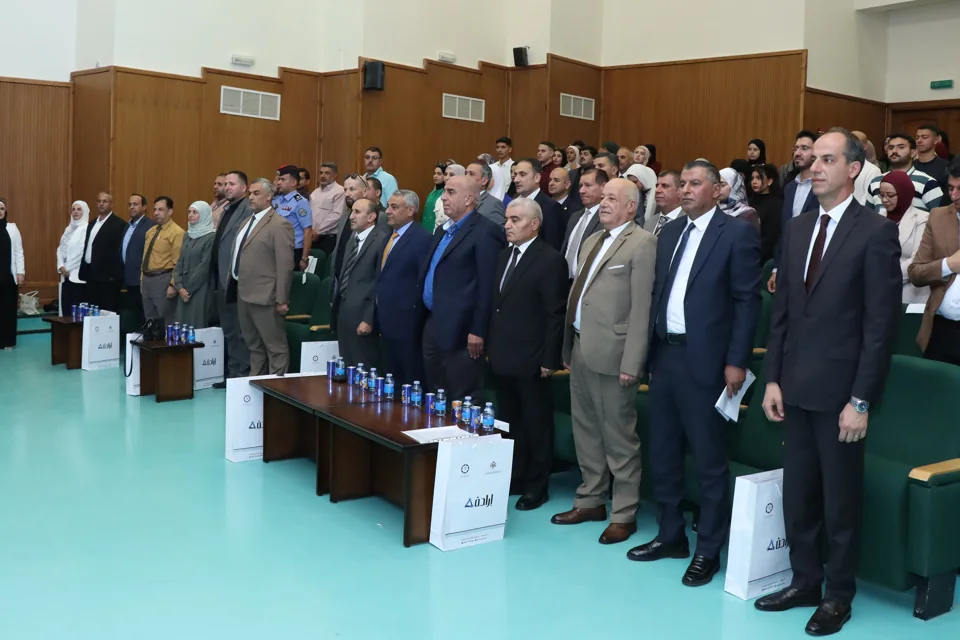
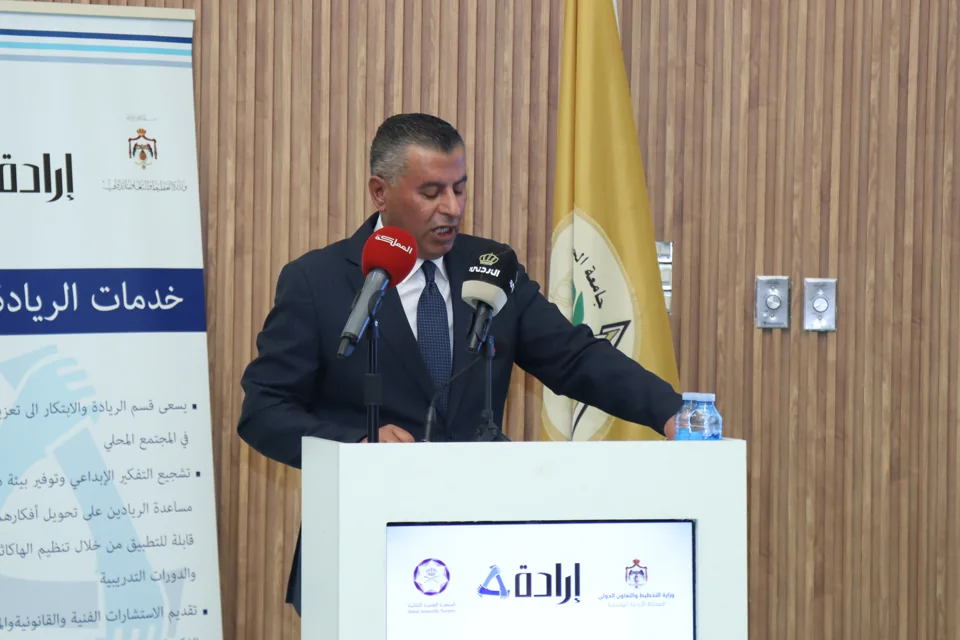
A university report published on 21 October 2026 documents the conclusion of the Ma'an entrepreneurship hackathon, organised with the Irada programme and national partners. Participants progressed through selection, training and a final presentation stage. Five days of workshops addressed idea development, business models and project-presentation skills before finalists presented to a judging committee. The closing ceremony recognised winning teams and included an account of the OrganicG company's development. The university's entrepreneurship and innovation centre helped organise the activity. Its leaders described mentoring, teamwork and continued development of ideas as priorities beyond the competition itself. The event provides a dated example of the university working with outside organisations on practical learning activities linked to questions of local development.
Sources: Ma’an Entrepreneurship Hackathon — October 2026 ↗