Visa

About Ajloun National University
A university in northern Jordan
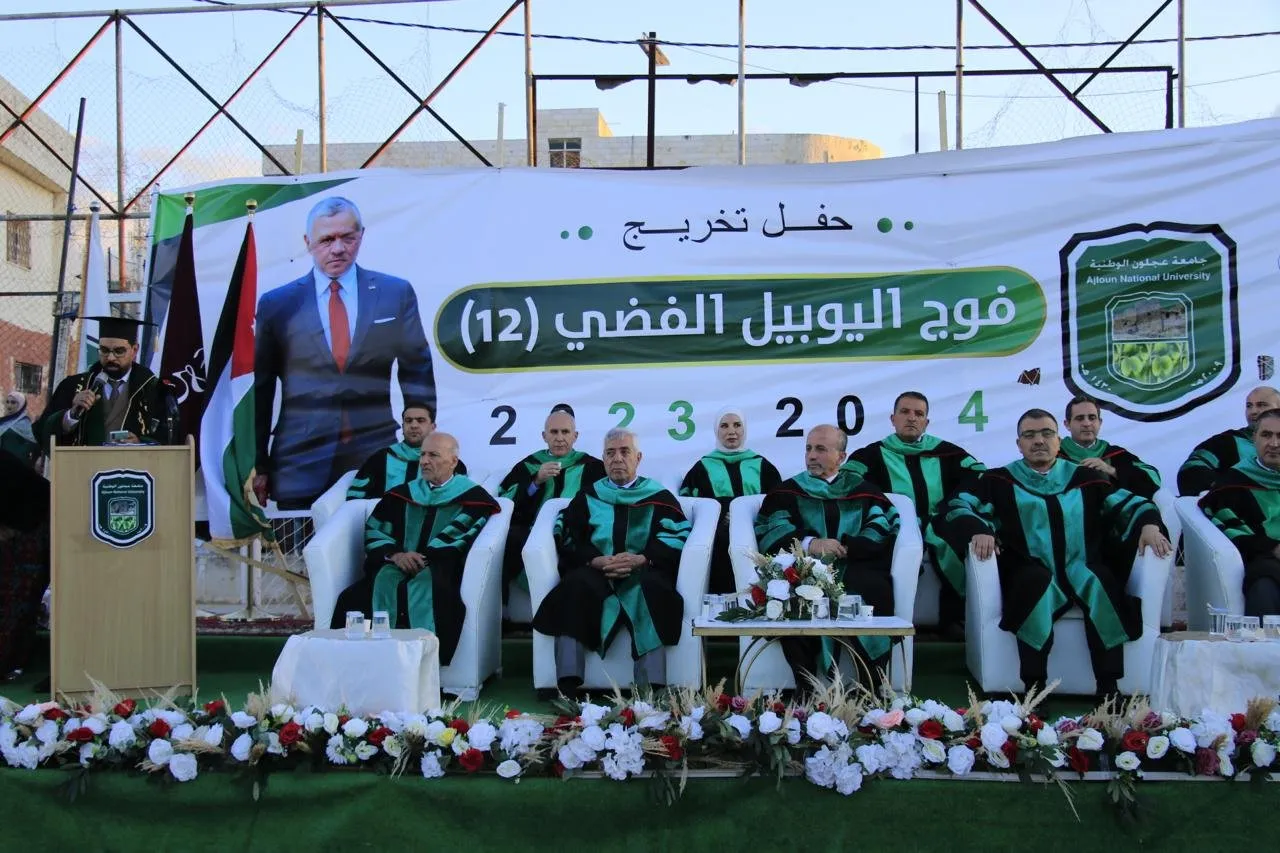
Ajloun National University is located in Ajloun Governorate in northern Jordan. Its official establishment account records licensing on 5 January 2008, while its Faculty of Arts and library histories describe the beginning of their activities in 2009. These dates mark different stages in the university's development. The university places teaching, research and community engagement at the centre of its mission. It describes participation in academic and literary conferences, extracurricular activities and interaction with local institutions as parts of that work. Its setting in Ajloun also shapes its outlook: the establishment account discusses the region's historical heritage and the university's interest in tourism, investment awareness and cooperation with local authorities.
The development of arts and humanities
The Faculty of Arts traces its beginnings to the 2009/2010 academic year, when it operated as the Faculty of Arts and Educational Sciences. Its first programmes were Arabic Language and Literature and Special Education. Psychological Counseling followed in 2010, and English Language and Literature in 2011. The university later separated educational sciences into an independent faculty.
The arts faculty's published history also records the establishment of University Requirements and Basic Sciences in 2014, the introduction of History in 2020/2021 and the launch of a master's programme in Arabic Language and Literature in 2022/2023. Its present departmental description brings together Arabic, English, history and university requirements. Conferences and cultural events are among the activities through which the faculty connects language and humanities teaching with a wider intellectual community.
Sources: Faculty of Arts history ↗
Information technology and practical study
The Faculty of Information Technology dates its establishment to the 2010/2011 academic year. Its official presentation identifies computer science, software engineering, cybersecurity and cloud computing among its fields, while its departmental navigation also includes data science and artificial intelligence. Practical learning and periodic academic programme review are recurring elements in the faculty's description of its work.
The faculty provides a detailed set of resources for field training and graduation projects. These include training plans, attendance records, supervisor visit forms and evaluation forms. Graduation project materials cover report preparation, project meetings and assessment criteria. This documentation gives students a framework for recording supervised work and presenting project results. The faculty also identifies student clubs, alumni communication and community responsibility as areas of its educational activity.
Sources: Faculty of Information Technology ↗
The library and access to information
The university library reports that it was established in 2009. It serves teaching and research through printed and electronic information resources for students, academic staff and administrative employees. Its collections include Arabic and English material, with books and periodicals complemented by access to the EBSCO database. The library uses the Library of Congress classification system to organise its holdings.
Reader services include reference guidance, borrowing, reservations, photocopying and printing. The library also describes introducing researchers to its collections and helping users search for material. Faculty members can suggest acquisitions, linking collection development with academic needs. Its published instructions distinguish material available for ordinary borrowing from references, current periodicals and special collections retained for use within the library. Computer facilities support electronic information searching.
Sources: University library ↗
Support for digital learning
Ajloun National University describes selecting an environment for blended and distance learning in 2018. It subsequently established an E-Learning Center during the 2020/2021 academic year, in the context of the COVID-19 pandemic and the expansion of remote teaching. The centre manages educational platforms, electronic examinations and digital educational content.
Its responsibilities extend to training faculty members, supplying educational materials and providing technical support to both teachers and students. The centre's website provides separate guidance for these two user groups, alongside instructional videos and resources concerning electronic learning. Its stated objectives combine the administration of systems with the development of users' knowledge and skills. In this arrangement, digital learning support operates as a university service shared across academic subjects.
Sources: E-Learning Center ↗
Water and environmental research
The Water and Environment Research Center was established in 2022. Its institutional description connects its work with climate change, limited resources, ecosystem protection and emergency planning for water and environmental services. The centre's proposed activities include training, workshops, consultation and collaboration with organisations working in related sectors.
Water resource management, waste management and the use of smart systems feature in its research agenda. It also seeks to connect environmental work with agriculture, tourism and environmental economics. Community awareness and capacity building are central stated purposes, alongside the development of research information and partnerships. The centre describes dialogue with partners, committees and joint research projects as mechanisms for identifying challenges and bringing together expertise. These priorities give environmental research a practical regional focus.
Graduate study and research organisation
The Deanship of Scientific Research and Graduate Studies coordinates the university's research activity and the affairs of postgraduate students. Its official account identifies master's programmes in Islamic Law, Islamic Banking, Business Administration and Accounting, alongside continuing work on the development of graduate provision. It gives priority to research connected with development plans and community problems.
Two councils form part of this organisation: the Scientific Research Council and the Graduate Studies Council, both chaired by the dean. The deanship's online resources include research forms, master's study forms and guidance for preparing academic theses. Its stated mission concerns support for projects with defined objectives and a relationship to sustainable development. This administrative structure connects postgraduate academic work with the wider organisation and support of research at the university.
Sources: Scientific Research and Graduate Studies ↗
Student activities and community participation
The Deanship of Student Affairs supports students' adjustment to university life and the development of their interests beyond formal coursework. Its stated objectives include programmes for leadership and creativity, voluntary initiatives, community service and assistance with problems encountered within the university. The deanship describes activities and gatherings as ways to cultivate students' talents and participation.
Its website identifies a Career Guidance and Graduate Affairs Office and provides student club regulations. Graduate follow-up, guidance, training courses and workshops appear among its listed responsibilities. The deanship also places partnership with the surrounding community within its mission. This combination of student support, organised activities and graduate contact gives the university an administrative home for experiences that sit alongside academic departments and classroom teaching.
Sources: Student Affairs ↗