Visa

About Al-Ahliyya Amman University
Identity and educational history
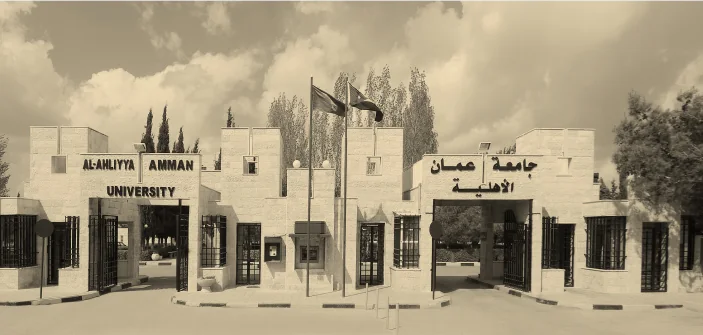
Al-Ahliyya Amman University is a private university in Jordan, with academic services dating from 1990. Its campus is on the Amman–Al Salt Road. The university’s establishment followed a Ministry of Higher Education and Scientific Research decree issued in 1989. It opened in 1990 with law, arts and sciences, and administrative and financial sciences as its initial faculties. Its later development extended into engineering, information technology, health-related disciplines and other fields.
The Faculty of Information Technology was established in 2001, while postgraduate law study began in 2005. This progression reflects the institution’s expansion from its original academic base into professional, technological and graduate education. Today, its stated approach includes information technology and e-learning within teaching and institutional activities.
Sources: University introduction and history ↗ · Hourani E-Learning Center ↗
Academic breadth and specialisation
The university’s academic catalogue brings together humanities, languages, business, law, engineering, computing, design, health sciences and other professional subjects. Information technology programmes include computer science, software engineering, networks and cybersecurity, and data science and artificial intelligence. The engineering offering includes communications and computer engineering, medical engineering, civil engineering, electrical engineering, robotics and artificial intelligence engineering, and electric vehicles engineering.
The Faculty of Arts and Sciences lists English language and literature, English language and translation, Chinese and English, German and English, and applied English. Design programmes include digital architecture, digital interior design, digital media and graphic design, and digital game design and development. Postgraduate study spans different academic units, with examples including cybersecurity, interior design, law, structural engineering and project management, and biomedical engineering. The range provides routes into both specialised professional study and further academic investigation.
Sources: Academic faculties and programmes ↗
Research organisation
The Deanship of Scientific Research oversees basic and applied research at the university. Established in 2005, it became separate from Graduate Studies in the 2018/19 academic year. The research structure includes the Pharmacological and Diagnostic Research Center, located within the Faculty of Pharmacy and established in late 2019. Its remit concerns pharmacological and diagnostic investigation, including drug discovery and evaluation.
Another component is the Hourani Center for Applied Scientific Research, which supports scholarly work, intellectual innovation and multidisciplinary research funding. The university also provides access to Al-Balqa Journal for Research and Studies. Its research pages connect organised institutional support with the publication and dissemination of academic work, rather than treating research solely as an individual classroom activity.
Sources: Research deanship and centres ↗
Digital learning and innovation
The Hourani E-Learning Center supports the technology and content used in teaching. Its services include multimedia and design, software and web tools, learning management systems, interactive educational materials, electronic examinations and synchronous online lectures. These functions support courses delivered through blended or fully online approaches. The centre also assists with electronic portals, archiving and the administration of educational systems.
The Center for Innovation and Entrepreneurship provides a complementary setting for developing ideas. Its services include a business incubator, an intellectual property and technology transfer department, and an education and capacity-building department. The centre describes training, mentoring and opportunities for students to participate in competitions and develop projects. Its work connects entrepreneurial learning with experimentation, collaboration and the practical development of ideas within the university community.
Sources: Hourani E-Learning Center ↗ · Center for Innovation and Entrepreneurship ↗
Campus facilities and student life
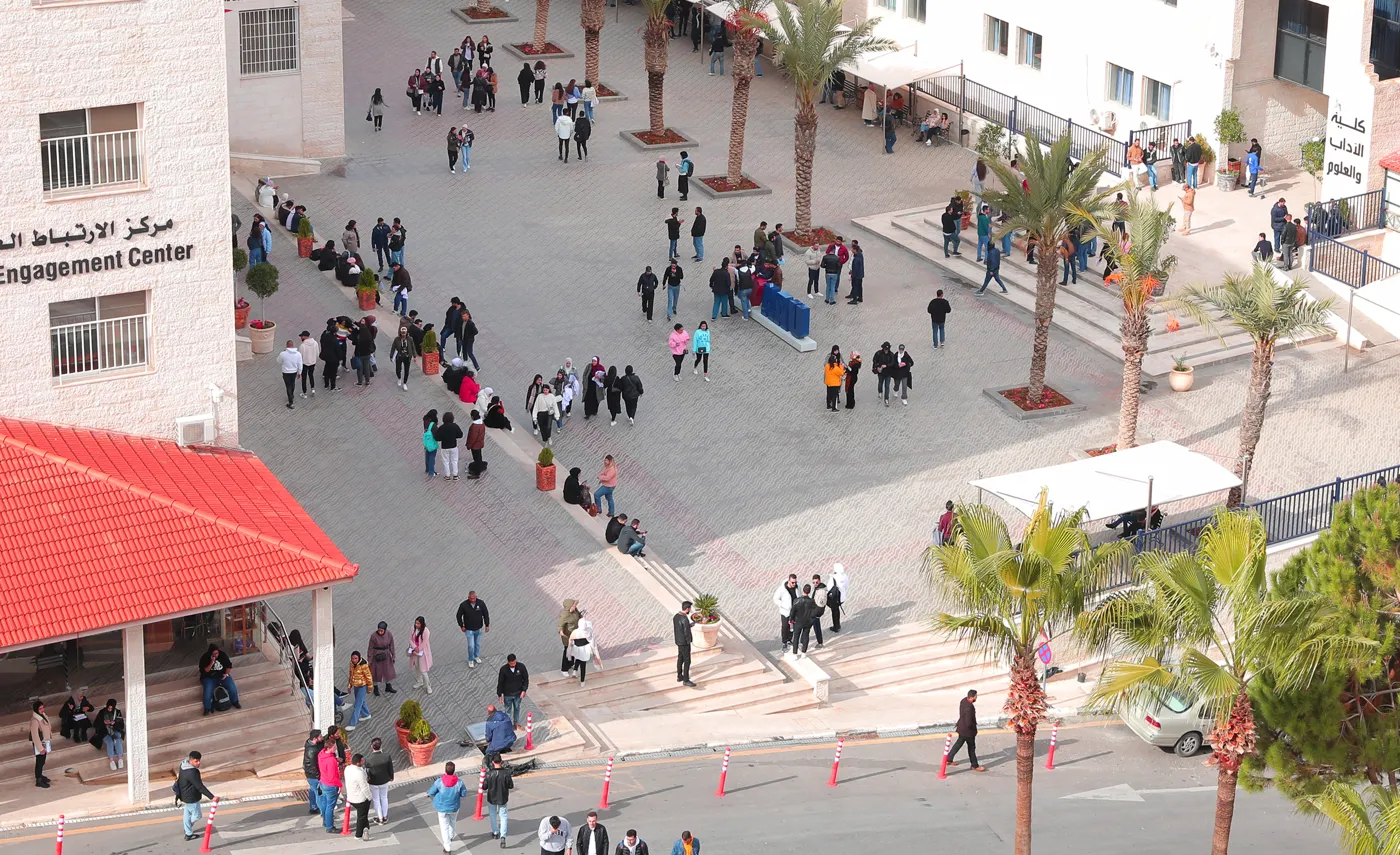
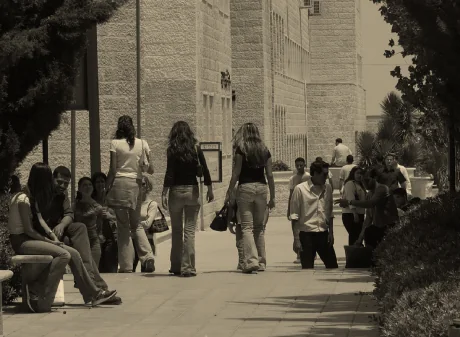
Campus services include dining facilities, bookshops, transportation, parking and student accommodation. Bookshops are associated with the faculties and provide reference sources and course textbooks. The accommodation information describes access to university services, wireless internet and the Arena sports facilities. Student gathering spaces are distributed across the campus for interaction, extracurricular activities and community events.
The Deanship of Student Affairs developed from a department established in 1990 and adopted its deanship title in the 1993/94 academic year. Its work includes programmes and activities intended to help students discover their talents and personal skills. The campus-life framework also includes sports, cultural and social activities, alongside academic services such as the library and computer support.
Sources: Campus life and student facilities ↗
Access and learning support
The university’s accessibility policy addresses participation in learning, work and campus life. It describes physical access measures such as designated parking, wheelchair access points, lifts and adapted toilets. Learning support includes assistive technology, classroom assistants or note-takers, trained student groups and sign-language interpreters. Academic departments consider adjustments to teaching, delivery and assessment while retaining the essential requirements of courses.
The Hearing and Speech Center and the Counseling and Special Education Center are identified within this support framework. Published accommodation information also describes adapted rooms and facilities for students with disabilities or health-related needs. Students can discuss individual requirements with the relevant learning-support staff, linking the policy’s general commitments with arrangements for particular learners.
Sources: Access and learning support ↗
Career guidance and alumni links
The Career Guidance and Alumni Office supports professional skills and communication between students, graduates and organisations outside the university. Its listed services include career guidance, training courses, alumni follow-up and a career day. The office’s objectives address communication skills, work values and connections with private-sector activities and civil society institutions.
It also acts as a link between university students and programmes associated with the King Abdullah II Fund for Development. The office’s emphasis on training and personal competencies complements subject teaching by giving students opportunities to consider professional environments and maintain contact with the university after graduation. These activities place career development within the institution’s wider student-support structure.
Sources: Career Guidance and Alumni Office ↗