Visa
About Applied Science Private University
A private university in Amman
Applied Science Private University is a Jordanian university in the Shafa Badran area of Amman. Its institutional history distinguishes approval for establishment in 1989 from the arrival of its first students in October 1991. The initial teaching provision involved arts and humanities, basic sciences and economics. The university operates under the Arab International Company for Education and Investment.
Its academic provision now spans humanities, law, business, science and a range of professional disciplines. The institutional introduction identifies information technology, engineering and technology, arts and design, pharmacy, nursing, dentistry, allied medical sciences, and Sharia and Islamic studies among its fields. It describes teaching that connects theoretical knowledge with practical training. Laboratories, training studios and classrooms support that approach, while the research and student affairs deanships provide academic and student support beyond individual faculties.
Sources: ASU in brief ↗
Student support and campus participation
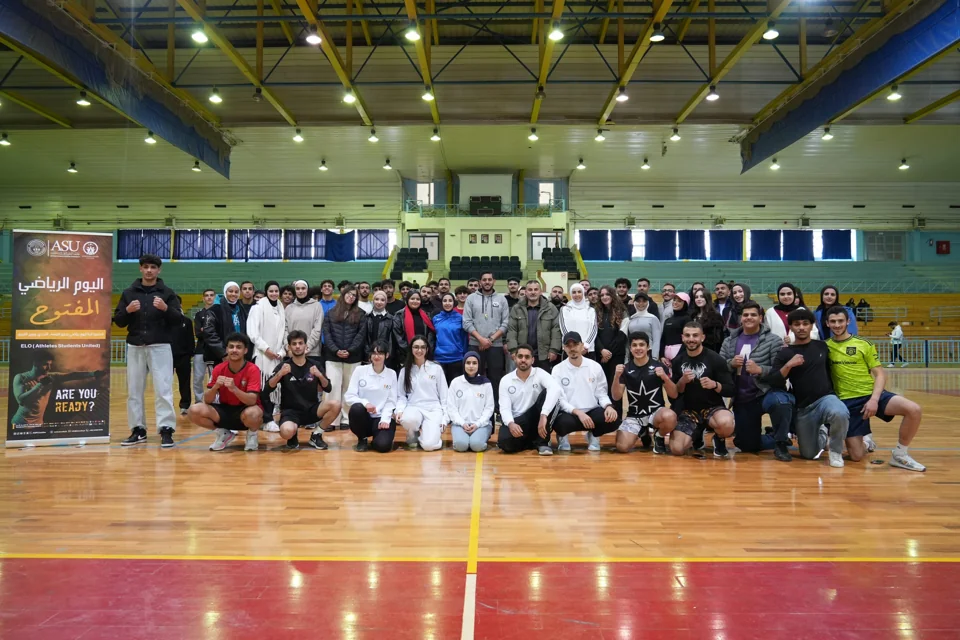
The Deanship of Student Affairs coordinates services and extracurricular participation across the university. Its published description addresses students’ intellectual, cultural, social and physical development, connecting university life with opportunities to contribute to the surrounding community. It works with faculties and other departments to provide advice and guidance.
The deanship’s organisational structure includes cultural and sports activities, international student affairs, psychological and social counselling, student clubs, and career guidance and alumni follow-up. These services provide several routes for students to seek support or take part in activities outside their subject courses. The dean’s office also oversees student matters and the publication of the student guide. That guide brings together information about degree requirements, university rules, disciplinary procedures and student union bylaws.
Sources: Student Affairs ↗
Library resources and study spaces
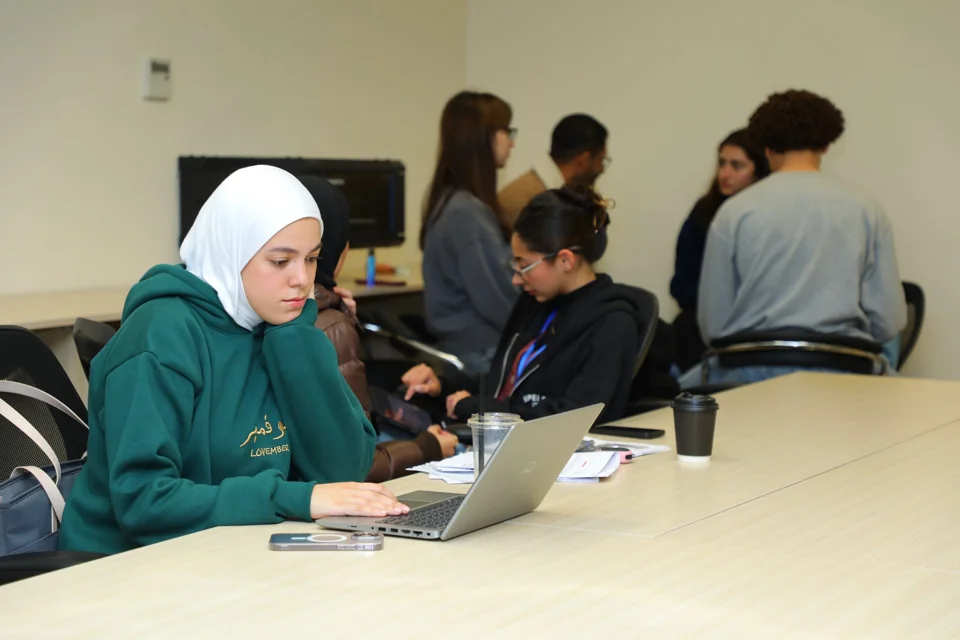
The university library dates its establishment to 1991. Its account describes an early period in the university’s liaison centre, where staff began acquiring books and arranging access to databases before its first campus building was completed. Over time, successive computer systems supported the organisation and retrieval of its materials.
The library occupies Building 8 and brings together books, periodicals, technical sections and reading rooms. Its collections include Arabic and other-language materials supporting the university’s taught subjects. The published service directory includes material and database enquiries, electronic resources, borrowing instructions, guidance videos and information about new arrivals. Group study room booking and library visit requests add further ways to use the facilities. A borrowing application for the local community also connects the library with readers beyond the university.
Sources: University library ↗
Research organisation and publication
The Deanship of Scientific Research and Graduate Studies was established by a Board of Trustees decision in January 1998. It coordinates institutional support for research and postgraduate work, with a stated mission covering studies, academic writing and translation as well as research activity. Its responsibilities include arrangements for faculty promotion and sabbatical leave.
The deanship describes support for faculty participation in conferences and for collaborative research with academic institutions outside the university. It also oversees publication of the Jordanian Journal of Applied Sciences in humanities and natural sciences series. These journals provide a channel for contributions from researchers within and beyond the institution. The combination of publication, researcher support and graduate study gives the deanship a role across several stages of academic work, from developing projects to communicating their findings.
Postgraduate subject areas
The graduate studies directory shows a portfolio extending across business, computing, engineering, design, language and health-related disciplines. Listed subjects include sustainability, energy and environmental engineering; finance and risk management; digital business administration; digital marketing; accounting; and computer science. Other entries concern chemistry, interior design, digital media technology, and audiovisual and mass media translation.
The same directory provides links to the Council of Graduate Studies and instructions governing master’s degrees and higher diplomas. Thesis preparation has its own guidebook, alongside resources concerning research derived from theses, published thesis research and thesis titles. These materials place the subject list within an administrative and research framework, connecting postgraduate study with formal academic procedures and the preparation of written research.
Sources: Graduate study directory ↗
Institutional priorities
The university’s strategy identifies teaching and learning, applied scientific research, sustainable development and community service as central priorities. Its mission places creativity, entrepreneurship and continuing development within education, research, human resources and the wider university environment. These statements describe the institution’s intended direction.
Its published values include teamwork, integrity, transparency, social responsibility, equality and diversity, alongside governance and institutional working practices. Strategic objectives address the development of a technology-supported academic environment, academic programmes, research and community service. National and international partnerships also form part of the plan. Together, these priorities connect work inside faculties with the university’s relationships beyond campus, rather than limiting institutional development to classroom provision alone.
Sources: Institutional strategy ↗
Cultural exchange in practice
An official report dated 2 June 2026 describes a visit by representatives of the Chinese Cultural Center in Amman and China’s cultural attaché in Jordan. The meeting explored possibilities for academic and cultural cooperation, with university representatives from international relations, arts and humanities, language teaching and digital media taking part.
The visitors toured university facilities and attended the International Communities Exhibition, including its Chinese booth. They met students studying Chinese and English and saw creative work and cultural activities. This event provides a specific example of language study connecting with wider cultural participation on campus.
Sources: Chinese Cultural Center visit ↗