Visa

About Aomori Akenohoshi Junior College
Aomori college and its final student cohorts
Aomori Akenohoshi Junior College is a Catholic educational institution in Aomori Prefecture, Japan. Its president’s message places communication and the confidence to take initiative among the qualities the college seeks to develop. Its educational work has included childcare, care welfare and business, with an emphasis on contributing to the surrounding region.
The college stopped recruiting students from the 2026 academic year. A notice issued on 21 March 2025 explains that the governing board made the decision on 27 December 2024, with the 2025 intake designated as the last. The notice commits to maintaining education and career support until all enrolled students graduate. The president’s message states that closure will follow their graduation. The programmes and campus arrangements described below therefore represent the college’s published educational provision during this transition.
Sources: President’s message and transition arrangements ↗ · Recruitment-stop notice, 21 March 2025 ↗
Development of the institution
The college’s history records its opening in 1963 with English and music departments and an affiliated music-education research institute. Childcare and advanced English and music study were added in 1965, followed by an affiliated kindergarten in 1971. These early developments established an association between language, music and education that continued through later changes in the curriculum.
The institutional timeline records a lifelong-learning centre in 1999 and an international-exchange centre in 2000. A care-welfare department was introduced in 2007. In 2014, childcare and care welfare were brought within the Department of Children, Welfare and Future, and the care-welfare major was renamed Community Welfare in 2017. The college established an agreement with Mutsu City in 2019 and opened its Shimokita campus in 2020. It marked its sixtieth anniversary in 2023.
Sources: College history ↗
Childcare education and practical learning
The childcare major’s published introduction describes a two-year curriculum organised around practical experience and opportunities to work with children. It combines specialist knowledge with activities such as piano and other skills used in early-childhood education. Small-group teaching and the use of information and communication technology form part of the approach presented by the college.
Community activity is another element of the programme. A project promoting the appeal of childcare gives students opportunities to interact with children and parents beyond their placements. The intended learning outcomes include understanding children’s characteristics, developing professional ethics, and acquiring the expressive skills and sensitivity needed for childcare practice. Cooperation and interpersonal relationships are also identified as learning goals. The programme connects preparation for work with children with an understanding of families, parenting support and the wider social setting of early-childhood education.
Sources: Childcare major: published educational approach ↗

Care welfare within community education
The care-welfare course combines classroom study, practical exercises and placements. Its published curriculum description includes physical care, dementia care, infection prevention, nutrition management and responses to disasters. These are presented as areas of professional learning, connecting practical competence with the ability to think through the reasons for care-related decisions.
The course also describes preparation for the national care-worker examination through practice tests, review sessions and individual teaching support. Its broader educational objectives include understanding different professional roles and working collaboratively. Additional study areas listed by the college range from communication and information processing to recreation, music-related learning and welfare-oriented housing environments. Together, these subjects show how the course situates care within everyday life and community participation. Practical experience is intended to connect taught material with situations encountered beyond the classroom.
Business skills and professional communication
The career-business course, also presented within Community Welfare, focuses on bookkeeping, information processing, English and professional communication. Its description combines conventional teaching with recorded bookkeeping lessons that students can revisit on a computer or smartphone. Business etiquette is taught through exercises as well as lectures, including everyday professional conduct and exchanges of business cards.
The published learning outcomes include using accounting information, gathering and evaluating information, understanding other cultures and communicating effectively. Internships and community activities are intended to help students understand the social role of their chosen work. Presentation skills and practical business administration also appear among the course’s areas of study. This gives the programme a combination of technical and interpersonal learning, with classroom knowledge connected to professional situations and engagement with the regional community.
Sharing expertise through community lectures
The college’s 2026 outreach-lecture programme provides a current example of its wider educational activity. The published menu is directed towards audiences including school pupils, childcare practitioners, welfare workers and members of the public. It brings together staff expertise from childcare and community welfare rather than offering a single general-interest subject.
Topics include child poverty, young carers, community spaces for children, volunteering, professional manners, writing and presentations. Music-related sessions address piano and songs used in childcare, while other offerings introduce recreation and regional engagement. Some sessions are designed for particular groups, such as practitioners considering support for parents or secondary-school students exploring childcare work. The programme is coordinated through the lifelong-learning centre. Its range illustrates how the college shares teaching expertise with people beyond its enrolled student body.
The Shimokita campus model
The Shimokita campus is listed at 6-1 Shimokitacho in Mutsu City, while the Aomori campus address is 2-6-32 Namiuchi, Aomori. The college’s Shimokita presentation describes a combination of distance teaching and face-to-face study, intended to let students from the Shimokita area retain a base closer to home.
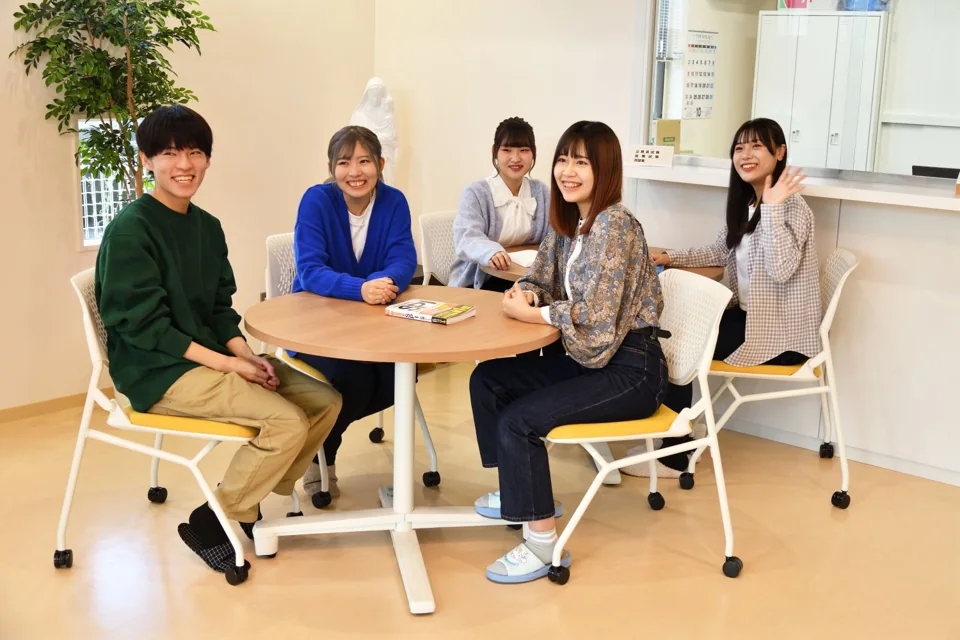
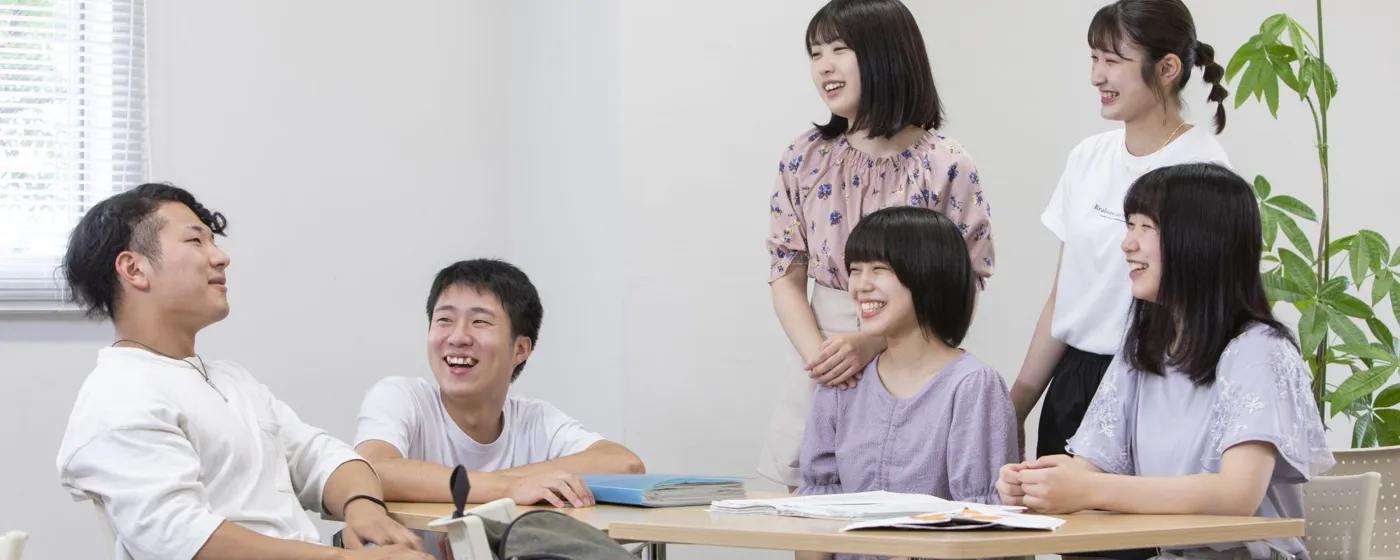
Under the published model, large monitors share teaching materials, sound and the instructor’s image from Aomori. Face-to-face days involve travel to the Aomori campus, particularly for practical classes. The page distinguishes childcare and career-business provision associated with Shimokita from care-welfare study based at Aomori. Its photographs show classroom and common-area settings, providing a view of the learning environment presented for the campus.
Sources: Shimokita campus educational model and photographs ↗