Visa
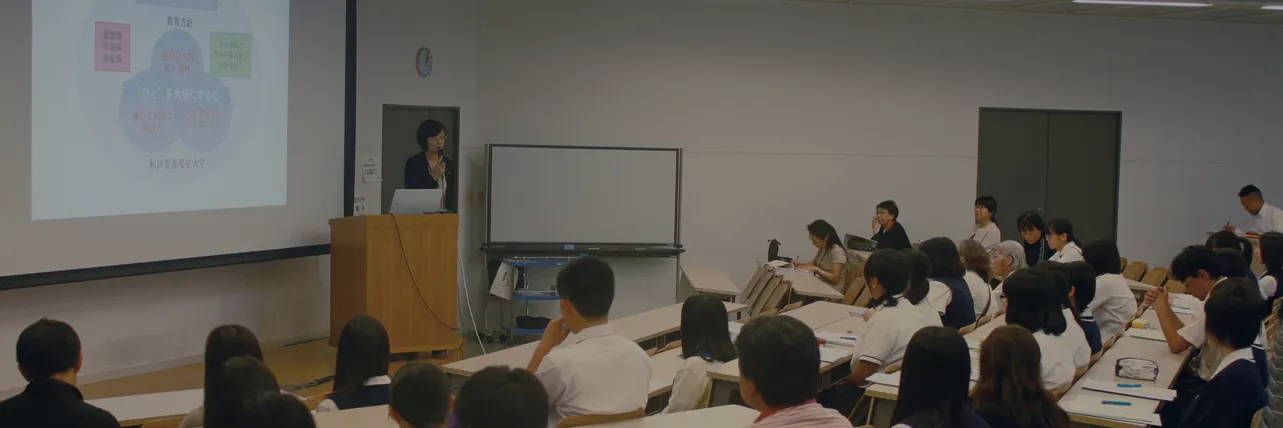

About Akita University of Nursing and Welfare
A health and welfare university in Odate
Akita University of Nursing and Welfare is a higher-education institution in Odate, Akita Prefecture, Japan. Its main address is 2-3-4 Shimizu, Odate. The university opened on 1 April 2005 under the educational corporation now known as North Asia University, with departments in nursing and social welfare.
Its institutional history begins earlier with Akita Keijo Junior College, which opened in Odate in 1996 with departments concerned with community sociology, nursing and human welfare. Following the university’s opening, the Social Welfare Department was renamed Welfare in 2009 and Medical Welfare in 2020. A separate Akita City campus opened in 2017 within North Asia University’s grounds. These developments explain the institution’s current combination of nursing and welfare education and its presence in more than one city within Akita Prefecture.
Sources: University overview and history ↗
Educational principles
The university’s founding principles bring together truth, harmony and practical learning. Its account of the educational corporation’s origins connects higher education with the preparation of people able to serve regional communities and contribute to economic and cultural development.
Within the Faculty of Nursing and Welfare, broad general education is linked with specialised study in health, medicine and welfare. The stated aim is to combine humanity and intellectual development with professional knowledge and practical skills. Nursing education emphasises respect for life, understanding the assistance people seek and continuing improvement. Medical welfare education places social welfare at the meeting point of knowledge and practice, encouraging students to investigate problems and propose constructive responses. These principles make community participation and thoughtful professional action central to the university’s educational identity.
Nursing study and progression
The nursing curriculum combines knowledge of the human body and illness with nursing theory, communication, ethics and practical education. The published 2025 curriculum materials identify subjects including anatomy and physiology, nutrition, pharmacology, infection and immunity, foundational nursing techniques and early experiential practice.
The later subject range covers paediatric, maternal, adult, older-person, mental-health, community and home nursing. Public health, epidemiology, health statistics, family nursing, research methods and nursing management also appear. Clinical practice is described across different groups and settings, linking theoretical study with experience.
Curriculum maps show relationships between subjects and the university’s educational objectives, while curriculum trees illustrate subject connections and learning sequence. Course numbering identifies levels and stages. These tools help students understand how individual classes contribute to an overall programme and support planning across the four years represented in the published subject lists.
Sources: Nursing curriculum and syllabuses ↗
Medical welfare education
The Medical Welfare Department combines specialist social-welfare learning with general education and practical experience. Its 2025 curriculum includes the foundations of social work, communication techniques, assistance with everyday living, welfare for older people and people with disabilities, social research and social security.
Further subjects concern poverty, community welfare, children and families, dementia care, welfare management, mental health, advocacy and adult guardianship. Seminars and practice-related subjects connect this theoretical range with professional settings. The page identifies social-work, mental-health-welfare and care-practice components, alongside curriculum models for Odate and the Akita City campus.
General education overlaps with the nursing curriculum in areas such as psychology, sociology, law, languages, information literacy, human relationships and interdisciplinary cooperation. This structure gives welfare students both a professional field of study and opportunities to consider its wider social, organisational and cultural context.
Rooms for practical learning
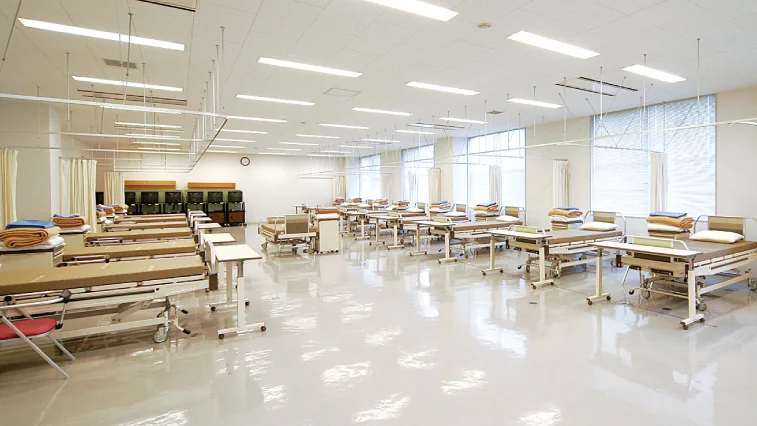
The Nursing Department’s facilities include a foundational nursing practice room, a paediatric and maternal nursing practice room, and an adult and community nursing practice room. The official facilities page illustrates both the rooms and examples of teaching activities associated with them.
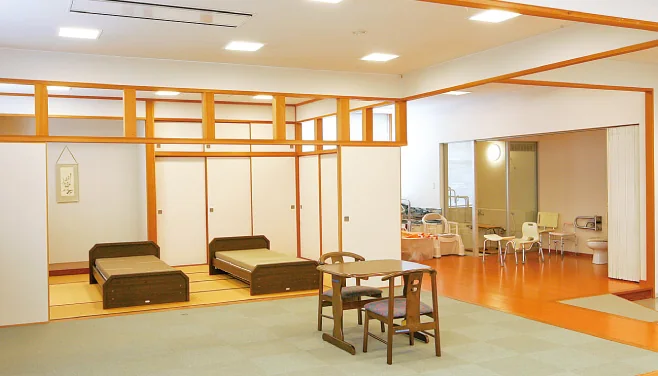
The foundational room contains multiple practice beds and teaching equipment. The adult and community room includes a domestic-style environment with beds, furniture and bathroom-related facilities, providing a different setting from a conventional classroom. These are university teaching spaces for practising and preparing for learning activities, complementing the department’s theoretical subjects and its practice outside the classroom.
Sources: Nursing teaching facilities ↗
Library guidance and access to literature
The university library provides reference assistance to help users understand library services and locate relevant materials. Students can ask at the counter about searching for resources and making effective use of the collection. This guidance supports independent academic work while leaving the research itself with the learner.
For material absent from local holdings, students and staff can request copies from other university libraries, with copying and delivery costs paid by the user. The library also accepts requests to purchase books. Proposed purchases are considered for their value to research, learning and general education and for their usefulness beyond the individual requester. Once acquired, an accepted title becomes part of the library’s lending collection. These services combine immediate guidance with mechanisms for widening access to scholarly resources.
Sources: Library services ↗
Research connected with the region
The university’s Comprehensive Research Institute investigates health, medical and welfare questions in regional society. Its activities include conducting and presenting research, publishing institute reports and other books or journals, and organising study meetings and lectures.
The institute can establish specialist research divisions as needed. Its organisation includes a director and full-time or concurrent researchers; university teachers may serve as concurrent researchers. The director oversees its work, while researchers undertake institute duties and can also conduct individual research and present their findings within and outside the institution. This provides an organisational setting for academic inquiry alongside the university’s teaching responsibilities, with regional health and welfare as a common focus.
Sources: Comprehensive Research Institute ↗