Visa

About Akita University of Art
From art-and-craft education to a university
Akita University of Art is a public art university in Akita City, Japan. Its four-year university opened in April 2013, following approval of its establishment in 2012 and the creation of its public university corporation in 2013. The institution's history includes Akita's earlier art-and-craft education: a municipal craft school was established in 1952, and an art-and-craft junior college opened in 1995. These dates represent different stages in the development of the educational institutions, rather than a single university founding date. The opening of the junior college also changed the organization of the earlier vocational school, which continued as an affiliated high school. Graduate education was added to the four-year university through a master's programme in 2017 and a doctoral programme in 2019, both in transdisciplinary arts.
Sources: Institutional history ↗
Broad exploration before specialization
Undergraduates begin with two years of study that cross conventional divisions between painting, sculpture, craft and design. Contemporary art theory and practical contemporary art courses introduce the full range of the university's five specializations. Introductory classes, art theory, art history and specialist foundations provide knowledge and techniques from which students can develop their own direction. General education covers subjects such as history, culture, natural science, environment, languages and information. Career-related education includes the ability to present works and plans. In the third and fourth years, students belong to one specialization and deepen their practice through advanced subjects. Graduation research in the second half of the fourth year brings together their learning. The curriculum therefore allows students to explore different materials and approaches before making a more focused commitment.
Sources: Undergraduate curriculum ↗
Five approaches to artistic practice
The five undergraduate specializations offer different ways to connect artistic inquiry with materials, media and place. Arts and Roots uses research into regional culture and history, combining theory, making and fieldwork. The visual arts specialization explores contemporary expression through varied media and materials, without confining students to a single established technique. Creative Manufacturing Design examines the cultural backgrounds and values carried by objects, drawing on Akita's resources while proposing new approaches to making. Communication Design develops visual communication through graphic expression and the direction of broader design work. Landscape Design begins with close attention to the experience and character of a place, using art and design to consider how landscapes can contribute to social change. Together, these specializations give students several distinct starting points for developing an artistic practice.
Sources: Five undergraduate specializations ↗
Spaces for production, research and exchange
The campus provides facilities for both individual work and shared university life. Computer rooms are available outside scheduled classes for students to develop their projects. A language-learning room uses audiovisual and computer equipment, while a large lecture room supports teaching, presentations, guidance sessions and public talks. The university library collects material related to art, craft and design, alongside audiovisual resources, newspapers and magazines. Reading areas support individual research. The rest house contains cafeteria-style dining areas, a student hall and conversation spaces, with a shop for materials and everyday supplies. Beyond the main campus, the university also describes exhibition and outreach spaces near Akita Station and elsewhere in the city, extending opportunities to present work and participate in cultural activities.
Sources: Campus facilities ↗
Atelier Momosada and reused warehouse buildings
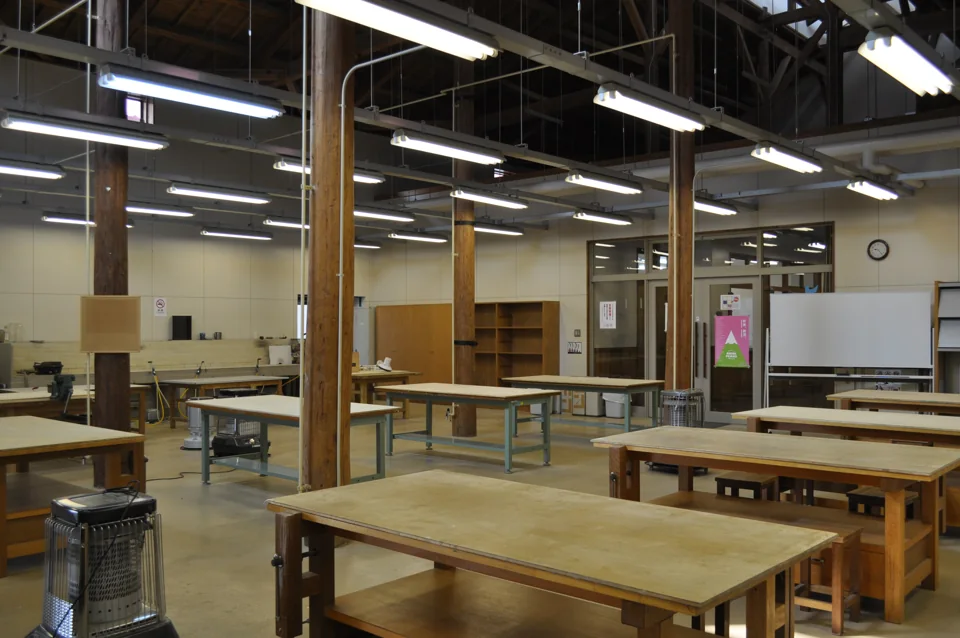
Atelier Momosada occupies former national agricultural warehouses in the Araya district. The timber warehouse complex was built in 1934 and subsequently used for rice storage. After that use ended, local interest in preserving and reusing the buildings helped shape their educational role. They became part of the junior-college campus in 1995 and the university campus in 2013. The university uses seven of the eight warehouses, with another serving as the municipal Araya Library. Workshop facilities support metalwork, woodworking, ceramics, dyeing and glass craft. Gallery and exchange spaces offer places to show student and alumni work, while a multipurpose hall accommodates lectures, performances and other presentations. The name Momosada comes from an older local place name, connecting the contemporary teaching facility with the history of its surrounding district.
Sources: Atelier Momosada history and facilities ↗
Graduate study through transdisciplinary work
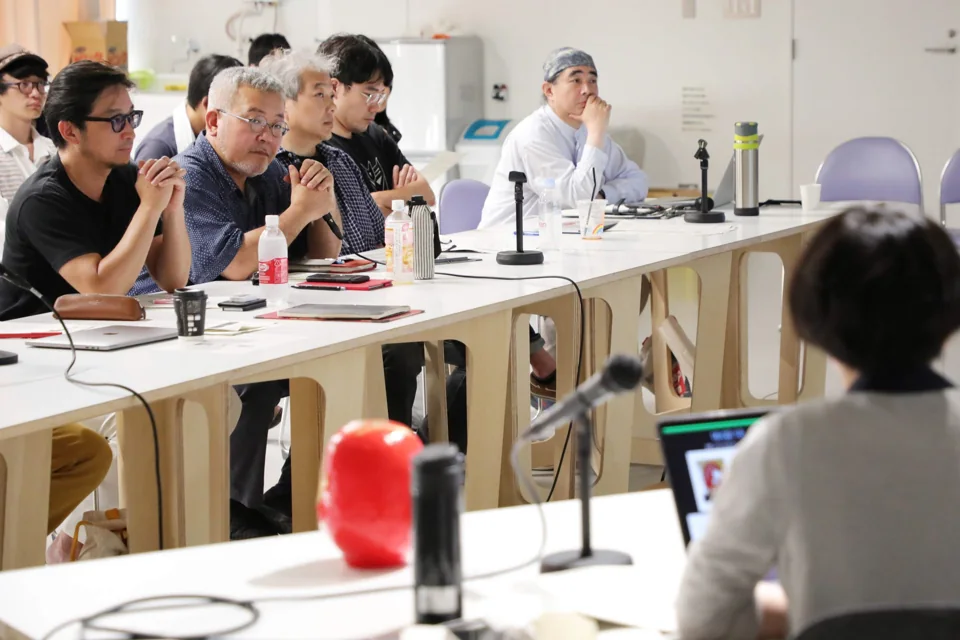
The graduate school connects lectures on the complexity of contemporary art with practical exercises and work in social settings. Its educational description emphasizes investigating an individual research theme while learning different methods and techniques intensively. Making work is considered alongside its relationship with society and the ways it is communicated publicly. Faculty members draw on their practical experience to discuss theories, perspectives and responses to artistic questions. Team-based learning is another feature: students, faculty and assistants work in different combinations according to the task. This provides opportunities for discussion across individual research interests and for learning through other people's approaches. The graduate curriculum therefore treats artistic research as both a focused personal investigation and an activity developed through exchange.
Sources: Graduate-school educational characteristics ↗
Support during student life
Student support includes academic consultation, health services, counselling and guidance about future plans. Students can approach teachers, the student affairs office or the health room when difficulties arise, and specialist counselling is available through a campus social worker and a clinical psychologist. An office-hours system creates opportunities to consult faculty members. Career support staff organize guidance, individual interviews and practice interviews, addressing routes that can include employment, further study and independent artistic activity. Facilities and equipment can also be used for creative assignments and student-group activities, subject to the arrangements for each space. The university's supporting association assists activities such as external exhibitions, graduation shows, the university festival and student organizations, connecting formal study with a broader programme of participation.
Sources: Student-life support ↗