Visa
About Akita University
A national university in Akita
Akita University is a national university in Akita, Japan, with educational roots in teacher preparation and mining. It was inaugurated on 31 May 1949 through the merger of Akita Normal School, Akita Mining College and Akita Youth Normal School. The new institution initially combined a Faculty of Liberal Arts with a Mining College, bringing different professional traditions into one university.
Medicine became another major part of the institution when the Faculty of Medicine was established in 1970, followed by the university hospital in 1971. The university became National University Corporation Akita University in 2004. Its development has included graduate education, research facilities and links with organisations across Akita Prefecture, alongside successive changes to its academic structure.
Sources: Historical Sketch ↗
Three campus settings
The university’s facilities are distributed across Tegata, Hondo and Hodono campuses in Akita City. Tegata is the location associated with resource sciences, education and engineering, while Hondo accommodates the Faculty of Medicine and Akita University Hospital. Hodono contains the university’s affiliated kindergarten, elementary school, junior high school and special-needs school.
This arrangement places different forms of professional education in distinct settings. The hospital campus supports medical education and research, and the affiliated schools provide an educational context beyond the university classroom. The university publishes separate maps and access information for each of these campuses.
Sources: Campus Location ↗
Resources, engineering and environmental study
International Resource Sciences brings social and technical approaches together around resources. Its three courses cover Resource Policy and Management, Earth Resource Science, and Earth Resource Engineering and Environmental Science. The faculty’s stated purpose includes preparing people for resource policy and international negotiations as well as practical engineering work. Its scope therefore encompasses questions of management and society alongside the scientific understanding of the Earth and resource development.
Sources: International Resource Sciences ↗
Engineering’s current direction
The engineering faculty was reorganised in the 2025 academic year as the Faculty of Integrated Science and Engineering for Environments. Its dean describes continuity with the university’s mining tradition while placing greater emphasis on the relationship between specialist knowledge and the global environment.
The current structure comprises Applied Chemistry and Bioscience, Mathematical and Physical Science for Environments, and Engineering for Social Systems. Interdisciplinary education is intended to help students work across conventional subject boundaries. The faculty connects advanced science and technology with environmental questions and the development of a sustainable society, rather than presenting engineering as an isolated technical discipline.
Sources: Integrated Science and Engineering: Dean’s Message ↗
Informatics and data science
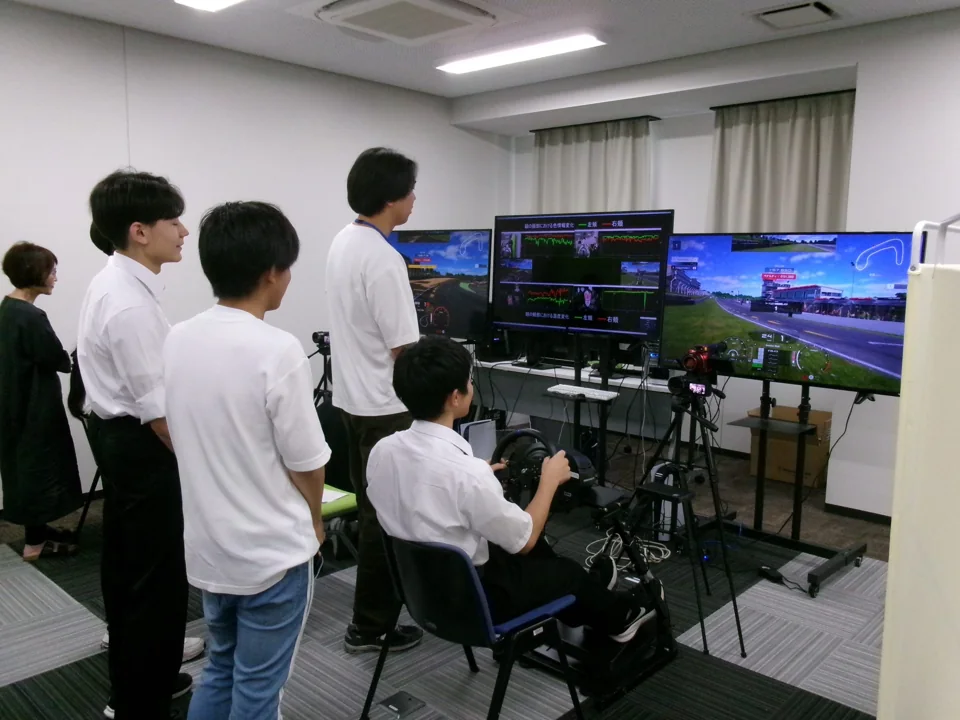
The Faculty of Informatics and Data Science opened in April 2025. Its educational focus includes information technology, data analysis and artificial intelligence, together with the practical ability to apply digital methods to problems. The faculty describes research interests in human information, disaster-prevention and energy information, social data and intelligent robotics.
These themes connect digital systems with human activity and physical environments. The faculty also publishes information about student projects, research presentations, outreach lectures and internships, showing different ways in which its educational and research work reaches beyond individual classes.
Sources: Informatics and Data Science ↗
Library, museum and educational facilities
The University Library includes a Main Library at Tegata and a Medical School Library at Hondo. Its services support academic work through books, journals, electronic information, databases, reference assistance and loans. Cooperation with other libraries in Akita Prefecture adds to the ways users can locate material. The library also welcomes people from the local community to use its academic resources.
The Mining Museum preserves another part of the university’s identity through collections of minerals, rocks, fossils and material concerning underground resources and their use. Other university facilities connect with educational practice, engineering design and disaster-prevention research. The hospital has an education and research role as well as its place in regional medical care.
Sources: University Facilities ↗
Research and collaboration
The Cooperative Research Center provides a point of contact for industry–university collaboration. Its work includes consultation, joint and commissioned research, technology transfer and intellectual-property support. Matching research ideas with needs outside the university is part of this role.
Collaborative research facilities also include the Bioscience Education and Research Center, which brings shared experimental and analytical resources together for life-science work. The Venture Business Laboratory addresses materials and recycling research, while the Venture Incubation Center provides space for collaboration with companies and other research organisations. Environmental research facilities support education and research while also addressing the management of waste arising from laboratory activity.
Student life and academic participation
The university’s student-life resources cover clubs, accommodation, scholarships, career support and study abroad. It supports approved clubs and circles and provides information about suitable part-time work intended to fit around study and extracurricular activity. This range of services accompanies the academic provision across its campuses.
Sources: Campus Life and Career ↗
Opportunities to meet students and researchers
At the July 2026 open campus, Informatics and Data Science presented faculty information, research exhibits and opportunities to speak with teachers and current students. The programme allowed visitors to explore research and ask about classes and university life.
Sources: Open Campus2026 ↗
Building a faculty community
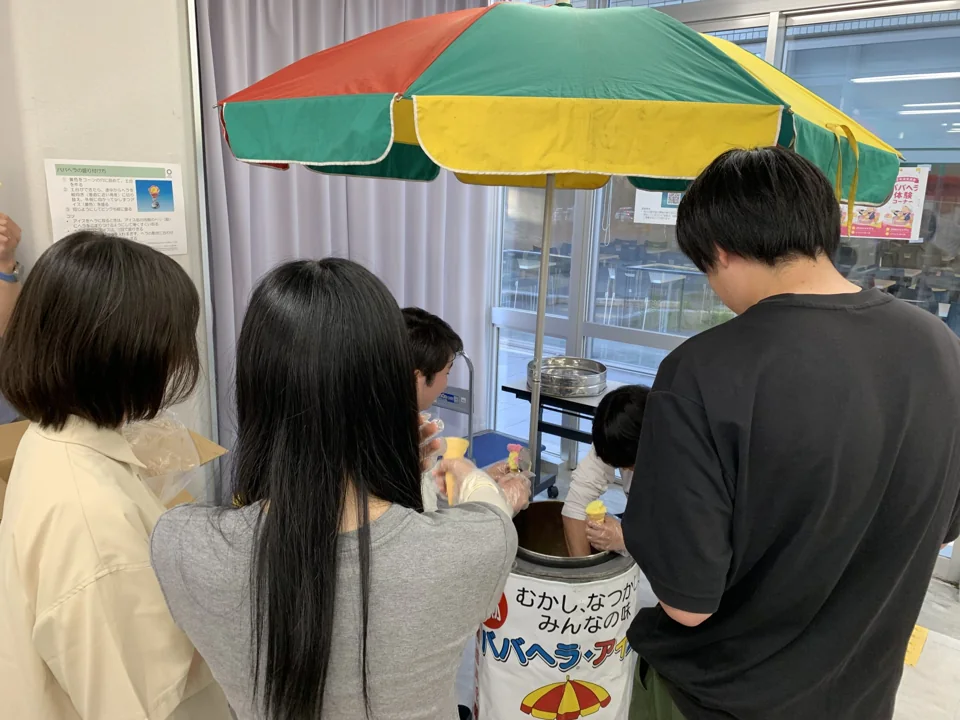
A June 2026 event brought second-year Informatics and Data Science students together with staff in the Tegata cafeteria event hall. Informal group conversation and a local ice-cream-making activity were used to encourage contact as students approached more specialised study and decisions about their future direction.
Sources: Second-Year Student Exchange Event ↗