Visa

About Akita Prefectural University
A prefectural university established in 1999
Akita Prefectural University opened in April 1999 following several years of planning by Akita Prefecture. Preparations included a university concept review, a dedicated establishment office and approval of the university's founding arrangements in December 1998. Graduate education followed: the Graduate School of Systems Science and Technology was established in 2002, and the Graduate School of Bioresource Sciences in 2003. In 2006, the university became a public university corporation and added its Department of Agribusiness. Further academic development included new mechanical engineering, intelligent mechatronics and information engineering departments in 2018. The university established an agricultural innovation education and research centre in 2021. Its history reflects a continuing combination of engineering, biological resources and research connected with regional needs.
Sources: University history ↗
Distinct campuses within Akita Prefecture
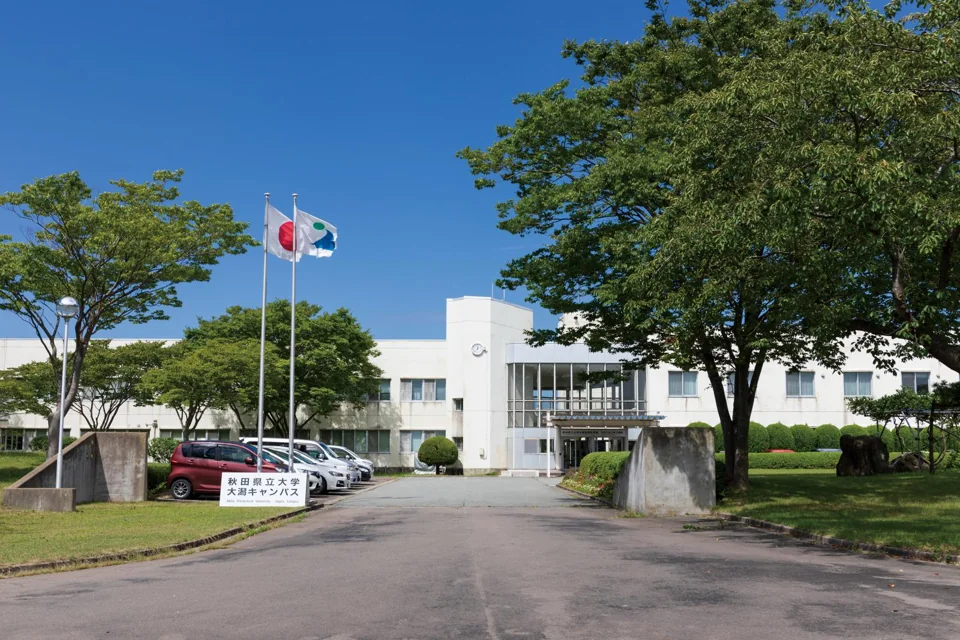
The university operates across several locations with different academic roles. Akita Campus, in Akita City, houses the university headquarters, the Faculty of Bioresource Sciences and its graduate school. Honjo Campus is in Yurihonjo City and is the base for the Faculty and Graduate School of Systems Science and Technology. Ogata Campus is in Ogata Village, where third- and fourth-year agribusiness students study in the landscape of the reclaimed Hachirogata area. Its facilities include laboratories, a library, student accommodation and an agricultural innovation centre. Fields, greenhouses and livestock facilities support practical education there. The Institute of Wood Technology is located separately in Noshiro. The university's organization therefore links specialized teaching and research settings across the prefecture, rather than concentrating every subject at one site.
Sources: Campus locations and academic functions ↗ · Ogata campus facilities ↗
Systems thinking in engineering
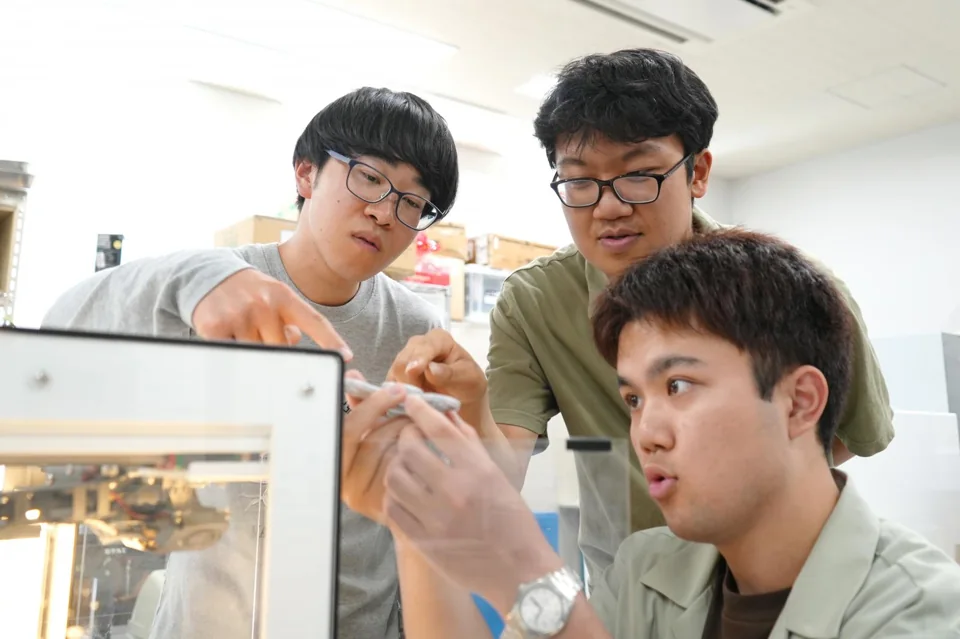
The Faculty of Systems Science and Technology organizes education around the relationships between technical systems and the societies that use them. Its five departments cover mechanical engineering, intelligent mechatronics, information engineering, architecture and environment systems, and management science and engineering. The faculty describes systems thinking as a way to connect specialist engineering knowledge with broader considerations such as safety, control, economics and environmental effects. Teaching and research take place at Honjo Campus, where facilities include computer teaching rooms, architecture workshops, laboratories, a creative workshop and spaces for independent study. Graduate education extends the same technical foundation into advanced research. The faculty also emphasizes relationships with regional industry, including agriculture and forestry as well as manufacturing, in developing and applying engineering knowledge.
Biological resources, food and environment
The Faculty of Bioresource Sciences approaches food, energy and environmental questions through biological science and related technologies. It comprises departments of biotechnology, biological production, biological environment and agribusiness. Its curriculum is designed to let students take specialist subjects outside their own department and broaden their interests. Experimental subjects begin in the first year, introducing scientific methods through observation and practical investigation. Foundational study includes mathematics, physics, chemistry, biology and earth science, alongside introductions to biotechnology, agricultural production and agribusiness. The faculty's facilities include experimental fields, specialist laboratories, greenhouses and biotechnology resources. Its stated educational approach connects a global view of human relationships with biological environments to concrete regional problems, including the development of agricultural businesses and the integration of knowledge from different scientific fields.
Sources: Faculty of Bioresource Sciences ↗
Students design their own early research
A distinctive student-led research scheme is available in the first and second years. Students choose a subject, organize a group, prepare a plan and carry it out, with academic advisers providing guidance. The university supports participating groups through experimental space, equipment and research funding. Projects normally finish within the academic year, and a group wishing to continue can apply again. Results are documented in research reports, with earlier work also available through the institutional repository. One published example concerns a portable, self-build sauna kit using local cedar, developed by architecture and environment systems students. Their account discusses materials, insulation, weight and the process of turning an idea into a physical design. The scheme introduces research planning and teamwork before students begin more specialized investigations later in their degrees.
Sources: Student-led research scheme ↗
Wood research with a regional connection
The Institute of Wood Technology combines research, graduate education and regional engagement around forest resources and wood use. Its research includes forest management, the distribution and utilization of forest products, and technologies for developing new wood materials and construction methods. Graduate education is provided through the university's Graduate School of Bioresource Sciences. Published student research themes range from genetic diversity in forest trees to wood surface modification, timber structures and conservation treatments for archaeological wood. The institute also works with the prefecture's wood-processing promotion organization. Public and evening lectures, cooperation with schools, joint research with regional companies and participation in local-government committees form part of its outreach. These activities connect specialist research with education, industrial applications and public discussion of forest-resource use.
Sources: Institute of Wood Technology ↗
Continuing ties through lifelong learning
The lifelong student scheme maintains an educational relationship with graduates after they leave their original programme. Registered alumni can receive study guidance and career advice from university teachers, use the university library and attend eligible lectures. Library services include borrowing by post, extending access beyond people living near a campus. The scheme also provides information about university-related events. Eligibility covers graduates of the university, its graduate schools and specified predecessor junior-college institutions. The university publishes guidance, registration forms and lists of courses available for auditing, with separate contact points at Akita and Honjo campuses. This gives alumni several practical ways to continue studying and remain connected to academic resources, alongside the university's education of currently enrolled undergraduate and graduate students.
Sources: Lifelong student scheme for alumni ↗