Visa
About Akikusa Gakuen Junior College
A junior college in Tokorozawa
Akikusa Gakuen Junior College is a junior college in Tokorozawa, Saitama Prefecture, Japan. It opened in 1979 with divisions of early childhood education, establishing the foundation for a continuing emphasis on childcare and education. Its later development also brought language, business and cultural studies into the institution’s academic life.
Japanese literature and management departments were added in 1985. In 2001 their names changed to Japanese Cultural Expression and Business Management, while community childcare departments were established. The cultural and business departments were subsequently combined to create Cultural Expression in 2007. The college’s chronology also records the closure of its advanced early-childhood course in 2020, distinguishing that former provision from the departments presented on the current website.
Sources: College History ↗
Educational values
The institution’s educational philosophy places importance on the development of women who contribute through their character and practical abilities. Its stated educational principles centre on courtesy, diligence and cooperation. The current presidential message connects these principles with thinking independently, acting with initiative and working with others in a changing society.
The college describes the junior-college years as a period in which students consider their own direction and develop the capacity to live independently throughout their lives. This outlook accompanies its specialised teaching: professional preparation is presented alongside personal development, relationships with others and the ability to continue making choices beyond graduation.
Sources: Educational Philosophy ↗
Two-year early childhood education
The First Division of Early Childhood Education is a two-year daytime programme. Its teaching combines the knowledge and practical skills of childcare with small-group seminars, visits to educational settings and fieldwork. Students are involved in planning and organising activities, while preparation for placements begins from the start of their studies.
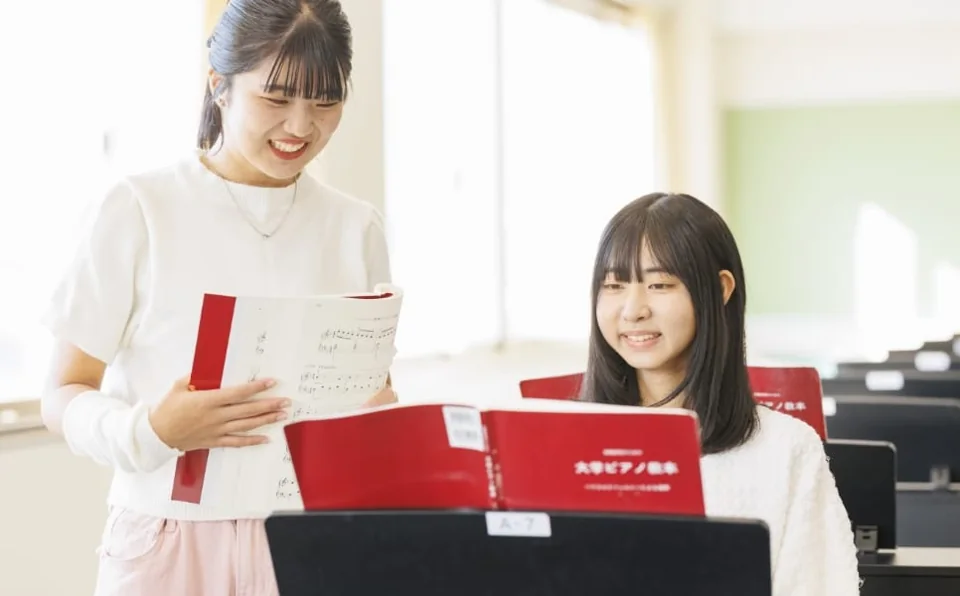
Music is part of this preparation. The department offers piano lessons before enrolment for beginners, and students can practise when instruments are not being used for classes. The programme lists childcare-worker and kindergarten-teacher qualification pathways among its study objectives, alongside subjects and activities connected with children’s play, outdoor experiences and educational technology.
Sources: Early Childhood Education First Division ↗
A three-year morning study route
The Third Division offers another approach to early childhood education, extending study over three years with classes mainly in the morning. Its basic timetable uses two morning class periods, leaving room in the afternoon for activities such as volunteering, work, piano practice or participation in college clubs.
The department also describes opportunities to take classes in other departments and to use online learning. This structure gives students a different way to organise study and other responsibilities while working towards the programme’s professional learning objectives. Its emphasis is on progressing through childcare education over a longer period rather than following the concentrated two-year daytime pattern.
Community childcare and family support
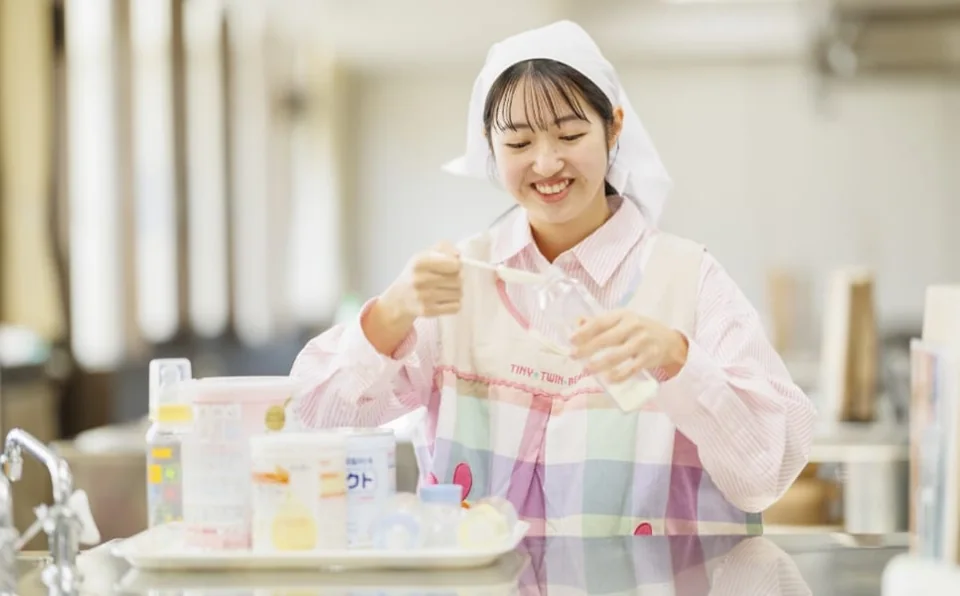
Community Childcare is a three-year daytime department. Small-group seminars allow students to explore particular interests, while engagement with the surrounding community forms a distinctive part of its approach. Students participate in local events and volunteering, meeting people outside the classroom as part of their preparation for work involving children and families.
The department describes activities in which students design programmes and invite children and parents to take part in play. Its educational interests extend to support for parents as well as children. The listed qualification-related areas include childcare, kindergarten education, librarianship, recreation and individual childcare, reflecting a range of learning opportunities across the three-year course.
Sources: Community Childcare ↗
Cultural Expression studies
The two-year Cultural Expression department brings together several fields rather than following a single occupational subject. Its options include culture and literature, manga and illustration, tourism and airlines, Korean popular culture, fashion and bridal studies, web design, information technology, medical administration, psychology and esports.
Alongside these interests, the department identifies communication, planning, writing and presentation as practical abilities developed through coursework. Its qualification-related study includes library work, information processing, web design and tourism. The combination allows students to select subjects while developing skills used in different organisational and communication settings. Medical-administration study concerns administrative support within healthcare organisations, rather than training students as clinical practitioners.
Sources: Cultural Expression ↗
Facilities for practice and independent study
The campus includes individual piano lesson rooms, an electronic-piano teaching room, computer classrooms and an audiovisual hall. The learning commons provides space for discussion and presentations by students and staff. A childcare-support room called Poppo is used for picture-book and hand-play exercises and activities involving parents and children.
The library includes a reference-practice area for the librarian course. Piano rooms can be used for individual practice outside scheduled lessons, and computer rooms are opened for use during free periods. The gymnasium supports indoor physical activity, while tennis courts are used in classes and club activities. Other facilities include a cafeteria and a shop. These spaces serve different aspects of the college’s work, from music and childcare practice to independent learning, physical education and everyday student life.
Sources: Campus Facilities ↗
Academic and personal support
Teaching staff set office hours for consultation about course content, study methods and student life. The health room provides a place to rest when students feel unwell and offers support concerning health matters. A separate student counselling service allows students to discuss concerns such as friendships, their future or difficulties connected with classes, adding personal support to the college’s academic arrangements.
Sources: Health and Student Support ↗