Visa
About Aino University
A healthcare university in Ibaraki
Aino University is a healthcare-focused university in Ibaraki, Osaka Prefecture, Japan. Its official address is 4-5-4 Higashiota. The university opened in 2004, within an educational group whose earlier development included Aino Hospital and nursing education. The hospital opened in 1965, and an associated practical nursing school followed in 1968. These earlier institutions form part of the group's history rather than the foundation date of the university itself.
The institution added clinical engineering in 2010 and a graduate school of nursing in 2015. A graduate school of health sciences followed in 2024. In 2025, it established a Faculty of Nursing, a health sciences department within the Faculty of Health Sciences, and an advanced clinical engineering course. Its university history distinguishes these developments from those of the separately operated junior college and other schools.
Sources: University history ↗ · Campus address and access ↗
Purpose and educational values
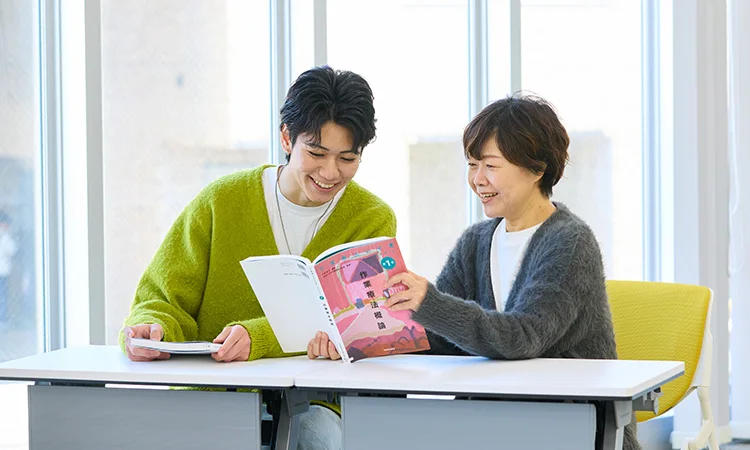
The university's educational purpose combines broad general education with practical specialist knowledge. It also stresses independence and responsibility, connecting personal development with contributions to healthcare and welfare. Respect for diverse values and human rights forms part of its stated educational goals, alongside the ability to communicate and work with other people.
Its faculty objectives bring knowledge and technical skills together with ethics, adaptability and creativity. The graduate school extends this approach into research, investigating the theory and application of medicine, nursing and health science. Nursing graduate objectives include evidence-based practice, educational leadership, management and collaboration across professions. Health sciences objectives emphasise interdisciplinary investigation of health promotion and the ability to identify problems and explore responses through research.
Sources: Purpose and educational goals ↗
Learning to collaborate across professions
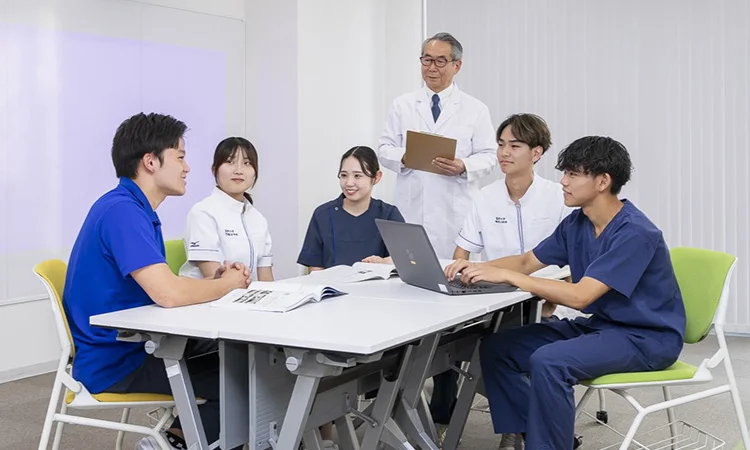
Aino describes its interprofessional educational approach as Sym-Medical. The emphasis is on people from different professions discussing problems and working together around the needs of the patient. This goes beyond learning separate occupational roles: students consider how specialist perspectives can contribute to a shared response.
The Sym-Medical sequence uses groups drawn from different departments and an active learning format. Discussion and presentations help students investigate information, analyse problems and communicate their conclusions. The published sequence runs from the first through fourth year, with the health sciences department participating through the second year. Understanding and respecting another profession's expertise is therefore built into the teaching process, alongside the development of each student's own subject knowledge.
Sources: Sym-Medical interprofessional education ↗
Nursing education and simulation
Nursing students study in the Aino Simulation Lab, where teaching spaces reproduce hospital rooms, an operating room and residential settings. A video system allows practical exercises to be recorded and reviewed. The department connects this simulated work with clinical placements, including opportunities to encounter practice from the first year.
The curriculum begins with subjects such as anatomy, physiology, microbiology, pathology and foundational nursing. Later study introduces adult, older-person, child, maternal, mental health and community nursing. Clinical placements and research methods contribute to the third year, followed by integrated nursing practice and graduation research in the final year. The department describes orientation before placements and support through class teachers and seminars. Together, these arrangements connect scientific foundations, supervised practice and reflection on nursing work.
Sources: Department of Nursing ↗
Physical therapy and clinical experience
Physical therapy education progresses from knowledge of the body to assessment, movement analysis and more specialised practice. The first-year curriculum includes body structure and function, movement science, pathology, introductory physical therapy and clinical observation. Second-year subjects develop assessment and clinical reasoning alongside internal medicine, orthopaedics and exercise physiology.
Later subjects include musculoskeletal, neurological, developmental and community physical therapy, as well as cancer rehabilitation. Fourth-year study includes sixteen weeks of clinical practice, graduation research and integrated learning. The department also describes AINO Clinical Internship opportunities, through which students can observe practising clinical teachers at nearby associated facilities during available time. This provides another way to connect classroom ideas with professional work. Teaching staff, placement supervisors and students communicate as part of the department's clinical learning arrangements.
Sources: Department of Physical Therapy ↗
Occupational therapy and everyday life
Occupational therapy education considers physical and psychological functioning in relation to everyday activities. Early study includes communication, clinical psychology, rehabilitation medicine and foundational practical work. Students subsequently learn assessment methods and examine clinical findings in relation to the knowledge they have acquired.
Third-year learning develops approaches to intervention, including analysing difficulties, considering possible explanations and testing responses. Final-year comprehensive placements and graduation research bring these strands together. Published placement settings include rehabilitation hospitals, older-person facilities, psychiatric hospitals, developmental support centres and community organisations. Preparation before placement and feedback afterwards are part of the learning process. The department also provides career preparation through application guidance, interview practice and individual consultations, connecting its academic programme with planning for the period after university.
Sources: Department of Occupational Therapy ↗
Student guidance and regional connections
The university describes a class-teacher system intended to provide individual guidance across student life and examination preparation. Its account of teaching places importance on students being able to ask questions and discuss concerns with staff. Support therefore accompanies specialist learning rather than being confined to a single point in the programme.
Regional relationships include nearby group healthcare and welfare facilities and comprehensive cooperation agreements with hospitals such as Takatsuki Hospital and Takatsuki Red Cross Hospital. An agreement with Ibaraki City also supports community-facing activity, including public lectures. Students can participate in volunteer opportunities through these connections. The university presents these activities as ways of learning through engagement with people outside the classroom, linking healthcare education with the communities in which it operates.