Visa


About Aikoku Gakuen University
A women’s university in Yotsukaido
Aikoku Gakuen University is a four-year women’s university in Yotsukaido, Chiba Prefecture. Its Faculty of Human Culture brings the study of people, society and everyday life into a single academic setting. The university opened in April 1998, following completion of its university building in October 1997 and approval of its department that December. Its parent educational organisation traces its history to a girls’ commercial school founded in April 1939. These dates distinguish the university’s own establishment from the longer history of Aikoku Gakuen.
The university’s educational philosophy connects women’s economic independence with broad knowledge, practical abilities, health and service to others. Kindness and honesty are central institutional values. Its stated learning objectives include expressing ideas, identifying problems, thinking logically and critically, and acting with ethical awareness. These aims give human culture a practical as well as an intellectual meaning.
Sources: 教育方針および沿革 :: 愛国学園大学 ↗
The curriculum from 2025
For students entering from 2025, the published curriculum requires 124 credits for graduation. Common education includes foundational study, foreign languages and wellness, alongside information and career support subjects. Students select English or Chinese for foreign-language study, with their mother tongue excluded from that choice. Specialist subjects progress through introductory, core and advanced levels.
Fifteen suggested learning models help students assemble a coherent programme. Their themes include Chiba, global affairs, tourism, Japanese-language education, psychology, food and health, regional design, community development, history, information technology, business, entrepreneurship and finance. These models provide several ways of connecting academic interests with social questions. Graduation research develops through seminars and a thesis. Students normally choose their research field in the third year and work toward a written thesis and presentation in their final year.
Sources: 教育課程の体系 :: 愛国学園大学 ↗
Four fields of enquiry
The faculty’s subject descriptions illustrate four broad areas of enquiry. Japanese studies considers language, culture, history, tourism and Japan’s relationship with the wider world. Its cultural range extends to popular culture and traditional practices such as tea and flower arranging. Psychology and life studies brings together perspectives on human behaviour, everyday living, welfare and food culture.
Regional studies draws on public policy, economics, anthropology and social research to examine communities and their environments. Business subjects include management and accounting as well as information skills. Programming, web design, databases, security and marketing appear within this range. The breadth of these subjects allows students to approach human culture through texts and ideas, social investigation, practical activities and the tools used in organisations.
Sources: 人間文化学部 :: 愛国学園大学 ↗
Library and access to scholarship
The university library supports study across culture, life sciences, welfare, information and business. Its public catalogue provides a starting point for locating materials, while library guidance describes help with reference enquiries and searching for holdings. Introductions to other libraries and requests for copies extend the resources available beyond the local collection.
A further resource is the university’s institutional repository, established in May 2017. It makes research publications available digitally, including issues of the Human Culture Research Bulletin from its eighth issue, published in 2006. The catalogue, repository and library calendar offer different routes into the university’s scholarly resources: finding a book, reading institutional research and planning a visit.
Sources: 附属図書館 :: 愛国学園大学 ↗
Research rooted in northern Chiba
The Hokuso Cultural Research Center focuses on the history and culture of northern Chiba and the region’s natural and social environment. Its work includes collecting municipal histories, natural histories and statistical materials that can support investigation of the surrounding area. Such resources make local places and industries subjects for sustained academic study.
The centre’s published seminar record shows the variety of that regional perspective. Examples from 2023 include Tone River transport and changes to waterways, textile industries, peanut cultivation and the use of mascots in regional revitalisation. A 2024 seminar addressed peanut breeding and its regional significance. These dated examples connect agriculture, movement, manufacturing and cultural representation rather than treating local history as a single subject.
Sources: 北総文化研究センター :: 愛国学園大学 ↗
Connections with the community
The university’s account of community engagement describes cooperation with Yotsukaido City and its board of education through citizens’ university courses taught by university staff. This extends academic learning to residents as well as enrolled students. A cooperation agreement signed with the city in November 2012 provided a framework for sharing resources and contributing to regional development.
Other forms of engagement include faculty service on public advisory bodies and relationships with local organisations. The university also describes participation in a prefectural credit-exchange arrangement involving private universities and junior colleges. These connections place the institution within a wider educational and civic network, while retaining Yotsukaido as an important reference point for its community activities.
Sources: 国際交流・社会貢献 :: 愛国学園大学 ↗
Student activities and the university festival
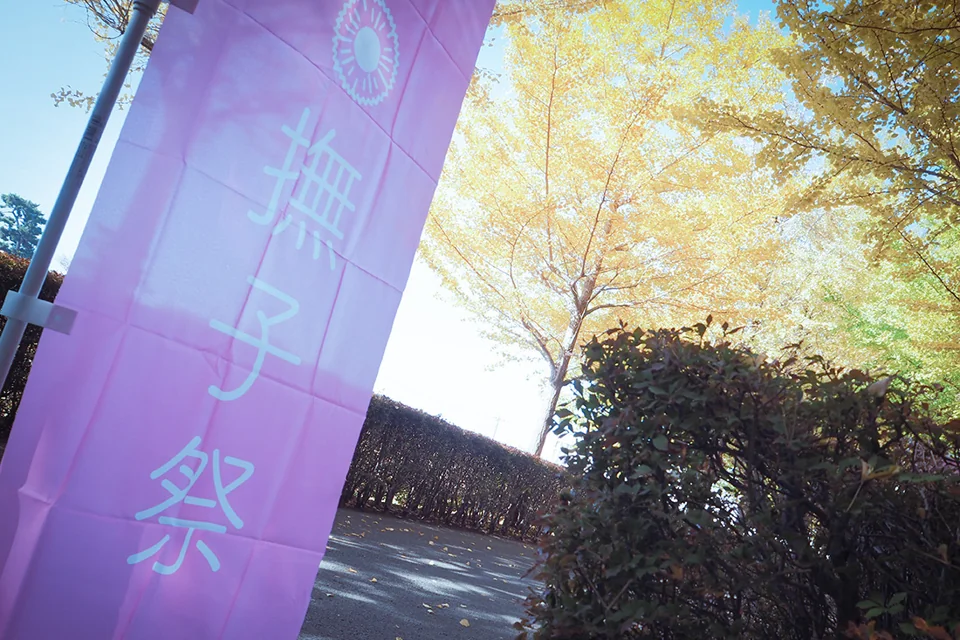
The student-life calendar includes the Nadeshiko Festival, which brings a public dimension to campus life. The university’s student association has elected leadership, including a president and vice-president serving a one-year term. Its activities connect student organisation with events on campus and participation in city and high-school festivals.
The listed clubs cover interests including analogue games, badminton and table tennis, creative writing and manga, reading aloud, photography and skiing. Alongside formal classes, these activities create opportunities for students to organise projects, share interests and take part in the social life of the university.
Sources: キャンパスライフ :: 愛国学園大学 ↗
Learning about accessible local environments
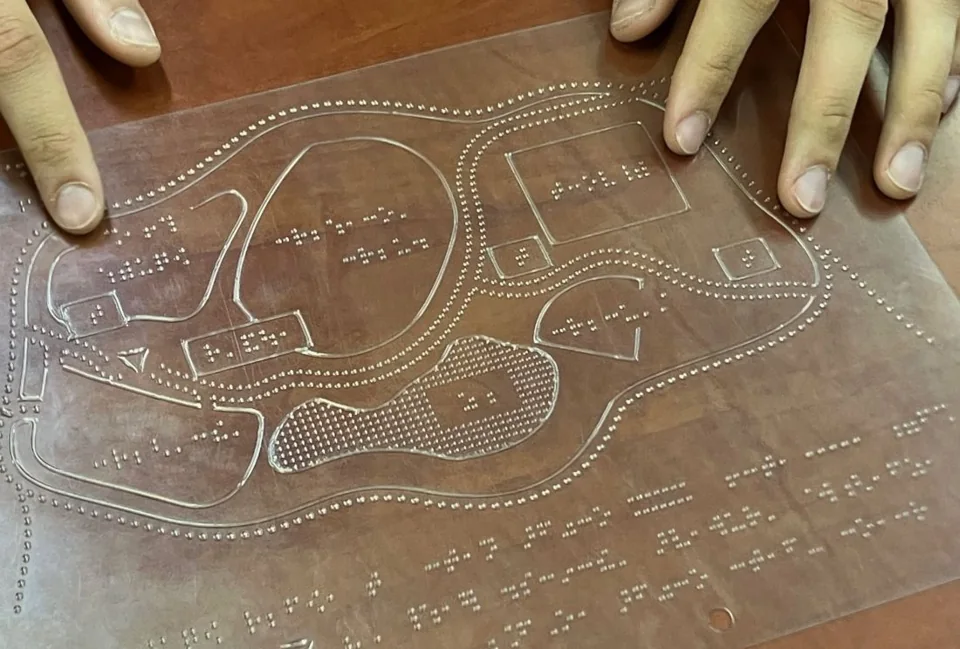
A September 2026 report on the Regional Coexistence Exercise gives a concrete example of learning outside conventional lectures. Students explored tactile maps with their eyes closed, considering how people who are blind or have low vision obtain spatial information. The exercise then moved into the local environment around Yotsukaido Station.
At the station’s south entrance, students examined a tactile information board showing features such as bus and taxi locations. They also considered tactile paving and voice-information buttons. The activity directed attention to accessibility features that people may otherwise pass without noticing, connecting classroom discussion with observation of a familiar public place.
Sources: 授業紹介「地域共生演習」“触地図” :: 愛国学園大学 ↗