Visa

About Aichi University of Technology
An engineering university in Gamagori
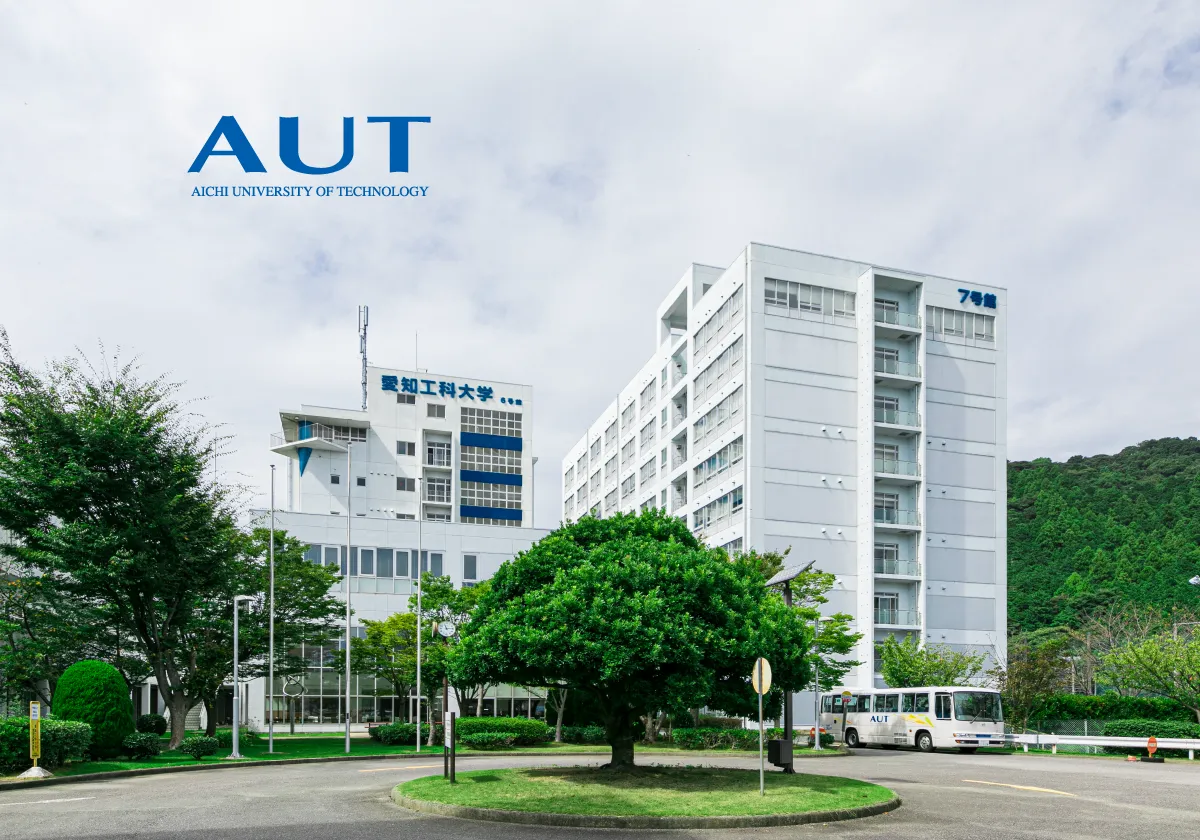
Aichi University of Technology is an engineering university in Gamagori, Aichi Prefecture, Japan. Its address is 50-2 Manori, Nishihasama-cho. In May 2026, the university announced a decision to stop recruiting new first-year undergraduate students from the 2027 academic year, making the 2026 intake its last. The decision was made by the Denpa Gakuen board on 25 April 2026.
The university’s FAQ, updated on 8 June 2026, distinguishes the timetable by programme. Third-year transfer entry continues through the 2028 intake, with recruitment stopping from 2029. The master’s-level intake continues through 2027 and stops from 2028, while doctoral intake stops from 2027. The institution states that teaching, research supervision and student support will continue for enrolled students through graduation. These arrangements concern the university itself, separately from its associated automobile junior college.
Sources: University recruitment notice, May 2026 ↗ · Recruitment FAQ, updated June 2026 ↗
Development of the institution
The university opened in April 2000 with electronic information engineering and mechanical systems engineering. Its development included additional teaching buildings, practical facilities and research organizations. In 2007, its undergraduate structure was reorganized into mechanical systems engineering, robot systems engineering and media informatics.
Graduate education began in 2008 with master’s-level and doctoral programmes in systems engineering. The university also established a career centre and a transport-systems research organization that year, followed by the Aerospace Research Center in 2010. The robotics-related department changed its name in 2011 and became the Department of Electronic Robot Engineering in 2021. This history reflects a combination of mechanical, electronic and information-related education.
Sources: Institutional history ↗
Practical engineering education
The university’s educational approach connects knowledge and technical ability with motivation, cooperation and practical application. It distinguishes the ability to develop a design from the ability to turn that design into a working system or piece of content. Experiments, workshop activity and practical assignments form part of this approach.
Active learning includes students working together on tasks, explaining ideas to one another and testing possible solutions. The university also describes project-based exercises using challenges provided by companies. Its links with the Mikawa manufacturing region appear in company visits, internships and classes about local industrial history and manufacturing strategies. Learning support includes a general education centre for students who need additional help or want to pursue subjects further.
Sources: AUT education ↗
Mechanical systems and electronic robotics
Mechanical systems engineering moves from mathematics and physics through mechanics and design into specialist manufacturing subjects. The department combines classroom theory with experiments and projects, and includes computer-based control-system design alongside mechanical engineering. Its published approach also incorporates short work experiences in the first two years and longer internships in the third.
Electronic robot engineering emphasizes learning by observing, handling and operating physical systems. Students develop programming foundations and practise identifying problems rather than only following predetermined answers. Project learning gives them opportunities to bring specialist knowledge together and consider different ways to solve a task. Some projects involve companies. Discussion, listening and understanding the needs of other people are presented as part of the engineering process.
Sources: Mechanical systems learning approach ↗ · Electronic robot engineering learning approach ↗
Media informatics and digital creation
Media informatics connects the principles of computers with programming, software and networks. The department’s description also covers image and sound processing, deep learning, computer graphics, video and web content. Internet-connected devices, artificial intelligence and data science provide further contexts for applying those foundations.
Practical classes are incorporated across the programme so that students can develop systems, applications and digital content. Team projects bring technical work together with cooperation and communication. The department describes these exercises as opportunities to strengthen both design and production skills. Its emphasis therefore extends from understanding how a computer works to using computing methods to create something and assess how it functions.
Graduate systems engineering
Graduate systems engineering brings mechanical, electrical and electronic, and information technologies into a shared research framework. Its stated focus includes advanced manufacturing and the needs of regional industry. Research areas described in the graduate overview include strength and fatigue analysis, production and transport machinery, robotics applications, sensor systems, computer networks and audiovisual information processing.
The graduate school’s thesis criteria emphasize knowledge of the research field, an appropriately situated research question, suitable methods and a coherent written argument. Doctoral assessment additionally requires the research’s originality and academic value to be established. Research supervision links specialist technical depth with the ability to investigate and solve problems independently.
Facilities for design, testing and making
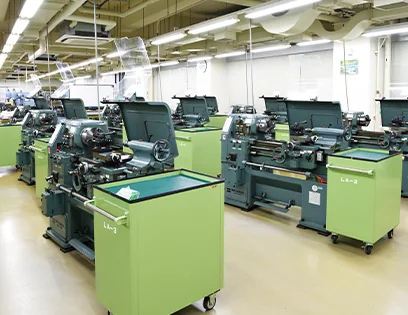
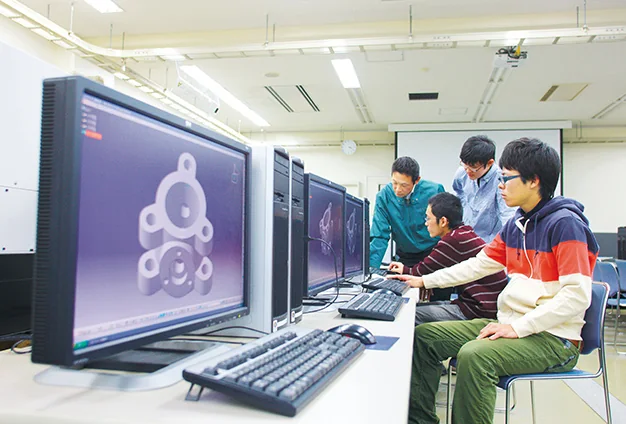
The hilltop campus overlooks Mikawa Bay and brings together engineering laboratories, practical workshops and student spaces. Its CAD and CAM room supports computer-based design, while the mechanical workshop contains lathes, milling machines and drilling equipment. Robotics teaching uses electronic control systems and practical robot materials. A content production studio and multimedia rooms support audiovisual and digital work.
Other facilities include a materials laboratory, a staffed manufacturing workshop centre and equipment for impact testing. Research facilities include a driving simulator for investigating driver behaviour and aerospace facilities associated with small satellites and exploration vehicles. The campus guide also identifies a library, dining facilities, lounges, training space and an event hall. These facilities describe the setting in which the university’s enrolled students study and undertake projects.
Sources: Campus and engineering facilities ↗