Visa

About Aichi Shukutoku University
A university with two Aichi campuses
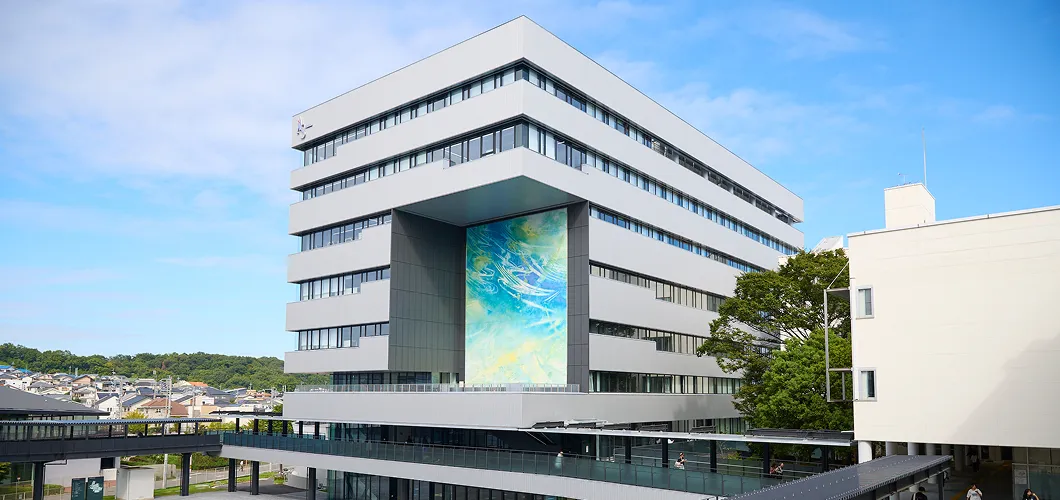
Aichi Shukutoku University is a private university in Aichi Prefecture, Japan, with campuses in Nagakute and Nagoya’s Hoshigaoka area. The university opened in 1975 with a Faculty of Letters offering Japanese and English literature. It grew from an educational organization whose history began with the opening of Aichi Shukutoku Girls’ School in 1905. The university initially operated as a women’s institution and became coeducational in 1995.
Its educational identity developed around learning to live with differences, including differences in values, nationality, generation and personal circumstances. Academic expansion followed that outlook. Library and information science was introduced in 1985, and graduate education began in 1989. More recent developments include the Faculty of Food and Health Sciences in 2024 and the faculties of Education and Architecture in April 2025. The university’s history records twelve faculties as of April 2026.
Learning across academic boundaries
The university’s educational system allows students to look beyond the specialist subjects of their own department. Its multiple-specialization system provides organized minor programmes in a second field. Students who complete the required credits receive a programme completion certificate at graduation. This is a structured additional course of study rather than simply a collection of unrelated optional classes.
Students can also take designated subjects opened by other faculties and departments, with credits counting toward graduation within the applicable limits. For students seeking advanced research, the university describes routes that may shorten undergraduate and graduate study to five years. These involve either taking graduate subjects during undergraduate study or entering graduate school early. Each route requires students to satisfy the relevant conditions and undertake the necessary academic work.
Sources: Educational system ↗
Nagakute’s academic and support facilities
The Nagakute campus is at 2-9 Katahira, Nagakute. Its facilities serve subjects including literature, education, human informatics, psychology, creative expression, architecture, health sciences, food and nutrition, and welfare. Dedicated spaces include architecture drafting and computer-aided design rooms, psychology seminar rooms and facilities for nutrition and food-related education.
Academic support is distributed across the campus. Building 9 houses career services, the centre supporting teacher, librarian and museum-curator education, and learning and research support. Building 11 includes a Community Collaboration Center, an active learning studio and the Diversity and Inclusion Center. The campus also has a library, indoor heated pool, gymnasium, international residence and childcare provision. Classrooms, laboratories, student services and practical learning spaces therefore form part of the same campus environment.
Sources: Nagakute campus guide ↗
Hoshigaoka’s urban campus
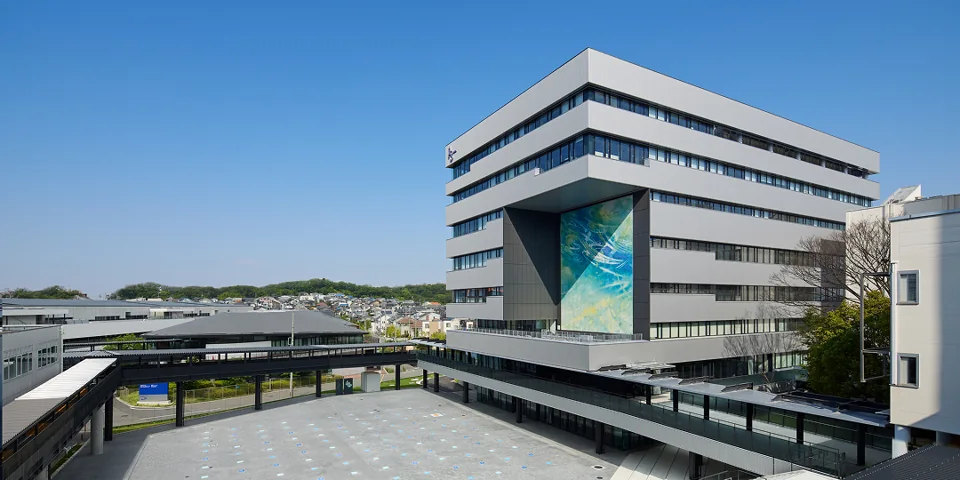
The Hoshigaoka campus is located at 23 Sakuragaoka in Nagoya’s Chikusa Ward. It accommodates the faculties concerned with cultural interaction, business and global communication. Its campus guide describes computer and language-learning facilities alongside teaching rooms and student support services.
Building 1 brings together the campus administration, career services, student counselling, health support and library facilities. Another building contains the AI and Data Science Education Center and computer laboratories. Building 5 includes international exchange support, Japanese-language education, the Community Collaboration Center and an active learning studio. Dining lounges and a writing support desk provide additional places and services for student life. The distribution of these facilities gives the urban campus its own combination of academic teaching, international activity and everyday support.
Sources: Hoshigaoka campus guide ↗
Architecture at different scales
The Faculty of Architecture, opened in April 2025, connects the design of furniture and interiors with buildings, communities, cities and the wider environment. Its educational approach treats these different scales as related rather than isolated subjects. Students consider how the spaces people inhabit respond to changes in living, working and learning.
The faculty explains architecture through a broad range of knowledge, including history, regional culture, climate, natural science, the humanities and social science. Its programme also emphasizes collaboration, since buildings, interiors and neighbourhoods are produced through work with others. Learning therefore involves communication and expression as well as technical and creative investigation. This academic scope places questions about comfortable daily environments alongside larger questions about society and environmental sustainability.
Sources: Faculty of Architecture ↗
International exchange and language encounters
The International Exchange Center supports students exploring overseas study through individual consultations and connections with partner institutions. Its advice covers selecting a destination and preparing for study abroad. On campus, the Global Lounge brings together international students and students from different faculties and years, while an international exchange plaza provides information about overseas opportunities.
Short programmes take place during summer and spring vacations and may involve language learning or internship-related experiences. The university also describes exchange study lasting a semester or a year and other arrangements for earning credits at overseas universities. Recognition of those credits depends on the relevant programme and approval process. A multiple-degree arrangement with Tianjin Foreign Studies University, operating since 2007, provides another route for eligible participants.
Graduate education and research
Graduate education combines specialized research with approaches that cross conventional disciplinary boundaries. The university’s graduate-school introduction describes cultural creation through fields including Japanese literature, information, creative work, media and architecture. Business research brings together management, accounting, marketing and economics. Education links thesis work with the development of practical teaching abilities.
The graduate schools emphasize small-group education and individual guidance for research projects and master’s theses. Health and nutrition study is presented through the relationship between advanced knowledge and practical application, while global culture and communication includes opportunities connected with Japanese-language education and international contribution. Across these fields, graduate work extends undergraduate learning into sustained investigation and more specialized professional knowledge.