Visa

About Aichi Sangyo University Junior College
Identity and development
Aichi Sangyo University Junior College is a Japanese junior college based in Okazaki, Aichi Prefecture. Its correspondence education office is at 12-5 Harayama, Okacho, on the campus also occupied by Aichi Sangyo University. The junior college and the four-year university are distinct institutions within the same educational group. International Communication is the junior college’s academic department, and its published course information centres on languages, intercultural understanding, children and psychology.
The institution opened in April 1986 as Tokai Sangyo Junior College, initially offering management and English. Its correspondence division began in April 1994, and the present institutional name was adopted in April 1997. A reorganisation established the Department of International Communication in April 2006. An advanced course within that department followed in April 2015. These dates distinguish the junior college’s own development from the longer history of its parent educational organisation.
Sources: Institutional history ↗ · Junior college overview ↗
English and intercultural learning
The Practical English course connects language learning with an understanding of the societies in which English is used. Its description includes culture, history and religion alongside communication skills. Grammar provides a foundation for developing practical expression, while learners can connect their studies with particular interests rather than treating English solely as a collection of examination exercises.
The college describes opportunities to learn from native English-speaking instructors through schooling sessions and online correspondence instruction. Its emphasis on communication places language within encounters between people with different backgrounds. The course therefore combines attention to how English works with attention to the cultural knowledge that helps speakers understand one another.
Sources: Practical English course ↗
Children, education and welfare
The Children course examines children’s minds and bodies together with their social surroundings. Its scope includes education and welfare in Japan and other countries, giving the subject a wider frame than childcare techniques alone. The published explanation addresses both people already involved with children and those developing an interest in this field through study.
Parenting and childcare are connected with educational questions about how children grow and learn. The course also identifies volunteering within a specialised seminar as an opportunity for learners who have little previous experience of working with children. This introduces an experiential element into a programme that otherwise makes extensive use of independent study.
Sources: Children course ↗
Psychology in everyday settings
Psychology is presented through the relationship between the mind and observable behaviour. The course encourages learners to analyse familiar situations, with social psychology providing one route into understanding how people respond to others. Its examples include decision-making, persuasion and negotiation, connecting academic ideas with encounters in everyday life.
This approach gives the subject relevance to interpersonal communication as well as personal reflection. Rather than presenting psychology as an isolated body of terminology, the course description emphasises using concepts to interpret behaviour and relationships. It sits alongside the language and children courses within International Communication, broadening the department’s treatment of how people understand and interact with one another.
Sources: Psychology course ↗
Support for correspondence students
The college’s Tsukyo Online system brings together notices, syllabuses, grades and opportunities to ask academic or administrative questions. Students use the system for report submission, quizzes and course examinations, with the published support description explaining that examination access follows successful completion of the required reports. Online materials and assignments give independent study a structured point of contact with the college.
Support also includes voluntary learning consultations at Nagoya and Tokyo venues. Full-time faculty can discuss both study planning and questions about particular subjects. These arrangements address different stages of correspondence learning: organising a workable plan, understanding course requirements and obtaining help when the content itself raises questions.
Sources: Learning support ↗
Japanese language education and online formats
Japanese language teacher training is another substantial area of the junior college’s provision. Its explanation places textbooks at the centre of study and distinguishes that work from the use of e-learning for reports and examinations. A Japanese language education exercise includes simulated teaching, with participants taking the roles of foreign learners. The course information also explains the possibility of studying individual subjects through non-degree enrolment.
The separate full online schooling page describes two delivery formats: on-demand study and synchronous sessions using Zoom. These formats allow scheduled interaction and asynchronous work to serve different purposes. The published subject table is dated 2025 and notes changes for 2026; the enduring feature is the distinction between recorded or independently accessed learning and live online classes.
Sources: Japanese language teacher training ↗ · Full online schooling ↗
Shared library and campus setting
The Aichi Sangyo University and Junior College Library is a shared resource on the second floor of Building 2. Its subject coverage includes languages, management, law, art, design and architecture. Students can search its holdings through the institutional catalogue, while the library website also links to CiNii Research and other literature-search services. MagazinePlus access is described specifically in relation to terminals connected to the campus network.
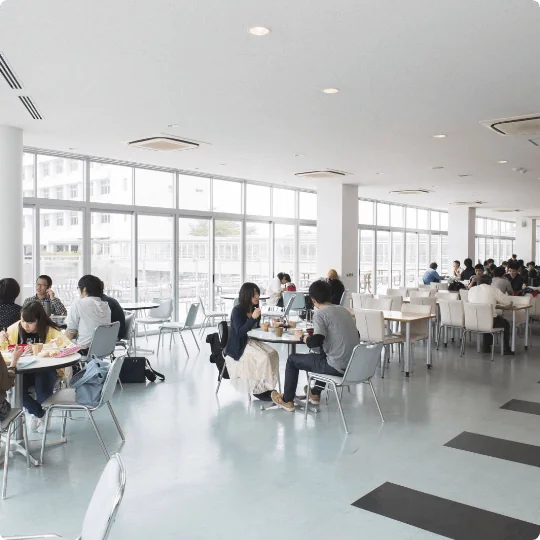
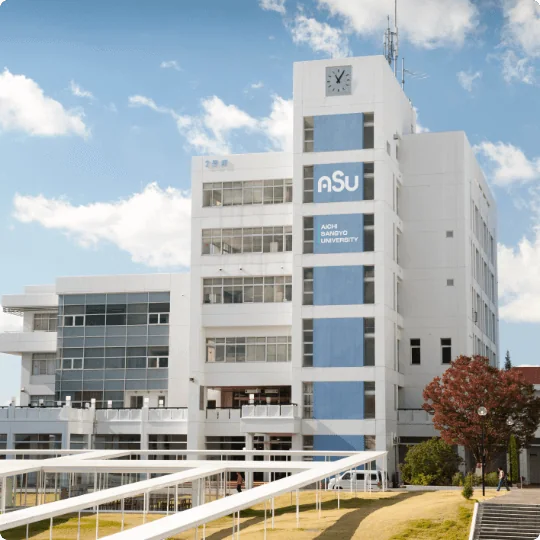
The Okazaki campus map identifies Building 2 as both a teaching building and the location of the library. The community hall contains dining and bookshop facilities, and Building 1 is connected to it by a glazed walkway. These shared facilities form the physical setting of a junior college whose academic information and student support also extend well beyond the campus through correspondence education.
Sources: University and Junior College Library ↗ · Okazaki campus facilities ↗