Visa

About Aichi Prefectural University of Fine Arts and Music
An arts university in Nagakute
The institution listed as Aichi Prefectural University of Fine Arts and Music uses Aichi University of the Arts as its current English name. It is located in Nagakute, Aichi Prefecture, Japan, at 1-114 Yazakosagamine. Established on 1 April 1966, the university brought art and music education together during a period of industrial and economic expansion in central Japan. Its founding purpose linked the development of regional culture with education and research in artistic theory and practice.
Master’s programmes began in 1970, followed by doctoral programmes in 2009. The university transferred from direct prefectural operation to the Aichi Public University Corporation in 2007. Its academic structure has developed over time: ceramics and expanded instrumental music provision were added in 1989, musicology followed in 1994, and the art faculty introduced New Media and Image in 2022. The corresponding graduate research area was added in 2026.
Sources: University history ↗
Art education through making and research
The Faculty of Art is organized into the Department of Fine Arts and the Department of Design and Craft. Together they provide seven specializations: Japanese-style painting, oil painting, sculpture, art studies, design, ceramics, and media and image. Practical production forms the main educational foundation in six of these areas. Students develop technical abilities alongside their individual approaches to artistic expression.
The faculty emphasizes close engagement with several teachers and teaching in small groups. Its stated purpose is to encourage the different creative characteristics that students bring to their work. Art studies provides the faculty’s theoretical specialization, including research in art history and artistic theory. Even here, practical experience of making art is part of the programme’s approach. The relationship between understanding an artwork and understanding how it is produced therefore extends across both the practical and theoretical sides of the faculty.
Sources: Faculty of Art ↗
Music, performance and composition
The Faculty of Music comprises composition, voice and instrumental music specializations. Composition includes composition and musicology courses, while instrumental study includes piano, strings, and winds and percussion. Performance education combines the development of musical understanding and sensitivity with the technical work needed to give that understanding an audible form.
Instrumental students encounter ensemble work as well as solo performance, with orchestral activity providing opportunities to develop cooperation with other musicians. Voice education similarly extends beyond solo singing into opera, with its theatrical dimensions, and choral work. Composition studies draw on methods of Western art music while also examining contemporary approaches, ethnic musical traditions and connections with society. Musicology brings together music history and theory with practical theoretical research. These different routes place the creation, interpretation and study of music within the same faculty.
Sources: Faculty of Music ↗
Graduate study across artistic fields
The Graduate School of Fine Arts offers master’s and doctoral programmes. Each is organized around one major with seven research areas, allowing students to deepen a specialization while also working across the boundaries between fields. Its educational approach combines the development of artistic expertise with academic research.
The Graduate School of Music likewise provides master’s and doctoral study. Its areas include composition, musicology, voice, keyboard, strings, and winds and percussion. The school describes a flexible framework in which students can broaden their studies beyond their immediate field while developing their musical knowledge and abilities. Together, the two graduate schools extend the university’s art and music disciplines into advanced creative work and research.
Sources: Graduate School of Fine Arts ↗ · Graduate School of Music ↗
Conservation and cultural heritage
The Institute for Conservation of Cultural Property was established in 2014. It undertakes research, investigation, reproduction and conservation work, connecting the university’s expertise in Japanese painting, oil painting, sculpture, design and art studies. Its purpose includes passing cultural property on to future generations and developing people able to contribute to that work.
The institute also shares research through specialist technique courses and symposia, including activities intended to strengthen cultural-property protection networks in central Japan. It accepts enquiries about investigating works, repairing them and making reproductions. This places the university’s artistic and technical knowledge in contact with the practical responsibilities of caring for cultural heritage.
Sources: Institute for Conservation of Cultural Property ↗
Spaces for investigation and practical training
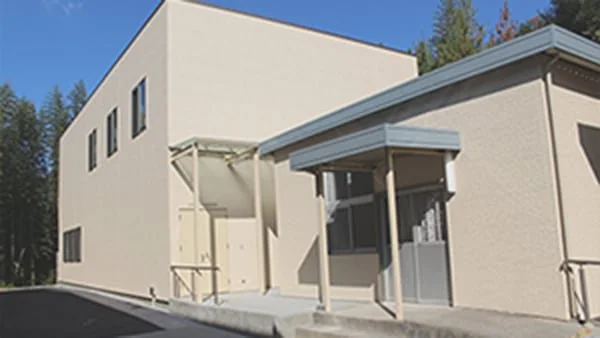
A dedicated conservation facility was completed in the 2015 academic year. Its rooms support different stages of investigation and treatment. The research office includes a precision microscope, while the photography room allows documentation using visible, infrared and ultraviolet imaging. Separate rooms accommodate mounting work, scientific treatment and reproduction.
Graduate students studying classical painting and conservation use the reproduction room for their work. They also undertake mounting exercises themselves, learning traditional techniques involved in presenting Japanese paintings. The facility includes controlled storage and fire-resistant storage for works awaiting or completing treatment. A lecture room equipped with audiovisual facilities provides space for sessions with visiting lecturers. These spaces connect detailed observation, documentation and hands-on training within the institute.
Sources: Conservation facilities and equipment ↗
Library resources for visual and musical study
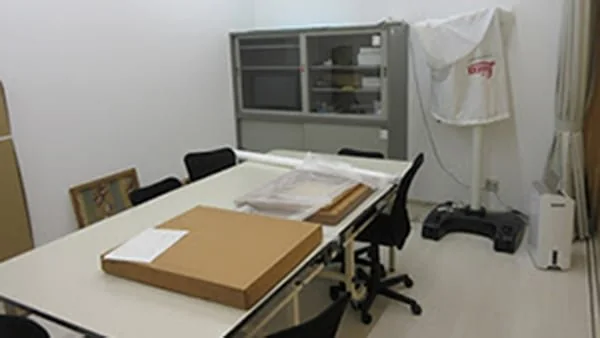
The Art Information Center Library provides facilities suited to both visual and musical learning. On the first floor, listening booths allow users to hear music materials, and separate booths provide access to video materials. A visual room can be used as a multipurpose space. The second-floor open-stack room holds art and music books, recently published books, works designated by teachers, reference books and periodicals. These different spaces support study through reading, listening and viewing.
Sources: Library first floor ↗ · Library second floor ↗