Visa

About Aichi Prefectural University
A public university shaped by two educational traditions
Aichi Prefectural University is a public university in Aichi Prefecture, Japan, with principal campuses in Nagakute and Moriyama, Nagoya. Its origins lie in the Aichi Prefectural College for Women, established in 1947 with Japanese and English literature departments. After development through junior-college education, a four-year women’s university opened in 1957.
The institution became coeducational Aichi Prefectural University in 1966. A major relocation took place in 1998, when the university moved from Nagoya to the eastern hills of Nagakute and expanded its academic facilities. In 2009 it merged with Aichi Prefectural University of Nursing, bringing the traditions of the two institutions into a university spanning humanities, social fields, information science and nursing.
The Nagakute campus is in Ibaragabasama, Nagakute, while the nursing campus is in Kamishidami in Nagoya’s Moriyama ward. The university also identifies a satellite campus in the Aichi Industry and Labor Center near Nagoya Station. These locations give the institution a presence both in the Nagakute learning environment and within the wider Nagoya area.
Sources: University history and philosophy ↗ · Campus locations ↗
Values connecting different fields and communities
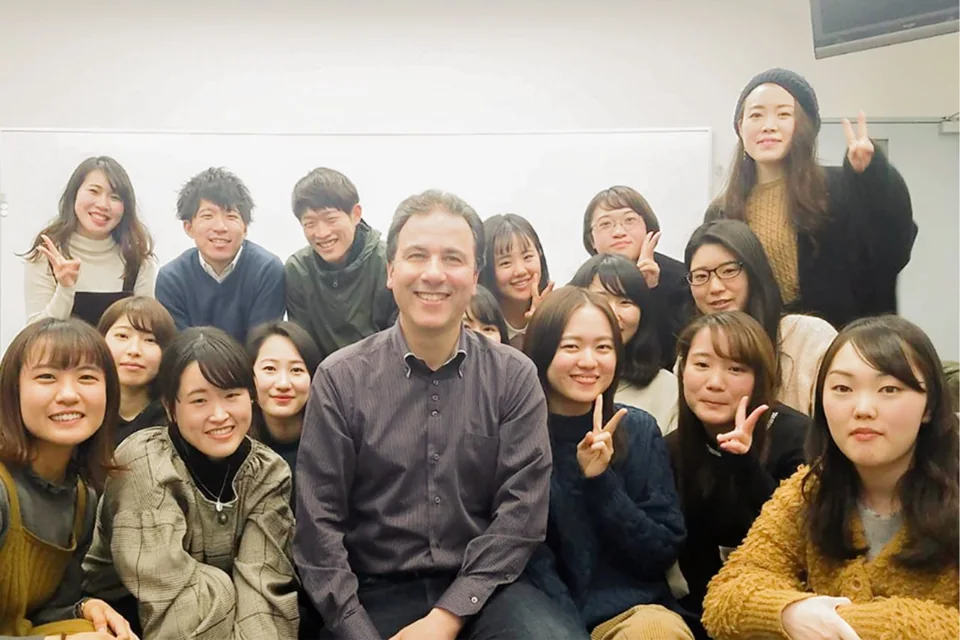
The university’s published values emphasise mutual respect and understanding, interdisciplinary collaboration, a human-centred outlook and an inclusive environment. Cultural exchange is presented as a way to develop relationships with communities locally and internationally. Collaboration extends beyond academic partners to culturally diverse communities in the surrounding region.
The university also encourages connections between the sciences and humanities. Its account of cross-disciplinary work brings faculty, staff and students together across different schools. Social inequality, environmental sustainability and community wellbeing are identified as questions requiring several perspectives, including science, policy, economics and culture. This gives a wider context to its combination of professional, technological and cultural subjects.
Sources: University values ↗
Information science from common foundations to specialisation
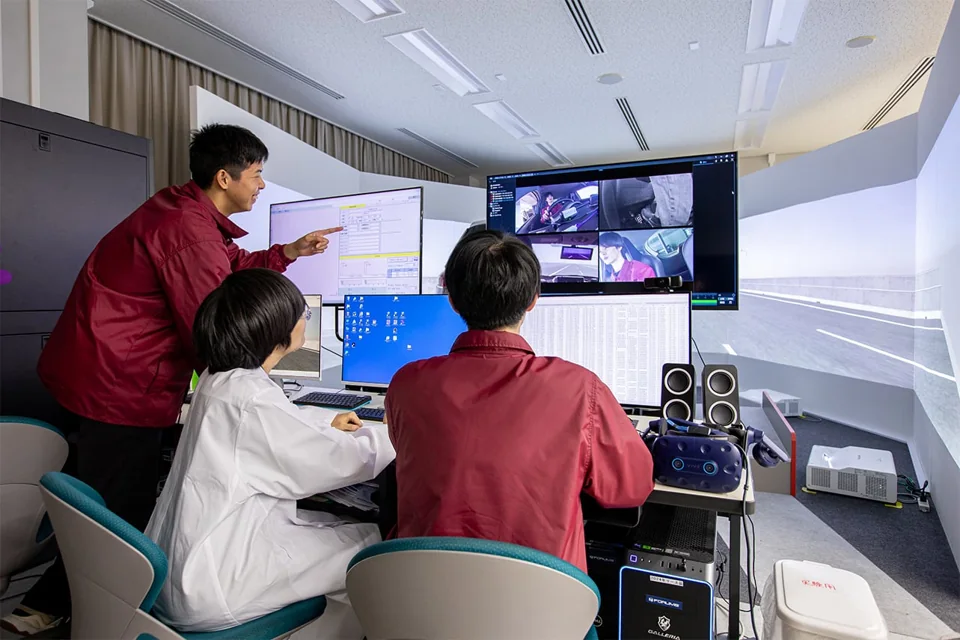
The School of Information Science and Technology develops teaching and research in areas including artificial intelligence, the Internet of Things, robotics and data science. Its undergraduate structure begins with a common foundation in the first two years, covering information-science theories and knowledge of hardware, software and networks.
From the third year, students deepen their interests through information systems, simulation science, intelligent media or robotics. Facilities support experiments, exercises and research. The school connects its subjects with the industrial characteristics of Aichi, including manufacturing and related technological challenges. Its published educational purpose includes both practical expertise and the ability to understand and explain the relationship between information science and society. This places specialised technical learning within a broader account of how technology affects people and organisations.
Sources: School of Information Science and Technology ↗
Education and welfare as related areas of study
The School of Education and Welfare brings together educational and developmental science with welfare science. Its common and specialised subjects address childcare, education and social welfare. The school describes professional competence in relation to human dignity, development and the different difficulties people can encounter in their lives.
Educational study includes elementary education and childcare and early-childhood education. Students can also encounter subjects from other schools, providing welfare and international perspectives alongside education. Welfare study uses sociology and psychology as foundations for understanding society and people, before developing social-work theories and methods. Its scope extends from personal assistance to policy and community resources. The school’s description therefore connects knowledge of individual situations with the social settings and support systems around them.
The welfare curriculum addresses varied circumstances, including poverty, disability, isolation and difficulties experienced by foreign residents. Its description also considers people whose employment is affected by caring for relatives. Students examine how personal support and the coordination of community resources can respond to these different situations.
Sources: School of Education and Welfare ↗
Japanese-language learning and international exchange
The university’s exchange programme is designed for students from partner institutions who study for one or two semesters. It combines Japanese-language courses with cross-cultural understanding and encourages participation in appropriate undergraduate courses. Language teaching emphasises active learning and practical communication, with placement informed by assessment before the semester.
One course brings Japanese and international students together to compare cultures through presentations, group work and discussion. Other opportunities concern perspectives on Japan and global issues. The programme therefore offers more than language practice alone: it creates settings in which students can discuss cultural differences while learning alongside people from other backgrounds. The published course structure distinguishes classes intended for exchange students from general university courses.
Spaces and services supporting exchange students
The International Office at Nagakute supports incoming and outgoing exchange, manages study-abroad events and provides information and counselling. Students can consult materials about partner universities and overseas study. The iCoToBa Multilingual Learning Center provides a space where Japanese and international students collaborate in classes, events and informal conversation.
The Cross-Cultural Space, known as CroCuS, supports interaction across cultural backgrounds and academic schools. Its facilities include equipment for online exchange, and furniture can be rearranged for different group sizes and communication styles. Meeting spaces and partitions allow several forms of activity. Together with the International Office and iCoToBa, it forms part of the university’s practical infrastructure for exchange, giving students places to obtain guidance, meet others and develop collaborative learning beyond individual lessons.
CroCuS includes monitors, cameras, microphones and speakers for online communication. Its flexible arrangement reflects the different needs of a discussion, a meeting or an exchange involving participants in another location.