Visa
About Aichi Prefectural Toyohashi School for the Deaf
A prefectural school in Toyohashi
Aichi Prefectural Toyohashi School for the Deaf is an educational institution in Toyohashi, Aichi Prefecture, Japan. Its campus address is 100 Hirahigashi, Kusama-cho. The school combines education for children and young people with hearing impairments across several stages of schooling. Its institutional history reaches back to 1898, when a private school was established in the former Shiotsu village. In 1900 it merged with an institution for blind pupils to form a combined school in Toyohashi.
Aichi Prefecture took over the school in 1945. After wartime destruction and a subsequent relocation, education for blind and deaf pupils was separated in 1948, giving the school its present Japanese name. The school completed its move to the current site in 1972. Its history also records a 2006 sister-school agreement with the Manitoba School for the Deaf in Canada.
Sources: School history ↗
Kindergarten and early learning
The kindergarten department places play, everyday routines and communication at the centre of early education. It seeks to develop children’s interest in their surroundings, their willingness to participate and their ability to express thoughts through language and bodily expression. Activities include imaginative play, group games, picture books, caring for living things and growing plants. Meals also provide opportunities for learning about food and daily habits.
Teaching responds to each child’s developmental characteristics. The department describes individual work on language, pronunciation and the use of hearing, alongside regular hearing measurements. Its communication policy stresses approaches suited to each child rather than a single method for everyone. Families participate through classroom observation, group discussions and individual meetings. Age-group classes and activities involving the whole kindergarten offer different settings for children to interact, listen and communicate their ideas.
Sources: Kindergarten department ↗
Primary education and everyday independence
The primary department combines foundational academic learning with practical experiences and social development. Teachers set goals and arrange learning environments around individual pupils. Language development extends across lessons and daily school life, with conversation, diary writing, composition and reading used to strengthen expression. Pupils are encouraged to think about problems, try possible solutions and improve their work.
The department organizes mixed-age groups spanning the first through sixth primary grades. These groups take part in cleaning, departmental events and pupil council activities. Children also help plan and run recreation and welcoming or farewell activities. Learning outside the classroom includes visits, overnight experiences and exchanges with other schools and local communities. The department describes travel training in cooperation with families for pupils from the fourth grade onward, including appropriate behaviour on buses, trains and at stations.
Sources: Primary department ↗
Junior high education
The junior high department’s educational priorities bring together study, physical activity, helping others and creative recreation. Its teachers aim to understand each student’s needs and characteristics, then adapt support to encourage independent learning and improve basic academic skills. Small classes are used to make lessons accessible and to support students’ willingness to learn.
Discussion and cooperative activities give students opportunities to state their intentions clearly and consider other people’s views. The department also incorporates exchanges, workplace experiences and service activities to broaden students’ understanding of society and future possibilities. Its stated approach includes helping students recognize their own strengths and develop a sense of self during adolescence. Encounters with other junior high pupils, international visitors and working adults extend the range of people with whom they learn and communicate.
Sources: Junior high department ↗
Upper secondary pathways
Upper secondary education includes Curriculum A, based on the content of ordinary upper secondary schooling, and Curriculum B, incorporating educational content used in special schools for students with intellectual disabilities. Within Curriculum A, second- and third-year students follow different routes according to their future direction. The Academy Course supports students aiming toward further education, while the Basic Learning Course is oriented toward employment and related pathways.
Career education includes internships in the first year, workplace practice and internships in the second, and workplace practice in the third. The department also lists visits to businesses and universities, school trips, presentations and a cultural festival among its activities. Athletics, table tennis, volleyball and physical fitness clubs offer extracurricular opportunities. Exchange and joint learning are organized with Toyohashi Commercial High School and Toyohashi Minami High School.
Sources: Upper secondary department ↗
Residential life and community activities
The school’s dormitory brings together children and young people from different departments. Residential staff support daily living skills and social development while maintaining contact with families and the school. Eligibility includes difficult journeys caused by distance, limited public transport or family circumstances, as well as cases where residence is considered educationally necessary. Applications are considered by the dormitory management committee.
Families can arrange a visit through the class teacher. Trial experiences may involve an evening meal and bathing, an overnight stay or a longer period, depending on the individual situation and availability. Dormitory life emphasizes greetings, punctuality, personal organization and care for shared belongings. Residents are encouraged to discuss and develop their living rules together. The published programme includes seasonal celebrations and evacuation exercises.
Sources: Dormitory ↗
Learning through shared experiences
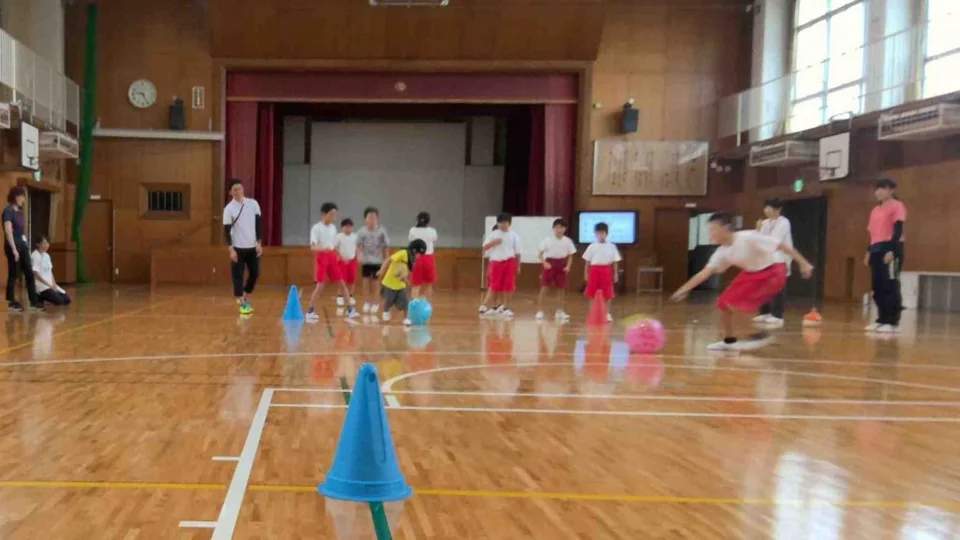
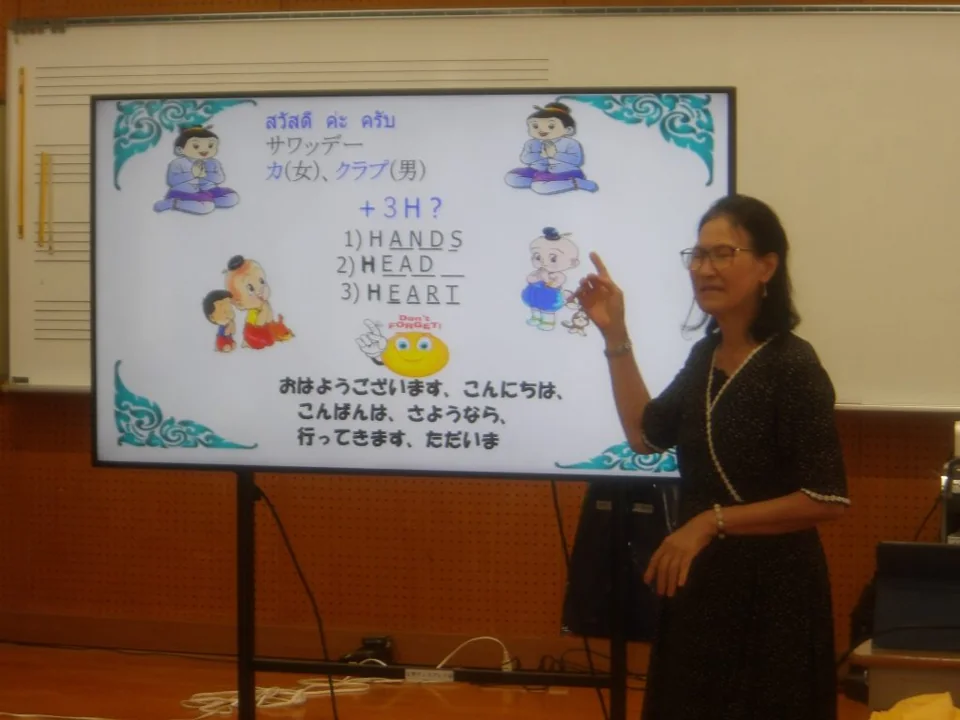
Two July 2026 reports illustrate participation beyond ordinary lessons. Junior high students welcomed a visitor from the Nagoya International Center for a session about Thailand, exploring greetings, ribbon craft, traditional clothing and dance. In the primary department, pupils planned and prepared a recreation event involving beach balls, badminton rackets and a course around cones. These reports show cultural exchange and pupil involvement taking concrete forms within the school’s departmental activities.
Sources: Junior high international exchange, July 2026 ↗ · Primary pupil council recreation, July 2026 ↗