Visa
About Aichi Prefectural Ichinomiya Nishi High School
A prefectural high school with a history beginning in 1964
Aichi Prefectural Ichinomiya Nishi High School is a general-course secondary school in Ichinomiya, Aichi Prefecture, Japan. Its address is in Hagiwara-cho Kushitsukuri. The school’s history begins on 1 April 1964, when the west branch of Aichi Prefectural Ichinomiya High School was established in temporary premises at Yamato Junior High School. It moved to its current location in August of that year after completion of a classroom building.
The branch became the independent Aichi Prefectural Ichinomiya Nishi High School on 1 April 1966. The subsequent history records changes to earlier part-time provision, anniversary events and the later introduction of international-understanding education. The International Understanding Course was established in 2017 and began operating in the following academic year. This distinguishes the school’s initial opening, its independent identity and a more recent development within its educational programme.
Earlier provision included a part-time home-economics course introduced in 1965 and a part-time general course introduced in 1974. Recruitment to those courses stopped in 1982 and 1984 respectively. The school later marked its development through anniversary ceremonies, including a sixtieth-anniversary lecture event in 2023.
Sources: School history ↗ · Principal’s message, April 2026 ↗
Freedom, responsibility and purposeful learning
The school’s motto brings a free and cheerful atmosphere together with discipline and responsibility. Its published policies connect broad knowledge and general education with inquiry, practical ability and solving problems. Communication and cooperation are identified as important capacities for young people who will help shape society. International understanding adds an emphasis on encountering other cultures and acting with an international perspective.
The 2026 principal’s message places academic work alongside clubs and special activities as parts of the school’s educational tradition. It describes the International Understanding Course as preparation for engagement across fields including politics, economics, industry, culture, education and welfare. The emphasis is on the range of contexts in which students may later participate, rather than on a single professional destination.
The curriculum policy describes learning as an accumulation of purposeful daily effort. Initiative, curiosity and collaboration are intended to develop through this process. Clubs and school events are also presented as settings for personal and social development. The admissions-policy description values respect for individual differences, working with others and the willingness to make sustained efforts towards present and future goals.
Sources: Principal’s message, April 2026 ↗ · School policies ↗
An international-understanding course based on experience
Students receive information about the International Understanding Course during their first year and can select it within the humanities route when choosing their second-year pathway. In the second year, school-designed subjects and related activities accompany research on questions students choose for themselves. Third-year study deepens learning in relation to individual educational goals, alongside the ordinary humanities course.
The course includes International English, online sessions, a Nagoya University study tour, a Taiwan school trip and research presentations. Students also develop communication through an international-understanding notebook and short daily speeches. Contributions from university academics, librarians and graduates working overseas expose students to perspectives beyond their immediate classroom experience.
The official account describes exchanges with an Australian partner school and interaction with students in Taiwan. Visiting Australian students have joined lessons and club activities and taken part in cultural visits with their hosts. Graduates of the course also contribute advice to student research and attend presentations. These activities connect language learning with collaboration, investigation and opportunities to explain ideas to others.
Sources: International Understanding Course ↗
Guidance for further study
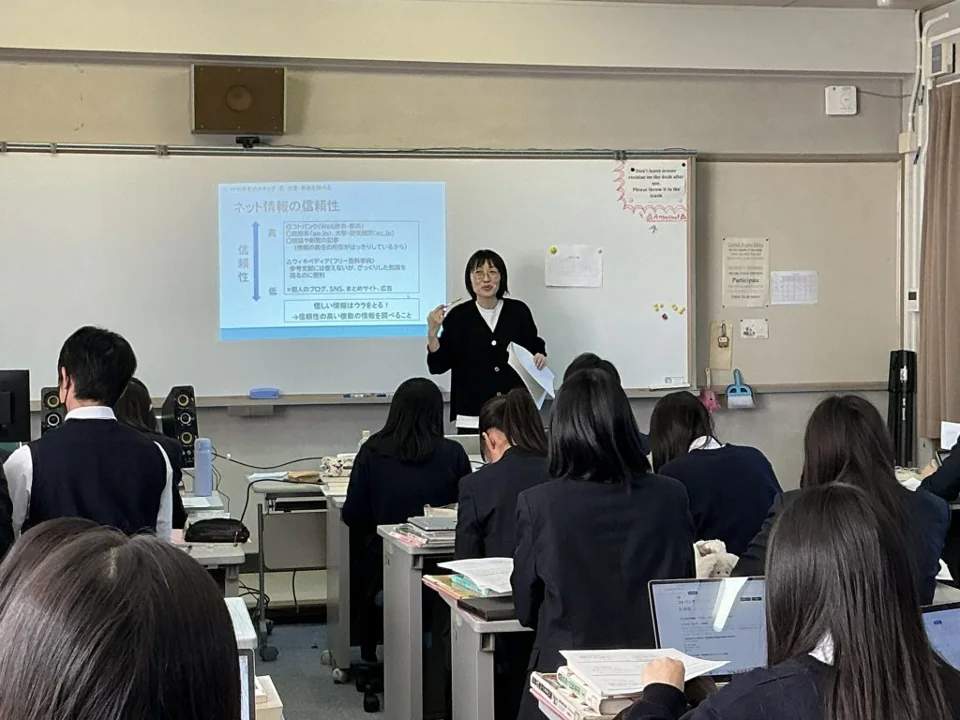
The school describes career guidance as a process in which students and teachers work together through the three high-school years. Its account emphasises students’ aspirations and looking ahead when planning further study. University information sessions bring representatives directly into the school to explain institutions and academic fields.
A session held on 24 June 2026 involved representatives from universities including Aichi Prefectural University, Aichi University of Education, Shiga University, Nagoya Institute of Technology, Nagoya City University, Nagoya University, Mie University and Gifu University. This brought different academic settings into the guidance programme and provided information relevant to considering university and faculty choices.
Sources: Career and university guidance ↗
Reading and library participation
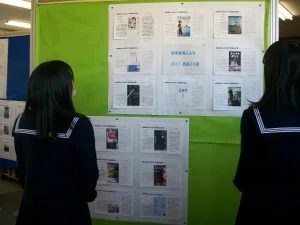
The school library is located on the third floor of the main building and continues to acquire new books. Its published activities include spring and autumn themed exhibitions, a display of selections by the student library committee and an in-school reading-response competition. These activities give reading a visible place in school life, combining individual use of the collection with recommendations and opportunities to respond to books through writing.
Sources: School library ↗
Sport, culture and student interests
The school’s club listing covers a broad range of physical and cultural interests. Sports include athletics, rhythmic gymnastics, archery, kendo, football, rugby, baseball, softball, volleyball, handball, basketball, table tennis, badminton and tennis. Cultural clubs include drama, wind band, koto, art, broadcasting, international relations, tea and flower arrangement, newspaper production and natural science.
These groups provide different forms of organised participation alongside classroom study. Their subjects range from performance and traditional cultural practice to journalism and scientific interests, while sports offer both individual and team activities. The variety is consistent with the school policy’s attention to balancing study with extracurricular life and developing the ability to work with other people.
Sources: Clubs and societies ↗