Visa
About Aichi Prefectural Chiryu East Koto School
A prefectural high school in Chiryu
The directory’s Aichi Prefectural Chiryu East Koto School is Aichi Prefectural Chiryu Higashi High School, known in Japanese as 愛知県立知立東高等学校. It is a secondary school in Chiryu, Aichi Prefecture, Japan. The school opened in April 1986 and has developed an educational programme combining academic study, inquiry, extracurricular participation and preparation for further education.
Its 2026 principal’s message describes a balance between intellectual, ethical and physical development. It identifies inquiry-based learning as a way to build foundations for career planning and the ability to discover problems. Cooperation with Chiryu City allows students to investigate local questions and propose ideas for regional revitalisation. The school also participates in Aichi’s STEAM-oriented inquiry initiative, through which students undertake research and presentations with guidance from university teachers. These activities place investigation and communication alongside regular subject learning.
The principal’s account describes students commuting from Chiryu and surrounding municipalities, including Kariya, Anjo and Toyota. Chiryu Station connects the Meitetsu Nagoya Main Line and Mikawa Line, placing the school within a wider regional network of everyday travel.
Sources: Principal’s message, 2026 ↗ · School introduction and policies ↗
School policies and the learning environment
The school’s policy emphasises perseverance, objective analysis, logical thinking, creativity and responsible action as a member of society. Its curriculum approach seeks a balance between academic work and club activities, connects humanities and sciences with students’ future plans, and uses integrated inquiry time to develop problem finding and critical thinking. The motto links effort with the power of continued practice.
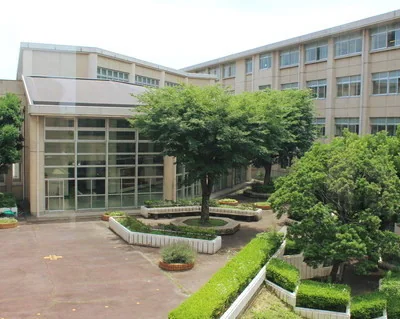
The published facilities include a courtyard, swimming pool, gymnasium, martial-arts and archery spaces, a counselling room, library, cooking room and teaching and study rooms. These spaces support different aspects of school life, from concentrated reading and practical lessons to sport and cultural activities. The combination reflects the school’s stated attention to learning, personal development and physical activity.
Sources: School introduction and policies ↗
First-year learning about local communities
First-year inquiry learning includes visits to communities outside Chiryu. Students work in groups and visit one of five cities: Inuyama, Gamagori, Tokoname, Okazaki or Handa. The purpose is to examine how different municipalities work to revitalise their communities.
The reported programme combines a morning lecture with afternoon exploration. Students use what they encounter to consider possible approaches to issues in their home city. This introduces local investigation through comparison: looking at another place becomes a way to identify ideas and questions that may be relevant to Chiryu.
Sources: First-year inquiry field learning ↗
University exploration and links with industry
The second-year university visit programme aims to broaden students’ perspectives and assist their consideration of future study. Visits include lectures about university faculties and their academic characteristics. The school’s report identifies routes involving languages, humanities, regional studies, nursing, education, information science, engineering and agriculture. Destinations include Aichi Prefectural University and universities in Gifu, Mie, Shizuoka and Nagano.
Third-year inquiry takes a different direction through visits to companies and other facilities in the Tokai region. Students examine how organisations address challenges and contribute to society. The published routes include manufacturing facilities, food-production businesses, energy-related organisations and museums. Examples include a machine-tool museum, a pharmaceutical museum, a fossil museum and the National Institute for Fusion Science.
These two stages connect school learning with different environments beyond the classroom. University visits introduce the organisation of advanced study, while company and facility visits allow students to consider practical questions faced by workplaces and research organisations. The school presents both as opportunities to learn directly from the institutions being visited.
Sources: Second-year university visits ↗ · Third-year company and facility visits ↗
Student science and environmental learning
The Natural Science Club allows members to choose research themes across a broad range of subjects. Its description highlights discussion across year groups and the importance of thinking through questions together. Work concerning turtles in the nearby Sawatari River has included trapping and examining their diets.
The club has also developed environmental-learning games. One uses the river ecosystem to explore relationships between natural events, human activity and the environment. Another grew out of investigations of invasive species, compost and soil nutrients, inviting players to consider how materials can be used rather than wasted. These projects connect scientific investigation with the challenge of explaining environmental questions to other people.
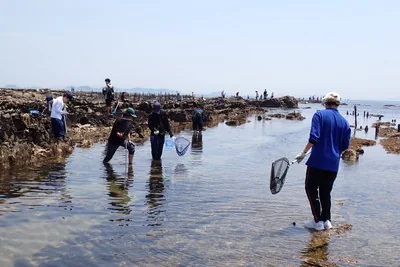
Recent activity reports include participation in invasive-plant removal with Chiryu City, presentations at the school festival and a coastal biological-observation session. The range extends from field observation and practical environmental work to research communication, giving the club several ways to connect its investigations with public learning.
Sources: Natural Science Club ↗
A school festival across year groups
Chiryu Higashi no Tsudoi is the school festival, organised through teams that bring together first-, second- and third-year students. Its published programme combines cultural and sporting activities. Team projects, panel displays, choral work and cheering performances form distinct parts of the event.
The sports programme includes relays, group skipping, tug-of-war and other activities intended to involve many participants. The cultural programme includes classroom presentations, exhibits and contributions from cultural clubs, followed by stage performances. The school’s report describes choir and wind-band performances as well as voluntary presentations. This creates opportunities for students to plan, practise and present work together across class and year boundaries, complementing the individual and small-group learning found elsewhere in school life.
Sources: Chiryu Higashi school festival ↗