Visa
About AICHI Medical College of Rehabilitation
Rehabilitation education in Kiyosu
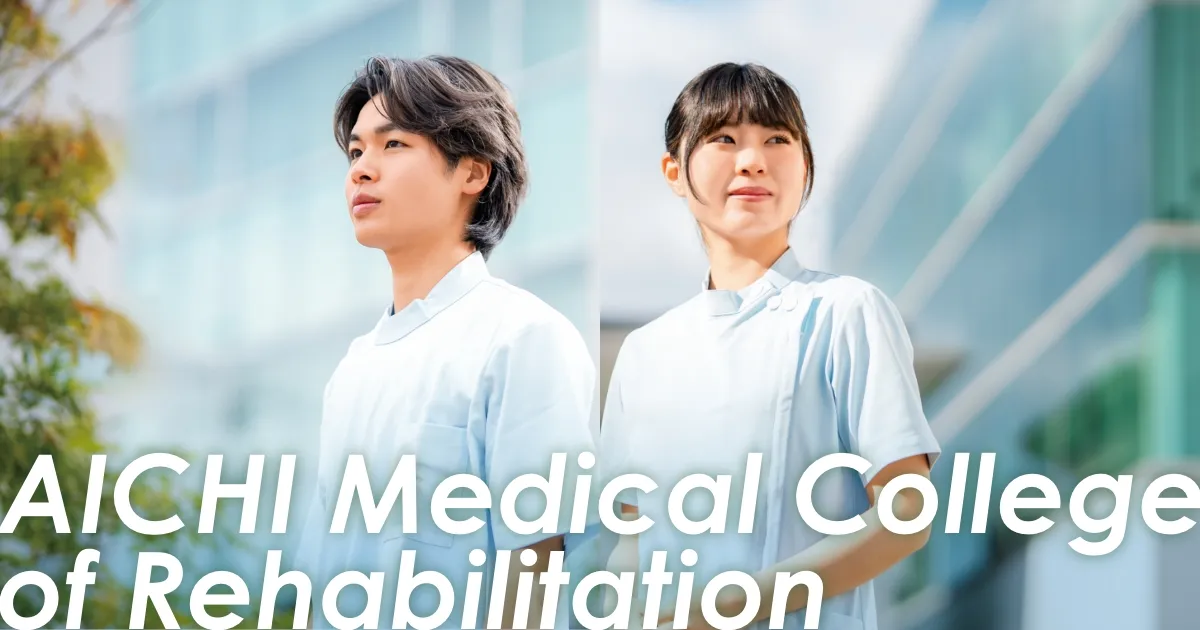
AICHI Medical College of Rehabilitation is the English name used by the institution now operating as Aichi Iryo Gakuin University in Kiyosu, Aichi Prefecture, Japan. Its Japanese university name is 愛知医療学院大学. The university opened in April 2024 and is operated by the Yuai Gakuen educational corporation. Its address is 519 Ichiba, Kiyosu.
The institutional history begins in April 1982 with the establishment of the educational corporation and a vocational school offering physical therapy education. Occupational therapy was added in 1994. Aichi Medical College of Rehabilitation opened as a junior college in 2008 with physical therapy and occupational therapy specialisations, and the vocational school closed in 2010. The history also records a rehabilitation clinic established in 2014, Student PLAZA in 2017 and an affiliated children’s centre in 2020. The current four-year university continues the institution’s focus through its Faculty of Rehabilitation and the two therapy specialisations.
Sources: Institutional history and current university overview ↗
Educational values and the structure of learning
The university’s educational philosophy combines social understanding with basic and specialist medical knowledge. Its stated purpose is to educate people able to support the minds and bodies of people with disabilities and contribute to their lives. Compassion, communication, cooperation and a willingness to learn are reflected in the academic policies.
The curriculum distinguishes general foundational subjects from specialist study, with specialist subjects further organised into supporting, core and developmental components. The policies describe a progression through successive years rather than isolated blocks of knowledge. Active learning, campus exercises and practical experience in community or clinical settings are part of the educational approach. Assessment includes subject examinations, student reflection and evaluation through clinical practice, comprehensive exercises and graduation research. The intended outcome is an ability to integrate knowledge, technical skills and professional attitudes while understanding the wider person and their circumstances.
Sources: Educational philosophy and academic policies ↗
Physical therapy across generations and settings
The physical therapy specialisation places emphasis on understanding the whole person, including situations in which several conditions or disabilities occur together. Its educational description connects knowledge of physical function with ethical responsibility, individual circumstances and participation in society. It also addresses the different characteristics of people from childhood to older age.
Students encounter community learning through the Kiyosu Citizens Genki University programme and activities involving children at the neighbouring affiliated centre. The department identifies disability sports as another educational field, with relevant coursework and opportunities for voluntary participation. Its account of graduation research emphasises students identifying their own questions and receiving faculty support in investigation and problem solving. These experiences connect professional subjects with contact across generations, community settings and different areas of rehabilitation research.
Sources: Physical therapy education ↗
Occupational therapy and participation in everyday life
The occupational therapy specialisation connects understanding of body and mind with activity and social participation. Its educational aims include professional ethics, recognition of individual needs and cooperation with other professions. The curriculum description spans different stages, from acute care through life in the community, and includes developmental and psychiatric fields.
The programme also identifies communication support and rehabilitation engineering as areas of study. Its description discusses learning with eye-tracking technology where verbal communication is difficult. Intergenerational contact is another component: participation in the city’s older-adult programme and interaction with children at the affiliated centre provide different contexts for understanding everyday lives. These are presented as educational opportunities through which students can consider the roles of occupational therapy in relation to people’s activities, environments and participation.
Sources: Occupational therapy education ↗
Spaces for teaching, practice and independent study
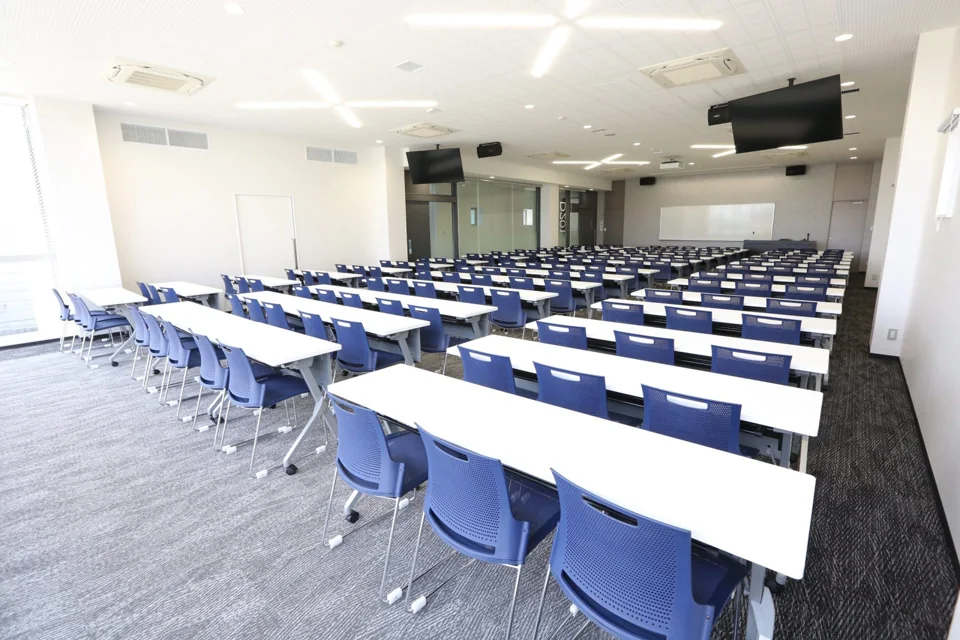
The campus guide identifies lecture rooms equipped with audiovisual facilities, staff research rooms where students can seek advice, a student hall and practical teaching rooms. In the therapy practice room, students take the roles of practitioner and patient in simulated learning. A daily-living training room supports study of everyday activities, environmental adaptations and assistance methods. The student hall accommodates self-study, group work, meals and conversation.
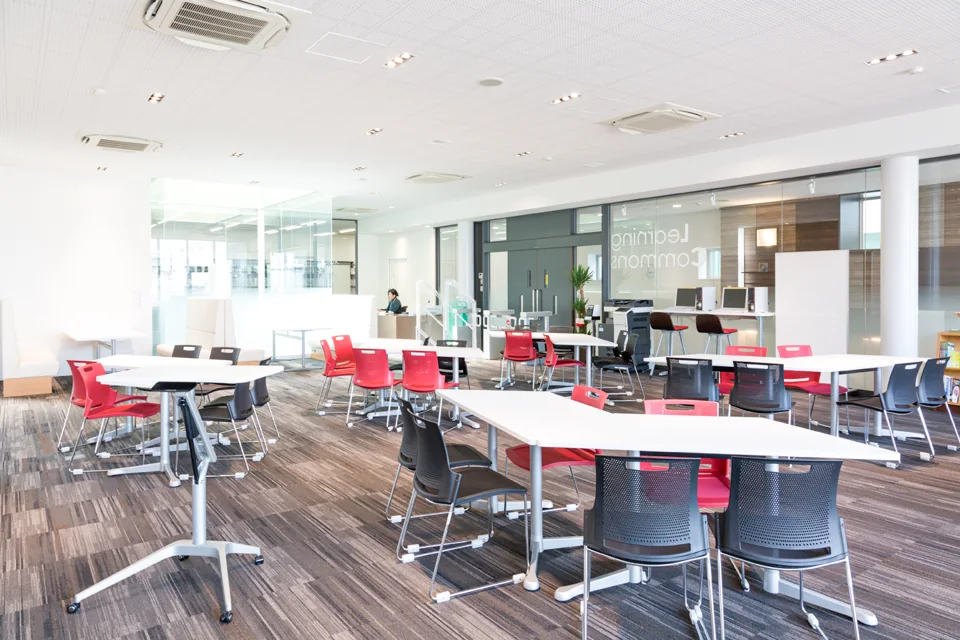
The library separates a Learning Commons area from a quieter book-collection area. Movable arrangements support group learning, and projection onto a wall allows presentation practice. The quieter area provides individual seating and access to specialist books, academic journals and audiovisual materials. Laptops are also available for use within the facility. This combination gives students different environments for collaborative preparation, consulting information and concentrating on individual work.
A door separates the library’s quiet collection space from the Learning Commons. Students can therefore choose between discussion and presentation preparation in one area and individual reading or report writing in another.
Sources: Campus facilities ↗ · Library learning spaces ↗
A continuing programme with the local community
Kiyosu Citizens Genki University is a community programme associated with the institution and the city. It is intended for older residents interested in learning about health, care prevention and participation in community activities. Its year-long format combines learning about these subjects with practical activity and opportunities for meeting others.
The published 2026–2027 programme runs from May 2026 to March 2027 at the university. Its description distinguishes a lecture component concerning active later life and community building from a practical component related to health and care prevention. Participants encounter contributions from university teachers and local organisations. The programme provides a concrete example of the university’s regional engagement and a setting for interaction between rehabilitation education and the surrounding community.
Sources: Kiyosu Citizens Genki University community programme ↗