Visa

About Aichi Gakusen College
A junior college in Okazaki
Aichi Gakusen College is a junior college in Okazaki, Aichi Prefecture, Japan, within the Anjo Gakuen educational organisation. Its Japanese website now uses the name Aichi Gakusen University Junior College Division, while retaining Aichi Gakusen College in its English footer. It has its own junior-college history and educational programmes, distinct from the four-year Aichi Gakusen University.
The college opened in 1950 as Anjo Gakuen Women's Junior College, initially with clothing and life-related departments. Its history records subsequent development in home economics, international education, food and nutrition, and early childhood education. It adopted the Aichi Gakusen Women's Junior College name in 1982 and Aichi Gakusen College in 2000. The early childhood education department moved to the Okazaki campus in 2007, bringing the college's teaching together there. Its published departments are Life Design, Food and Nutrition, and Early Childhood Education.
Sources: College institutional history ↗
Recruitment changes announced in 2026
On 9 October 2026, Anjo Gakuen announced that the junior college would stop recruiting students from the 2028 academic year. The announcement follows a governing-board decision in September 2026 and identifies falling student numbers and changes in educational demand among the reasons for restructuring. The decision concerns future recruitment rather than an immediate end to teaching.
The announcement states that education will continue for enrolled students and those entering in April 2027, with academic, student-life and career support maintained through graduation. It also sets out an intention to reorganise educational resources and experience within the sister university's Faculty of Home Economics. The notice describes this as preserving and developing the college's educational culture in a different structure. Other schools operated by Anjo Gakuen are identified separately, and the announcement does not present their existing recruitment and educational activities as ending.
Sources: Important announcement on recruitment from 2028, 9 October 2026 ↗
Life Design and flexible subject choices
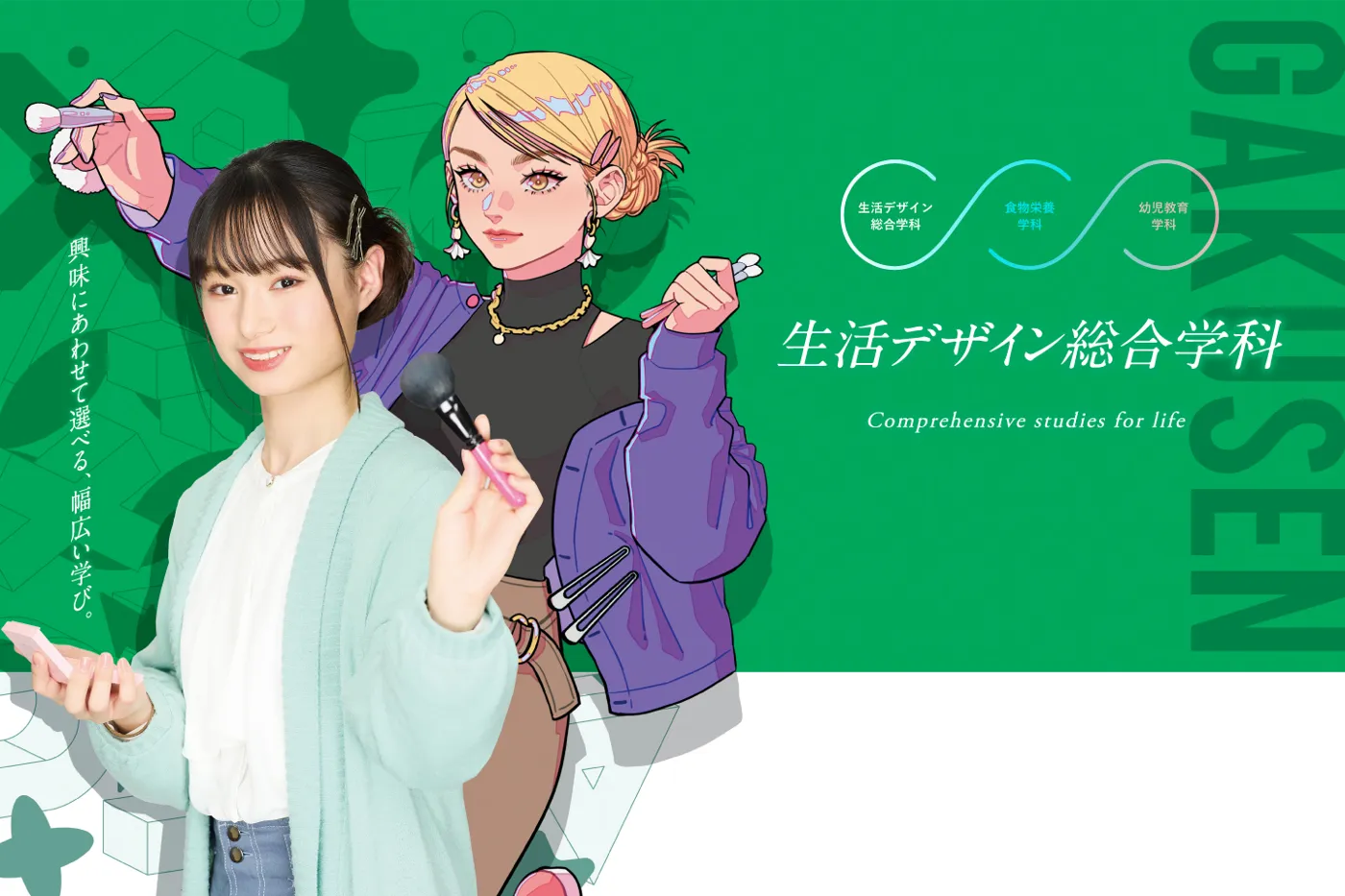
The Life Design department describes a flexible approach in which students select subjects according to their interests and goals. It calls this cafeteria-style course selection: students can combine learning areas rather than follow only one narrowly defined subject route. Academic advisers and seminar teachers help students consider their learning plans and future direction.
The department's published areas include information design, video editing, artificial-intelligence applications in business and school-library work. Beauty-related study also appears in its 2026 curriculum information. Other areas associated with its study and examination support include fashion, interiors, colour, languages, business, food, welfare and computing. The department therefore connects practical skills with planning for work and everyday life. Its description emphasises individual combinations of subjects and support for making those choices. Advising connects this broad selection with each student's learning plan, helping students choose subjects that fit their interests and future direction.
Sources: Life Design department ↗
Food and Nutrition through practical study
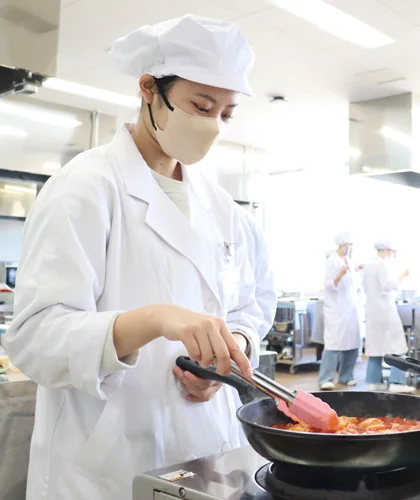
Food and Nutrition gives particular attention to experiments and practical exercises. Its description presents food education across different age groups, with social-welfare subjects complementing nutrition and food-related learning. Sports nutrition and exercise-related study are among the areas highlighted by the department, alongside medical-office-related curriculum options.
Work with businesses and community organisations provides another part of its learning environment. The department reports continuing involvement in product and recipe development, as well as food-education events and cooking classes for parents and children. These activities give students opportunities to connect classroom material with preparing food and communicating about it. Food allergies are also identified as an important study topic, particularly in relation to settings such as schools and childcare. The emphasis is on developing knowledge through several kinds of practical learning, from laboratory exercises and cooking to discussions about food in community settings.
Sources: Food and Nutrition department ↗
Early Childhood Education and community contact
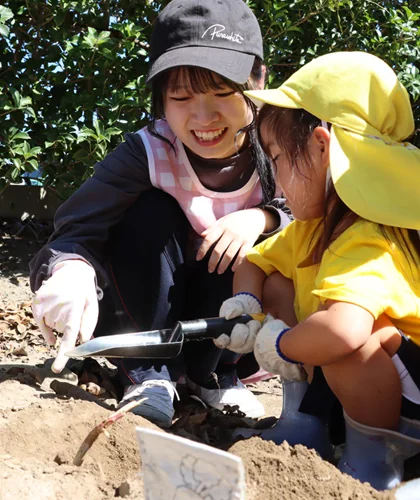
The Early Childhood Education department combines academic study with opportunities to interact with children. Its published account identifies three affiliated kindergartens within the educational organisation and describes activities such as digging sweet potatoes and taking part in play exchanges with kindergarten children. These interactions provide settings in which students can observe and participate in activities beyond the college classroom.
Other examples include work at Okazaki Genki-kan and the Kodomo Matsuri children's festival, which welcomes parents and children. Off-campus activities also feature in early childhood seminars. The department describes collaboration with Food and Nutrition students on events combining seasonal play with meals planned with food allergies in mind. Its account therefore connects children's development, play, family participation and food-related awareness. The learning setting includes both subject study and shared experiences with people from the surrounding community.
Sources: Early Childhood Education department ↗
The rhythm of campus life
The college's published annual schedule combines teaching terms and examinations with student-organised activities. Entrance ceremonies and orientation are followed by the start of first-term classes. Welcome gatherings, campus exchanges and spring sports activities provide opportunities for new students to become involved in college life. Open-campus events and summer festivals appear alongside the academic calendar.
Later in the year, the schedule includes a sports day, campus concerts, Halloween activities, the Gakusen festival and the children's festival. Winter events and the transition towards graduation include seminar presentations and a graduation-production fashion show. The schedule distinguishes events organised by the student association from those led by the festival committee. This gives a picture of campus participation extending across creative, sporting and social activities, while remaining linked to the sequence of classes, assessment periods and graduation.