Visa

About Agricultural Research and Development Station Suceava
An agricultural research station in northern Romania
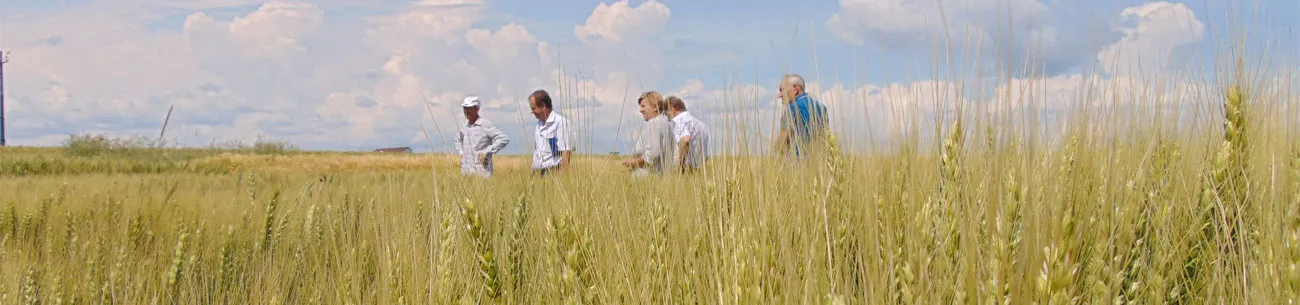
The Agricultural Research and Development Station Suceava is a Romanian agricultural research institution serving the Suceava Plateau and neighbouring foothill areas. Known locally as Stațiunea de Cercetare-Dezvoltare Agricolă Suceava, it works on field crops, crop improvement, cultivation methods and plant protection. Its institutional role is research and development rather than that of a college offering a conventional catalogue of undergraduate courses. It operates within the agricultural research system associated with the Gheorghe Ionescu-Șișești Academy of Agricultural and Forestry Sciences.
The station traces its foundation to 1946, when an agricultural experimental station was established at Ilișești, near Suceava. It moved its headquarters to Suceava in 1949, expanding work in breeding, crop husbandry and plant protection. Its historical anniversary account records subsequent institutional names in 1975 and 2002 and a reorganisation under Government Decision 148 of 2018. The seventy-fifth anniversary marked in 2021 belongs to that longer history of organised agricultural investigation in the region.
Sources: Institutional history ↗ · Seventy-fifth anniversary: historical account ↗
A distinctive environment for field experiments
The station’s account of its environment places its principal site in western Suceava, on the right-hand slope of the Suceava River. Streams divide the terrain into areas with different gradients and orientations. The relationship between permeable and impermeable geological layers contributes to groundwater conditions, waterlogging and landslides in parts of the surrounding plateau. Such physical variation is relevant to the interpretation of experiments conducted in the area.
The environmental description characterises the region as relatively cool and subhumid, with a growing season influenced by frost and by occasional dry summers. It also describes soils with differing textures and nutrient characteristics. This local setting helps explain the station’s emphasis on varieties adapted to northern conditions: its work concerns how crops behave in a particular agricultural environment, including limitations imposed by temperature, moisture and soil.
Sources: Local environmental conditions ↗
Potato improvement and planting material
Potatoes have been a research subject since the institution’s early years. The programme initially assessed varieties that could replace less productive or disease-susceptible material. From around 1960, the station developed more intensive breeding work addressing viruses, degeneration, pests, productivity, culinary qualities and suitability for mechanisation.
Sucevița, approved in 1982, is identified as the first potato variety created at the station. Later varieties listed in its historical register include Moldovița, Dragomirna, Expres and Temerar. The programme’s stated objectives extend beyond creating varieties: they include producing high-generation planting material, developing seed-production methods for newly approved varieties and evaluating the storage behaviour of planting material. This links breeding with the practical steps needed to maintain and multiply useful potato varieties.
Sources: Potato breeding ↗
Cereals and maize adapted to cooler conditions
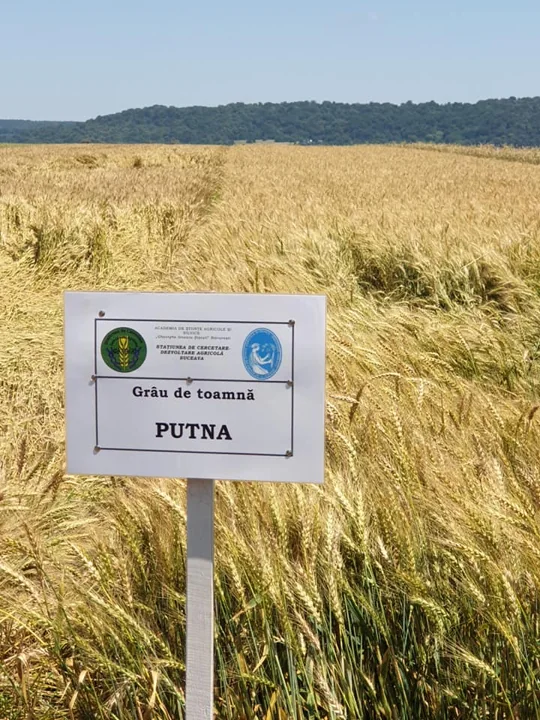
Cereal research encompasses winter and spring wheat, rye, triticale and spring barley. The station’s account describes a progression from testing domestic and foreign varieties to creating breeding material adapted to northern Romania. Its published cereal register includes the wheat varieties Bucovina, Suceava 84, Aniversar and Putna. Rye breeding has included attention to productive, shorter-stemmed plants with resistance to lodging, while triticale work has addressed adaptation to acidic soils.
Maize improvement has a particularly strong connection to the region’s thermal limits. Work begun in 1955 collected and studied local populations, followed by the development of varieties and then hybrids using inbred lines. The programme emphasises early and very early maturity, resistance to low temperatures and suitable performance in cool, humid areas. Its stated objectives include evaluating germplasm in both field and laboratory conditions and identifying useful genetic sources. Resistance to stalk breakage, lodging, diseases and pests forms part of this breeding agenda.
Sources: Cereal breeding ↗ · Maize breeding ↗
Plant protection and mountain agriculture
The plant protection programme investigates the biology, ecology and distribution of organisms that damage crops. Its objectives encompass prevention and control in cereals, potatoes and forage plants. It also addresses integrated pest management, biodiversity, pesticide resistance and ways to reduce environmental pollution. The emphasis is on understanding damaging organisms and improving the timing and effectiveness of interventions.
The Pojorâta Agricultural Research Centre adds a mountain-area dimension to the station’s work. Established in 1950 with a focus on potato wart disease, it came under the Suceava station’s administration in 1968 and broadened its remit in 1980. Its activities include testing potato material for resistance to Synchytrium endobioticum in field and controlled conditions. The centre also studies cultivation suited to mountain and foothill environments and conserves and improves broad bean genetic material. Its breeding objectives include protein quality, suitability for mechanical harvesting and resistance to diseases.
Sources: Plant protection research ↗ · Pojorâta Agricultural Research Centre ↗
Research priorities and scientific communication
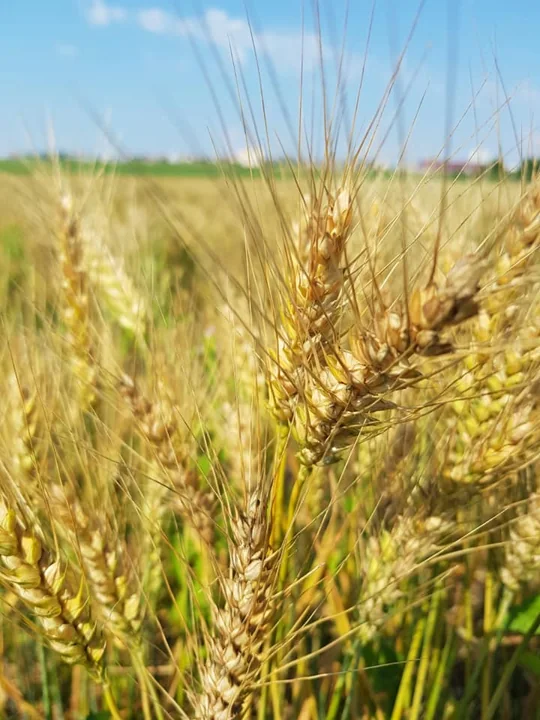
The station’s published research priorities connect genetic improvement with seed production, environmental adaptation and cultivation technology. They include maintaining germplasm collections, improving disease resistance, examining fertilisation systems and continuing long-term studies of soil–plant relationships. Research on forage crops and grasslands links crop science with the needs of livestock systems.
Its publication record provides another view of this work. The official books list includes subjects such as maize, plant genetic resources, biodiversity, potato biology, entomology, broad bean cultivation and remediation of soils contaminated with heavy metals. Publications on potato diseases and pests in northern Romania illustrate the continuing relationship between regional agricultural problems and scientific communication. Together, these research programmes and publications show a station organised around crops, their growing environment and the transfer of agricultural knowledge.
Sources: Research priorities ↗ · Published books ↗