Visa
About Accademia Nazionale di Danza
A national institution for dance
The Accademia Nazionale di Danza, usually abbreviated to AND, is a higher dance institution in Rome. It was established in 1948 through legislation transforming the royal dance school founded by Jia Ruskaja in 1940. That earlier school had been attached to the national academy of dramatic art. The institution’s history connects dance practice with analytical study, research and education.
Its organisation includes schools of classical dance, contemporary dance, choreography and dance education. These represent different aspects of the field: interpreting repertoire, developing movement languages, composing work and investigating how dance is taught. The academy’s account of its development also identifies preparatory education and projects bringing dance together with other arts. This range connects specialist artistic training with broader questions about learning, performance and creative enquiry.
The institution’s historical account records the contribution of resident and visiting artists including Giuliana Penzi, Clotilde and Alexander Sakharoff, David Lichine and Kurt Jooss. Such encounters form part of the academy’s development as a place where different traditions of performance and teaching have met.
Sources: History ↗
Classical training and repertoire
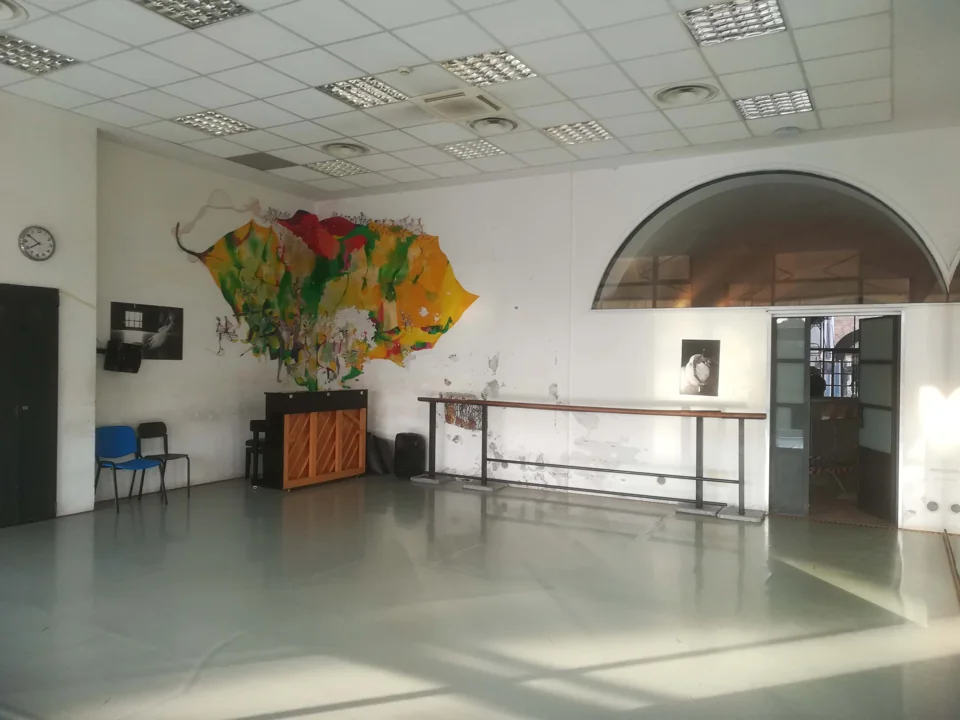
The School of Classical Dance draws on the academy’s established traditions while developing the preparation of performers for classical and neoclassical repertoire. Its first-level teaching connects technical training with the disciplines needed to understand and interpret ballet. Russian methodological references form part of the approach, alongside workshops exploring other techniques and styles from ballet’s history.
Historical dances contribute to the practical and interpretative preparation of students. The school describes this material as a means of broadening knowledge of ballet and its different forms rather than treating technique as an isolated physical exercise. Its provision includes first-level and second-level studies, preparatory courses and a two-year dance education pathway specialising in classical dance. The education pathway became part of its established second-level offer from the 2018–2019 academic year.
Sources: Classical Dance School ↗
Contemporary performance and creation
The School of Contemporary Dance prepares performers to engage with the varied languages of the contemporary choreographic scene. Its approach includes historical European and North American techniques and repertoires from the twentieth century, together with their subsequent developments. Contemporary training therefore involves both inherited practices and the changing ways in which choreographic work is made and interpreted.
The school connects technical and interpretative disciplines with projects involving new choreographers. Resid’AND is identified as one setting in which technique and dramaturgy meet contemporary concerns. Its programme listings include first-level and second-level contemporary dance studies, preparatory education and a dance education pathway specialising in contemporary dance. This combination places performance training alongside investigation of teaching methods and the development of artistic projects with other practitioners.
Sources: Contemporary Dance School ↗
A historic site on the Aventine
The academy occupies a historically layered site at Largo Arrigo VII in Rome’s Aventine area. Its official account refers to seventeenth- and eighteenth-century maps recording an asymmetrical building and identifying it as a water castle. The location forms part of a landscape extending between the Circus Maximus and Santa Prisca.
Archaeological investigation during restructuring in the 1960s identified walls belonging to an imperial Roman bath complex incorporated into the later building. The site now includes the Teatro Ruskaja, named in honour of the academy’s founder, whose original name was Evgenija Borisenko. The institution’s premises thus connect spaces used for contemporary performance with evidence of much earlier construction and use, providing a distinctive physical setting for dance education.
Sources: Historic headquarters ↗
A specialist library and documentary collections
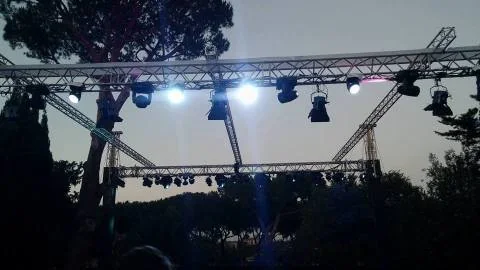
The academy library is located on the ground floor of Villino Muñoz behind the outdoor Teatro Grande. The building, associated with architect Antonio Muñoz, was acquired in 1965 by the Opera dell’Accademia Nazionale di Danza and used for theoretical classes and library functions. Reorganisation began in 2005, followed by renovation, and the library was officially inaugurated on 28 January 2010.
Its specialisation is dance, with thematic collections covering history and repertoire, theory and technique, preparatory and educational dance, anatomy and supporting techniques, stage space, art history and music history. Reference works, periodicals and audiovisual materials complement these subjects. Books associated with Jia Ruskaja form an original core, with additional named collections including those of Leonetta Bentivoglio, Maria Verga and Nino Piccione, Fabio Ciofi degli Atti and Aldo Zoppolato. Membership of the BVE library network connects these holdings with a wider documentary system.
The collection’s organisation brings written scholarship and audiovisual documentation into the same specialist setting, supporting investigation of movement, repertory and the other arts connected with dance.
Sources: Library ↗
Connections with dance secondary schools
Since the introduction of Italy’s dance secondary schools in 2010, AND has contributed to their establishment and coordination. Its published role includes assessing premises, making framework agreements with schools and appointing internal academic staff as school contacts. It also supervises educational activity and aspects of admission and progression assessment in cooperation with the national network of music and dance secondary schools.
Artistic and educational events extend these relationships beyond administration. OpenAND offers participating pupils and teachers meetings and open classes at the academy. Liceindanza gives secondary-school students an opportunity to perform on the Teatro Grande stage and present results of their studies. These activities connect earlier dance education with the academy’s teaching environment, allowing young performers and their teachers to encounter its spaces, practices and wider educational community.
Sources: Dance secondary schools ↗