Visa
About Academy of Fine Arts of Bologna
An academy in Bologna’s university district
The Academy of Fine Arts of Bologna, known in Italian as the Accademia di Belle Arti di Bologna, dates its foundation to 1710. It began as the Accademia Clementina, with the purpose of encouraging local artistic industries. Its teaching history includes artists such as Antonio Basoli, Donato Creti, Giorgio Morandi, Virgilio Guidi, Quinto Ghermandi and Concetto Pozzati. Painting, sculpture, architecture and the study of art formed its initial educational framework.
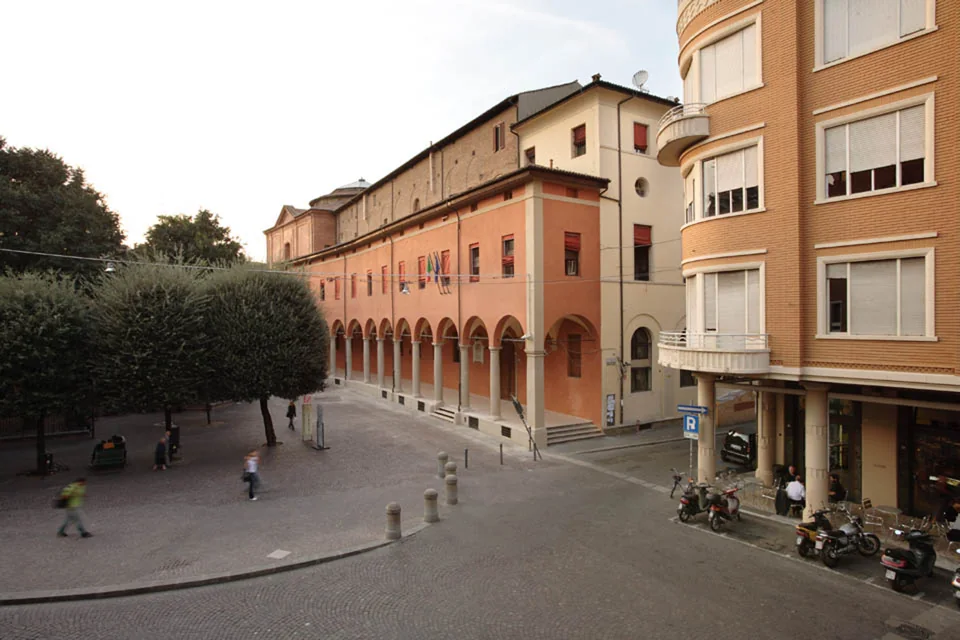
The historic headquarters are in Bologna’s university district at Via delle Belle Arti 54. Together with the National Picture Gallery, the academy occupies the former church of Sant’Ignazio and Jesuit novitiate complex built by Alfonso Torreggiani between 1728 and 1735. Its present academic portfolio extends from painting, sculpture, decoration and scenography to graphic and product design, comics and illustration, fashion, photography, audiovisual languages and art education. First- and second-level academic diplomas sit alongside five-year single-cycle restoration courses.
Sources: History and historic location ↗
Painting and individual artistic research
The three-year first-level painting programme combines traditional techniques with experimentation in contemporary forms of expression. Its purpose is to develop students’ individual artistic research, supported by technical knowledge and critical methods. Painting is considered both as a material practice and as a form of visual language that can interact with newer media and technologies.
The programme addresses the production of artworks for different settings, including public and private spaces, galleries and museums. The published study plan brings painting and drawing together with modern art history, the psychology of art, perception and the psychology of form. Opportunities for internships in galleries and public or private institutions provide direct experience beyond the studio. Exhibition organisation and the communication of painting also form part of the skills described in the course presentation.
Sources: Painting ↗
Graphic design and visual communication
The first-level graphic design course develops a design methodology for visual communication. Students study how images carry symbolic and evocative meaning while acquiring the technical ability to simplify and invent visual forms. The course connects typography and editorial design with multimedia communication, recognising the relationship between a designer, other production specialists and the intended audience.
Its professional fields include corporate and event identities, books, magazines, catalogues, packaging, exhibition design, signage, web graphics and animation. The curriculum includes technical and project drawing, computing for graphics, photography, the history of applied arts and graphic-design projects. The programme also considers cooperation with photographers, illustrators, typographers, architects and other contributors. This emphasis makes coordination and communication part of the design process, alongside the development of an individual visual solution.
Sources: Graphic Design ↗
Conservation and restoration
The PFP2 restoration course is a five-year single-cycle programme concerned with painted works on wood and textile supports, carved wooden objects, furnishings, wooden structures and certain synthetic materials. It brings together theoretical, methodological, design and practical preparation for the conservation of cultural property. Its scope includes paintings on canvas and panel, wooden sculpture, furnishings and contemporary art.
Students can work on publicly owned objects under the guidance of laboratory teachers and the supervision of heritage officials. The study plan places practical restoration alongside scientific and historical learning. Subjects include drawing for restoration, cultural-heritage photography, applied chemistry and physics, the techniques of paintings on wooden and textile supports, art history and restoration theory. Optional subjects allow students to shape aspects of their studies while working within this specialist conservation pathway.
Art education and cultural mediation
The second-level, two-year programme in art education and cultural mediation focuses on communicating artistic and cultural heritage. Students explore methods for interpreting artworks and designing communication suited to particular audiences and settings. Its educational purpose encompasses both structured learning and the wider public presentation of art.
The course combines art history, museology and criticism with pedagogy and cultural-mediation techniques. Specialist workshops in artistic practice accompany this theoretical foundation. Further work addresses how new media affect art communication, while workshops with contemporary artists expose students to current creative approaches. Curricular internships in museums and other public or private institutions add practical experience. The programme describes competences in museum education, educational-project development, exhibition organisation and the preparation of communication materials for artistic and educational events.
Collections and library resources
The academy’s historic heritage includes sculpture, paintings, drawings, prints and archival documents inherited from the Clementina institution and developed through later acquisitions. These holdings remain within the school and support cataloguing, research and teaching. Works in the main hall, corridors and Clementina room are publicly accessible, while other spaces are opened through guided visits organised for academic events. Students from the art-communication and education department take part in these visits.
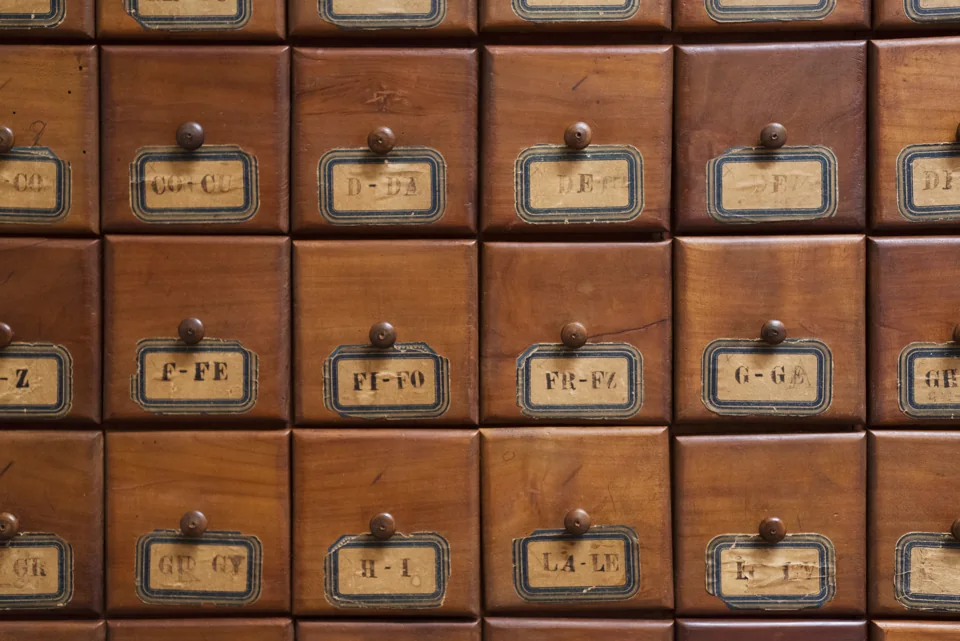
The historic library contains approximately 5,300 volumes, including rare works from the sixteenth to nineteenth centuries on architecture, scenography, decorative arts and art history. Notable holdings include the first Italian edition of Diderot and d’Alembert’s Encyclopédie and texts by the scenographer Ferdinando Galli Bibiena. The Enrico Panzacchi collection adds books, manuscripts and notes donated in 1940. A separate academy library at Via del Guasto 7 provides books across artistic disciplines, exhibition catalogues and monographs, with an online catalogue supporting discovery.
Sources: Historic artistic heritage ↗ · Historic library ↗ · Library ↗