Visa

About Academy of Fine Arts of Palermo
An artistic institution with eighteenth-century roots
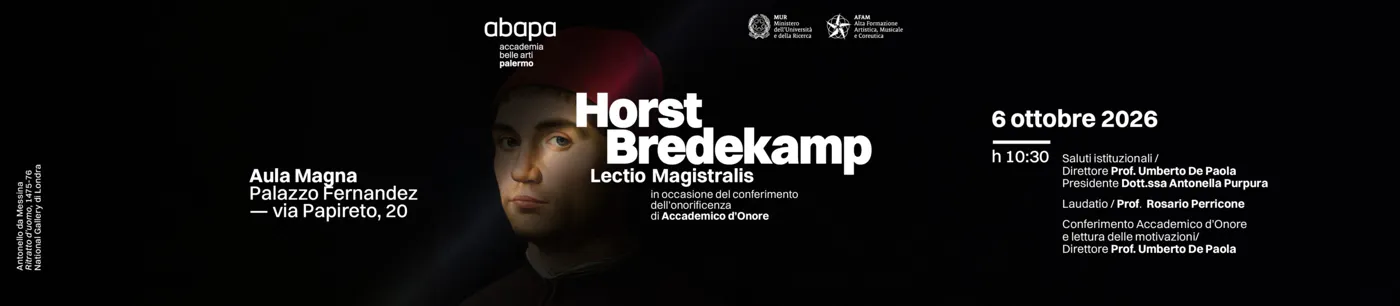
The Academy of Fine Arts of Palermo, known in Italian as Accademia di Belle Arti di Palermo, is an institution of higher artistic education in Palermo, Sicily. Its history begins with the School of Drawing established in 1780 within the city's Accademia degli Studi. Francesco Sozzi was its first teacher. Drawing provided the foundation of the early programme, while the Accademia dell'Uomo Ignudo, established in 1783, offered more advanced study from the living model for painters and sculptors.
The institution developed through successive reorganizations of artistic education. A sculpture chair was established in 1815 and entrusted to Valerio Villareale. The Royal Institute of Fine Arts followed in 1879. Today the academy combines artistic training with research and production. Its stated mission emphasizes helping students develop methods, individual styles and artistic or professional paths, supported by critical study, experimentation, cultural initiatives and collaboration with the local community.
Sources: History and mission ↗
Visual arts, design and cultural communication
Teaching is organized across three departments: Visual Arts, Design and Applied Arts, and Communication and Art Education. The academic offering includes first-level and second-level diploma courses. Visual arts subjects include painting, sculpture, printmaking, experimental languages, decoration and applied arts. These areas sit alongside courses connecting image-making with contemporary technologies and cultural communication.
Design and Applied Arts includes first-level routes in scenography, comics and illustration, photography, cinema and audiovisual work, graphic design and fashion design. Second-level offerings include scenography, cinema and video, graphic design and visual communication, fashion design, and new languages of animation, illustration and comics. Communication and Art Education includes exhibition and interior design, art education, exhibition design and museum enhancement, and cultural mediation of artistic heritage. The academy also lists a five-year single-cycle restoration programme. Its course directory distinguishes current titles from programmes being phased out.
Sources: Academic offering ↗
Historic palaces and spaces at the Zisa
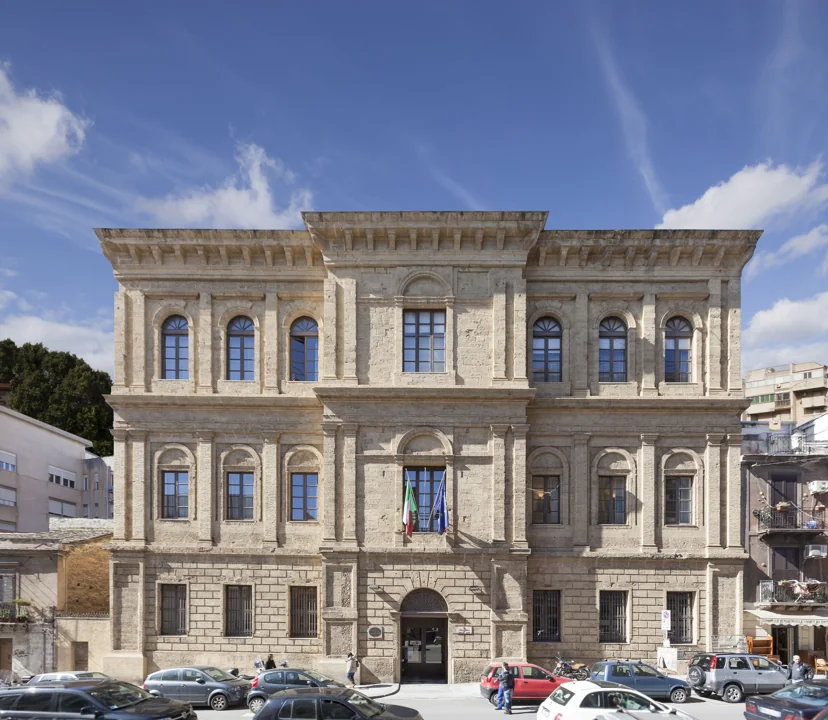
The academy's activities occupy several sites within Palermo. Palazzo Fernandez on Via Papireto was inaugurated in 1886 as the home of the Royal Institute of Fine Arts. Architect Giuseppe Damiani Almejda completed the building, whose substantial stone facade remains a distinctive institutional presence. Following restoration completed in 2005, the palace houses the directorate, international relations office, library, historical book collection, drawing and print collection, and main assembly hall.
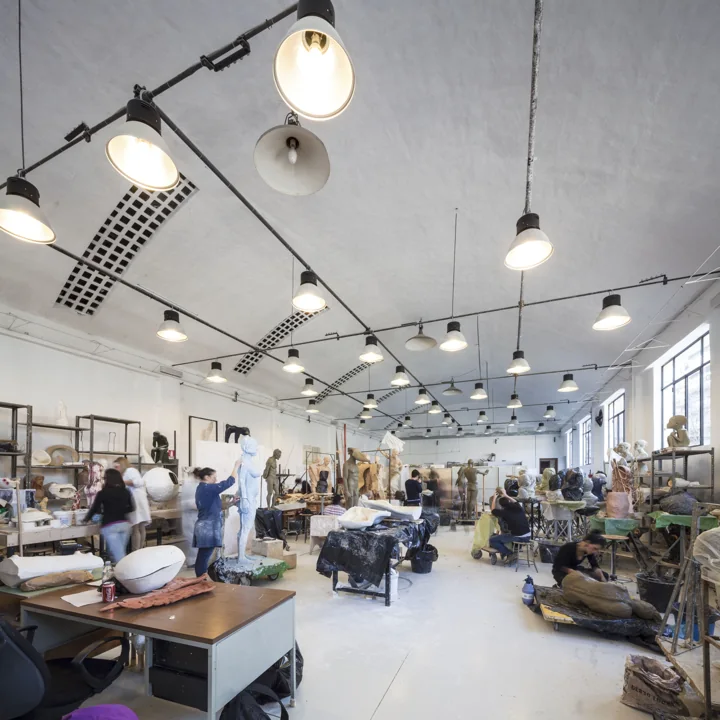
Palazzo Molinelli di Santa Rosalia, also in the Papireto area, originated in the late sixteenth century. The academy identifies it with laboratories for subjects including painting, ceramics, ornament, engraving, mosaic, design and modelling. A further group of learning spaces occupies the Cantieri Culturali alla Zisa, the former Ducrot industrial workshops. The academy has used pavilions there since 2004 for practical disciplines including sculpture, painting, scenography, fashion and graphic design. These different buildings connect artistic education with both the city's architectural heritage and its converted industrial spaces.
Sources: Academy locations ↗
Books for contemporary practice and historical study
The contemporary library collection is housed in the ground-floor reading room of Palazzo Fernandez. Open shelving brings together material on twentieth- and twenty-first-century art, including artists' monographs, exhibition catalogues, artists' writings and critical studies. Books concerning Sicilian art and applied arts form part of the collection. Specialist journals extend its coverage into contemporary art, graphic arts, architecture, design and fashion. The library's collecting policy is closely linked to supporting students across the academy's disciplines.
The historical collection preserves earlier and particularly significant publications, including a seventeenth-century volume and material from the eighteenth and nineteenth centuries. It reflects the teaching and artistic life of the institution over more than two centuries. Decorative arts holdings include portfolios of loose plates published by French and German publishers around the turn of the twentieth century. Architectural details and natural, floral and animal motifs in these works once provided models for practical student exercises. Historical periodicals are also preserved, linking current research with earlier artistic debates.
Sources: Contemporary library collection ↗ · Historical book collection ↗
The book as an artwork
In 2012 the library began building a permanent collection of artists' books. This collection treats the book as an artistic object, exploring different materials, techniques and ways of combining images, writing and physical form. It began with the intention of recording the presence and work of academy teachers and grew through donations from contemporary artists active in Sicily and younger artists trained at the institution.
Works from the Horat-Genna archive joined the collection in 2016. That contribution includes a selection of forty artists' books produced by students through courses, seminars and workshops taught by Carla Horat and Francesca Genna. It preserves evidence of both traditional and alternative printmaking approaches. Small exhibitions in the library and the historical collection's mezzanine bring selections of these works before the public.
Sources: Artists’ books ↗
Collections that record generations of artistic teaching
The academy's plaster collection combines casts of well-known works with original plaster models taken from artists' clay studies. Acquired through purchases and donations for teaching, these objects connect sculpture education with examples from classical, medieval, Renaissance, Baroque and Neoclassical art. The collection's origins are associated with the sculpture chair established in 1815. Its history also records the movement of teaching collections between the academy's successive buildings.
The painting collection includes work by artists who also taught at the academy. Paintings are distributed through rooms and offices in Palazzo Fernandez and Palazzo Molinelli di Santa Rosalia. Artists represented include Gianbecchina, Pietro de Francisco, Salvatore Fiume, Pippo Rizzo and Eustachio Catalano. Together these collections preserve material traces of the academy's educational community and its connections with Palermo's wider artistic life.
Sources: Plaster cast collection ↗ · Painting collection ↗