Visa

About Accademia di Belle Arti di Urbino
An academy shaped by Urbino’s artistic setting
Accademia di Belle Arti di Urbino was established in 1967. Renato Bruscaglia, called from Florence to organise the new institution, was its first director. The initial teaching offer comprised painting, sculpture and scenography; decoration was added in 1975. The academy developed in a city associated with Renaissance art, Raphael and the later tradition of Federico Barocci, giving its modern educational work a distinctive historical setting.
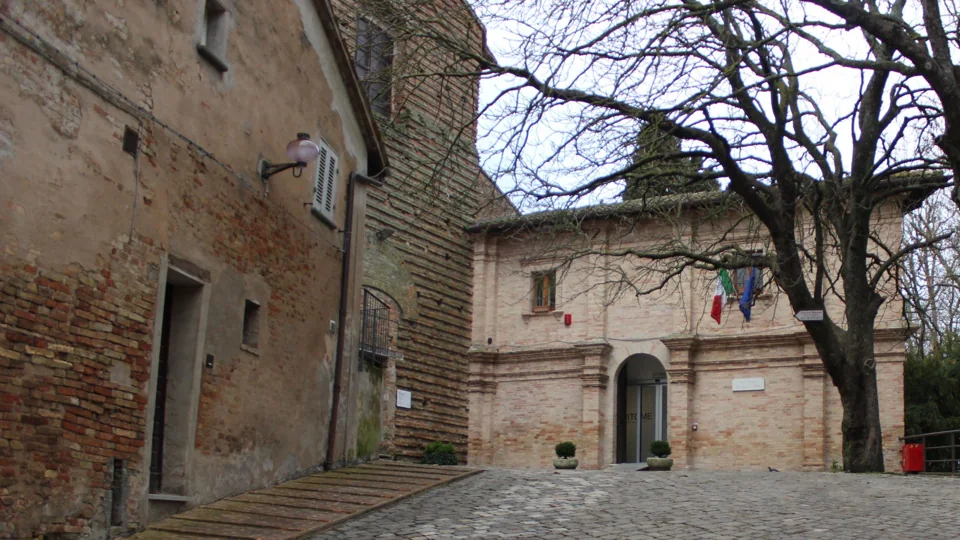
The main location occupies a former Discalced Carmelite convent restored for the academy in 1967. The convent building had been reconstructed between 1713 and 1742, with the adjoining Annunziata church completed in 1757. Over subsequent decades the academy expanded into additional buildings as student numbers, teaching subjects and specialist artistic practices developed. Its institutional history records the introduction of experimental multimedia study in 2000–2001 and further first- and second-level pathways during the following decade.
Sources: History ↗
Connecting tradition with contemporary practice
The academy belongs to Italy’s AFAM higher artistic and musical education sector under the Ministry of Universities and Research. Its mission places artistic research and experimentation alongside teaching, with a particular emphasis on bringing established visual languages into dialogue with contemporary practices.
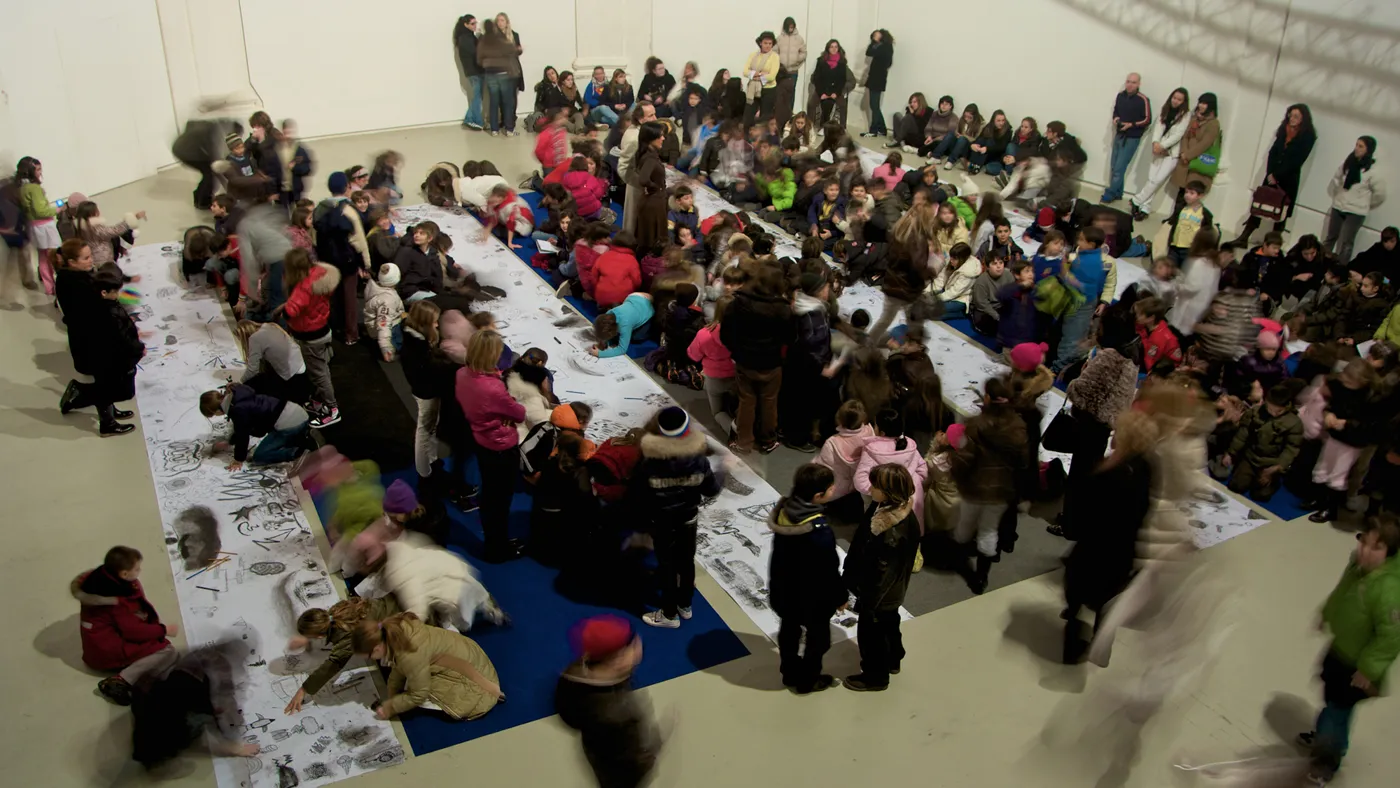
Laboratory experience and theoretical reflection are intended to develop students’ ability to create independently across different forms of visual expression. The academy also describes responsibilities extending beyond its classrooms: supporting knowledge of communication, publishing and new technologies, contributing to the appreciation and protection of Urbino’s artistic and cultural heritage, and working with local public and private organisations. Exhibitions, debates, conferences, workshops, performances and teaching laboratories form part of this cultural activity.
Sources: Mission ↗
Four locations with different teaching roles
The academy operates across four locations. At Via dei Maceri 2, the main building contains the library, reading room, main lecture hall and other teaching rooms on the ground floor. Painting occupies the first floor and decoration the second, while the administrative offices are also based there.
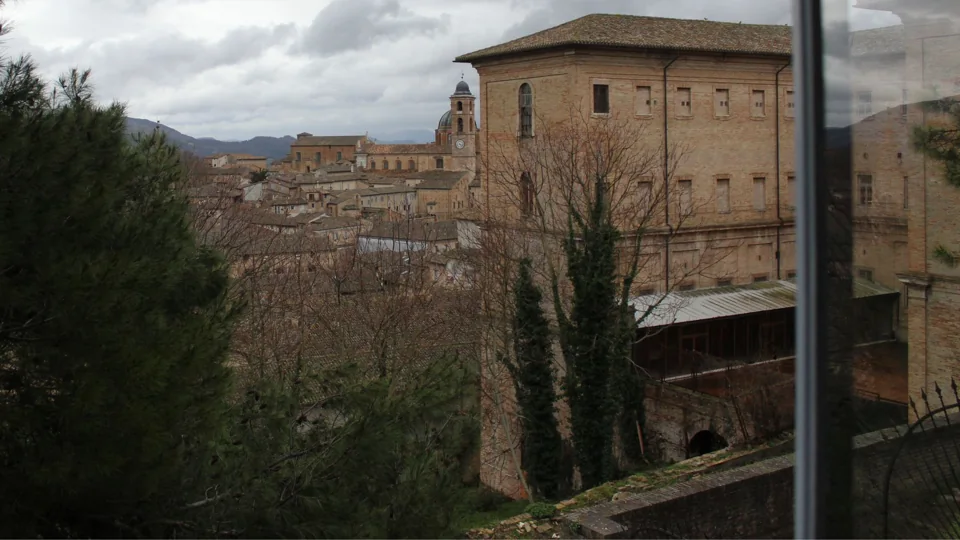
The Via Timoteo Viti location houses scenography in the Aulateatro, created within the former gymnasium of a re-education institution. The Giro del Cassero building accommodates sculpture and art graphics and illustration in premises formerly used by a pedagogical secondary school. The academy identifies this elevated site with its views over Urbino and the surrounding hills. Palazzo Odasi, at Via Valerio 1, provides accommodation for the new technologies of art school. The distribution gives distinct artistic disciplines their own working settings within the city.
Sources: Locations ↗
Multimedia study in detail
Human Centered Multimedia Art is a first-level pathway that combines theoretical study and practical exercises in digital artistic production. The programme aims to develop multimedia design methods, technical independence and an understanding of how new-media languages change in relation to contemporary art and communication.
The published new curriculum moves through three years of transdisciplinary design. First-year subjects include interactive systems and data aesthetics, cinematography, mass-media theory, digital applications for art, sound design, modern art history and perception. Second-year work adds photography, contemporary art history, design ethics, machine learning and artificial intelligence for art, performance-related techniques, visual arts aesthetics and English for artistic communication.
The third year includes video-game art, three-dimensional computer modelling, digital animation, cinematography and documentary practice, alongside further design work and the final assessment. This combination situates technical production within broader questions of visual culture, creative experience and artistic interpretation. The course page distinguishes the new curriculum from the previous study plan, showing how its teaching structure has evolved.
Sources: Active courses ↗ · Human Centered Multimedia Art ↗
A specialist library and its wider collections
The academy library specialises in art, particularly contemporary practice, while also supporting a broad range of humanities subjects. Its holdings include books, pamphlets, journals and an audiovisual collection centred on film and theatrical performance. Early collection development was supported by directors Renato Bruscaglia and Concetto Pozzati and art historian Alberto Boatto.
The subject organisation ranges from artistic anatomy, architecture, urban planning and design to costume, art history, exhibition catalogues, cinema, photography, aesthetics and philosophy. Literature, music, scenography, stagecraft, science, humanities, history, theatre and artistic techniques also feature. This breadth supports contextual study as well as individual studio disciplines.
Borrowing is reserved for enrolled students and teachers, while external users can consult books in the reading room. The library maintains author and subject catalogues, participates in the Marche Nord regional library network, and contributes records to national and regional collective catalogues. It is based in the main Via dei Maceri building.
Sources: Library ↗
Inclusion and international exchange
The inclusion service supports students with specific learning disorders and disabilities through welcome activities, educational mediation and tutoring. Following submission of the required documentation, students can arrange a confidential meeting in person or online to discuss available support. Free peer tutoring can assist with examination preparation, organising study materials and lesson schedules, and communicating with teaching or administrative structures. Students may also request appropriate adjustments to entrance tests and curricular examinations.
The academy’s Erasmus policy identifies student and staff exchange as part of its international strategy. Its stated objectives include developing bilateral relationships with related artistic institutions, sharing approaches to teaching and workshop spaces, and collaborating on research, experimentation and exhibitions. The policy connects international activity with the academy’s local cultural setting and with questions of art, territory and environmental protection.
Sources: Inclusion service ↗ · Erasmus policy statement ↗