Visa

About Accademia di Belle Arti di Sassari
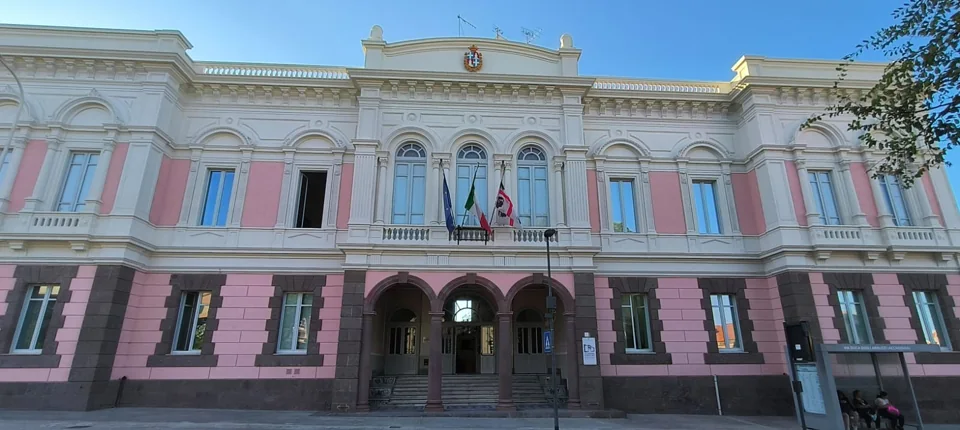
The Mario Sironi academy in Sassari
The Accademia di Belle Arti di Sassari, named after Mario Sironi, was founded in 1989. Located in Sassari, Sardinia, it connects higher artistic education with the island’s cultural traditions and the investigation of contemporary practices. Its educational identity combines established artistic techniques with design and newer technological approaches.
The academy has legal personality and autonomy over its statutes, teaching, research, administration and finances. Its programmes include three-year first-level and two-year second-level studies in artistic disciplines, alongside an integrated restoration course. Its historical presentation emphasises multidisciplinary enquiry and the relationship between inherited skills and contemporary forms of production. Painting, sculpture, scenography, decoration, graphics, new technologies and art education all appear within its account of the institution.
Sources: Institutional history ↗
Departments and first-level study
The first-level diploma courses are organised across three departments. Visual Arts brings together decoration, graphics, painting and sculpture. Communication and Art Education includes art education, while Design and Applied Arts includes cinema and audiovisual technologies, new art technologies and scenography. The three-year structure provides different routes into artistic investigation, with individual course pages supplying the associated study plans.
The academy’s course information distinguishes the overall diploma framework from the plans followed by particular cohorts. When an established programme changes, enrolled students are offered the possibility of completing the earlier approved plan or moving to the revised one with recognition of credits already earned. This arrangement connects the renewal of teaching with continuity for students progressing through their studies.
Sources: First-level diplomas ↗
Restoration and cultural heritage
The School of Restoration offers a five-year integrated academic diploma. Its stated educational objectives connect knowledge of artistic objects with scientific analysis, documentation and practical conservation methods. Chemistry, physics, biology and geology provide scientific foundations, while art history and the history of techniques place materials and objects in their cultural settings.
The programme also addresses diagnostic investigation, drawing and graphic reconstruction, material technologies and the history and theory of restoration. Legal aspects of heritage protection, safety and management accompany computer and multimedia applications. The final examination has both applied and theoretical components: practical laboratory work demonstrates acquired skills, and a written conservation project is discussed to show the student’s ability to analyse and plan an intervention. This structure joins practical decision-making with documented reasoning.
Sources: Restoration ↗
Library access and wider collections
The academy library’s books and electronic resources can be searched through the SardegnaBiblioSar catalogue within the national library system. Readers can search across participating collections or select the Mario Sironi academy specifically, using fields such as title, author, publisher and subject. The catalogue connects a specialist arts collection with the wider regional network.
Eligible academy students can also use the humanities library at the University of Sassari. The published arrangement covers reading, consultation, bibliographic assistance and reproduction services, with registration providing access to lending across the university catalogue. Registration requires evidence of academy enrolment and identification and is renewable after a year. This cooperation extends the documentary resources available for artistic and theoretical work beyond the academy’s own holdings.
Sources: Library ↗
Support for participation in learning
The academy’s inclusion service addresses students with specific learning difficulties, disabilities and other educational needs. Its framework involves a delegate, tutoring and communication with teachers, with individual circumstances informing a personalised study plan. Students can provide documentation during admission, enrolment or later in their academic pathway.
The published guidance describes possible adjustments to learning materials and examinations, agreed according to individual requirements. Examples include digital texts, assistive software, conceptual maps, additional time and alternative forms of assessment. Junior tutors can provide peer support with classes, study and finding materials. The service’s stated purpose is to strengthen student autonomy and participation, connecting practical assistance with the conditions in which learning takes place.
Sources: Learning support and inclusion ↗
Publishing as artistic research
The academy’s publishing initiative, h_demia.ss/press, presents editorial production as a form of research and communication involving students from conception through production. Its catalogue connects art, aesthetics and the different languages of creative work. Publishing is therefore described as both a way to circulate ideas and a practical field in which students encounter editorial processes.
The historical account records the journal Parɔl becoming an academy research instrument in 2010. Other documented series explore relationships between artistic practices and places, exhibition catalogues, and graphic expression. Art education publications include children’s reinterpretations of works by Sardinian artists, such as Giuseppe Biasi and Stanis Dessy. These examples show the range of forms through which the academy has connected critical writing, visual production and educational activity.
Sources: Academy publishing ↗
Art Lab Net and cross-border collaboration
Art Lab Net began in February 2017 within the Interreg Italy–France Maritime programme for 2014–2020. The academy participated as an Italian partner in a project concerned with resource and innovation centres for artistic crafts. Partners included craft organisations in Nice and Ajaccio, the University of Genoa and organisations in Sardinia and Liguria.
The project proposed shared equipment and expertise for experimentation, production and the presentation of craft work to markets. Its recorded activities included discussions with students about their needs, visits to fabrication laboratories in Corsica and meetings with textile and ceramic craftspeople in Sardinia. This historical collaboration connected artistic education with regional craft knowledge and cross-border exchange, extending practical enquiry beyond the academy’s studios.
Sources: Art Lab Net historical project ↗