Visa
About Accademia di Belle Arti di Reggio Calabria
An arts academy on the Strait
The Accademia di Belle Arti di Reggio Calabria, known as ABARC, began teaching in 1967. Based on Via XXV Luglio in Reggio Calabria, it connects artistic education with the cultural setting of the Strait and the wider Mediterranean. Its institutional approach combines creative thought, practical experience and historical and theoretical enquiry.
The academy describes teaching as a meeting between humanistic and scientific cultures. Artistic languages interact with digital and technological methods, while collective working complements individual practice. Its main building extends across three floors, with classrooms and technical resources for teaching and research. The institution also maintains a contemporary art collection formed through donations, placing examples of artistic work within the environment in which students learn.
Sources: History and institutional spaces ↗ · Educational approach ↗
Visual arts and contemporary forms
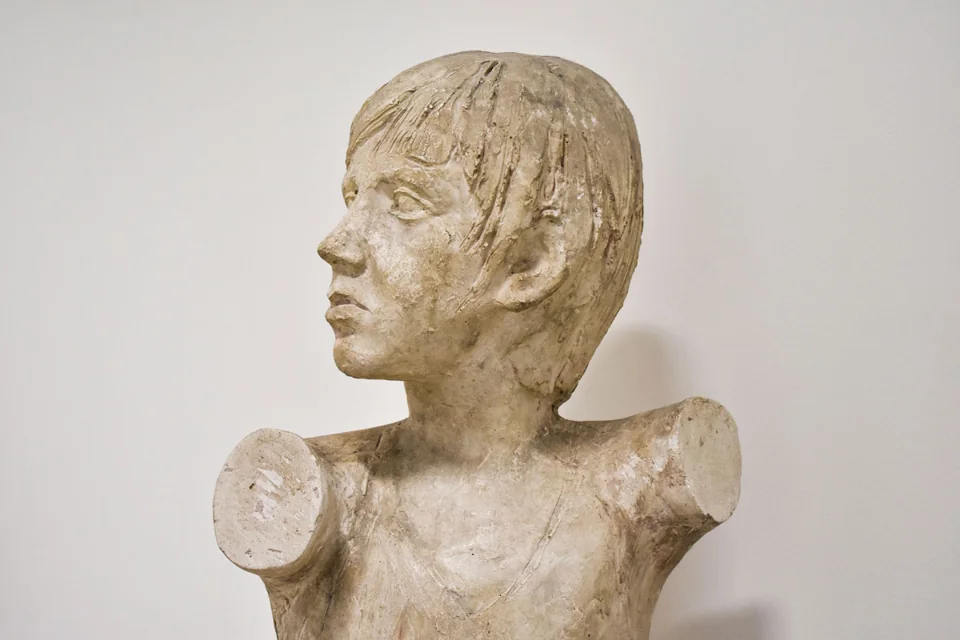
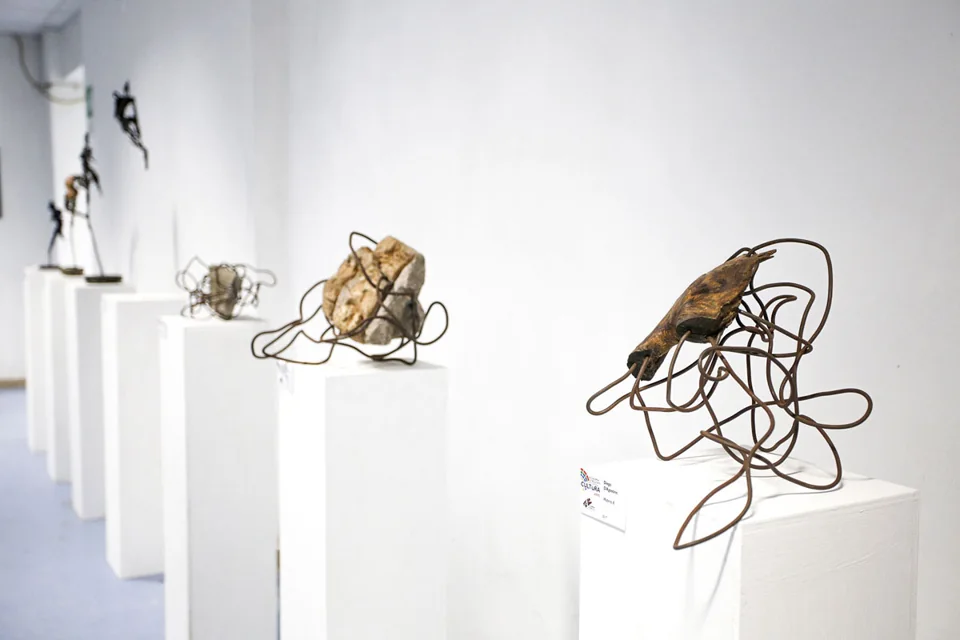
The published 2026–2027 educational offer includes three-year and two-year pathways across a broad range of artistic disciplines. Painting and sculpture remain part of this provision alongside printmaking, decoration, scenography and design. First-level sculpture emphasises research in contemporary artistic languages, while second-level study focuses on public and environmental sculpture.
Decoration connects artistic investigation with architectural and urban settings. Its second-level course addresses audiovisual and multimedia spaces, bringing manual decorative skills together with digital applications. Scenography encompasses performance, cultural events and exhibition spaces, with multimedia languages appearing in advanced study. These fields connect the production of an artwork with the surroundings, audiences and situations in which it is encountered.
Sources: Programmes 2026–2027 ↗
Images, narratives and digital media
ABARC’s course list also includes comics and illustration, graphic design, cinema and technologies for cinema, and fashion design. Comics and illustration extend from the construction of visual stories to advanced investigation of narrative languages and their relationships with different graphic techniques. Printmaking and graphics address both artistic research and communication.
New media studies include a first-level course in new languages of communication and a second-level course in generative art. Cinema provision appears at both levels, while contemporary sacred art and communication and art education broaden the catalogue further. Together these courses place screen-based production, image-making and cultural interpretation alongside the academy’s established studio disciplines, with different programmes pursuing distinct materials and forms of expression.
Sources: Programmes 2026–2027 ↗
Internships within an educational pathway
The academy organises educational internships through agreements with approved host organisations, including businesses, public bodies and associations. Study plans provide academic credits for workshops or internships, with the duration determined by the relevant programme. The intended purpose is to let students encounter practical professional contexts while developing choices informed by direct experience.
Each placement requires an agreement with the host and an individual training project. Academic and host tutors help define the work, establish educational and organisational conditions, monitor progress and record the activities undertaken. The academic tutor checks that the proposed experience fits the student’s course. Attendance documentation and a final report form part of the process, linking external experience with the academy’s assessment and credit framework.
Sources: Internships ↗
International encounters through Erasmus
The International Relations Office promotes exchange between artistic cultures through Erasmus. Its stated activities include study abroad, examinations, placements and research opportunities, with internationalisation understood as an exchange of ideas and creative approaches. Cooperation also brings visiting teachers into the academy’s ordinary teaching environment.
The office’s account describes visits from partner institutions in Latvia, Spain and Bulgaria, involving photography, fashion, sculpture and art history classes. Rather than limiting encounters to formal presentations, teachers used workshops and classroom meetings to allow students to participate directly. A separately documented meeting on 30 May 2023 brought Bulgarian artist and Sofia academy teacher Ivan Kyuranov to an academy discussion and documentary presentation. These examples show how exchange can enter regular teaching as well as mobility abroad.
Sources: International relations ↗
Art, technology and the SENSEABLE programme
The published third edition of SENSEABLE, the Summer School dello Stretto, was scheduled for September 2026 at ABARC and other Reggio Calabria locations. Led by Numero Cromatico, it proposed an intensive investigation of the idea of an artificial South: the unequal visibility of people, places and languages within digital archives and artificial intelligence systems.
Its programme connected theoretical discussion with artistic exercises involving perception, language, imagination and complex systems. Participants were invited to develop devices or prototypes that could reveal overlooked aspects of contemporary technological infrastructures. Group work and shared project development formed part of the proposed format. The programme illustrates the academy’s interest in considering technology both as an artistic tool and as a subject requiring cultural and critical examination.
Sources: SENSEABLE Summer School 2026 ↗
Artistic memory within the institution
ABARC’s historical account identifies its contemporary art gallery as a repository of works donated by artists. It also draws attention to the decorated doors of offices and laboratories, where teachers contributed painted interventions using their own visual languages. Artistic expression therefore appears within the working spaces of the institution as well as in designated displays.
The academy has also published Brutium, an art periodical founded in 1922 by Alfonso Frangipane. Its place in the institutional history connects teaching with the documentation and dissemination of Calabrian artistic and aesthetic production. Together the collection, decorated interiors and publishing activity provide evidence of the academy’s interest in preserving artistic memory while continuing practical education.
Sources: History and institutional spaces ↗