Visa
About Accademia di Belle Arti di Frosinone
Artistic higher education in southern Lazio
The Accademia di Belle Arti di Frosinone is a state institution of artistic higher education founded in 1973. It serves southern Lazio through a combination of studio teaching, theoretical study, research and cultural activity. The academy awards first-level and second-level academic diplomas and brings together established visual arts disciplines with design, audiovisual and digital practices. Its teaching operates across the Viale Marconi site and Palazzo Tiravanti.
The academy presents artistic education as a relationship between specialised knowledge, technical skills, creative practice and critical reflection. Workshops supplement the regular curriculum with encounters involving visiting professionals. Its institutional collaborations extend to museums, foundations, universities and cultural bodies, creating settings for exhibitions, research and shared projects. This places students’ practical work within a wider artistic and cultural environment.
Sources: Institutional presentation ↗
Two sites and a contemporary art museum
The central site occupies the former Palazzo del Laboratorio di Igiene e Profilassi di Frosinone. Designed in the early 1930s by architect Giovanni Iacobucci, the building houses administration and part of the academy’s laboratory provision. Its distinctive entrance links two wings through a sculptural corner arrangement. The academy’s history places this site within the historic urban fabric of Frosinone.
Palazzo Pietro Tiravanti opened as an academy site in January 2015. Constructed between 1925 and 1929 to a design by engineer Edgardo Vivoli, it stands on the Belvedere hill overlooking the plain. The MACA, the academy’s Museum of Contemporary Art, was established there in 2015. Its collection includes works donated by artists who taught at or collaborated with the institution. Permanent displays occupy upper floors, while the entrance level accommodates temporary exhibitions, bringing teaching and contemporary art collections into close proximity.
Sources: History and locations ↗
Sculpture and material investigation
The 2026–2027 first-level Sculpture programme totals 180 academic credits across three years. Its subjects include artistic anatomy, drawing for sculpture, photography, art history, marble and hard-stone techniques, sculpture practice and computer graphics. Later study introduces modelling, ornamental plastic work, foundry techniques, design, ceramics, and pedagogy and art education. Student-selected activities and a thesis form part of the published study plan.
The second-level Sculpture course extends study into materials technology, contemporary sculptural techniques, the economics and market of art, psychology of art and lithography. Sculpture and its methods continue throughout the programme. The curriculum connects direct work with materials to historical, conceptual and professional questions, allowing specialised artistic investigation to develop alongside broader knowledge of the contexts in which sculpture is made and encountered.
Sources: Sculpture, 2026–2027 ↗
Visual communication and digital practice
Graphic Design combines visual communication and publishing with artistic and cultural study. First-level subjects include editorial graphics, photography, graphic projects, web design, typography, illustration, colour theory and digital animation. The second-level plan adds brand design, digital video, ecodesign, multimedia graphics, art direction and packaging. The course description links technical and theoretical learning with laboratories and workshops, reflecting the relationship between design methods and practical production.
Media Art provides another route through digital and audiovisual practices. Its first-level curriculum includes photography, graphics computing, contemporary art history, digital animation, interactive software design and multimedia projects. Later subjects include perception, mass-media theory, video editing, three-dimensional modelling, sound design and digital cultures. At second level, published subjects include Net Art, digital video, integrated new-media techniques, multimedia installations and the design of sound spaces. These pathways connect image, interaction, movement and sound within artistic study. English is included in the first-level curriculum, while second-level study includes English for artistic communication alongside its specialised subjects.
Sources: Media Art, 2026–2027 ↗ · Graphic Design, 2026–2027 ↗
Workshops connecting practice and professional knowledge
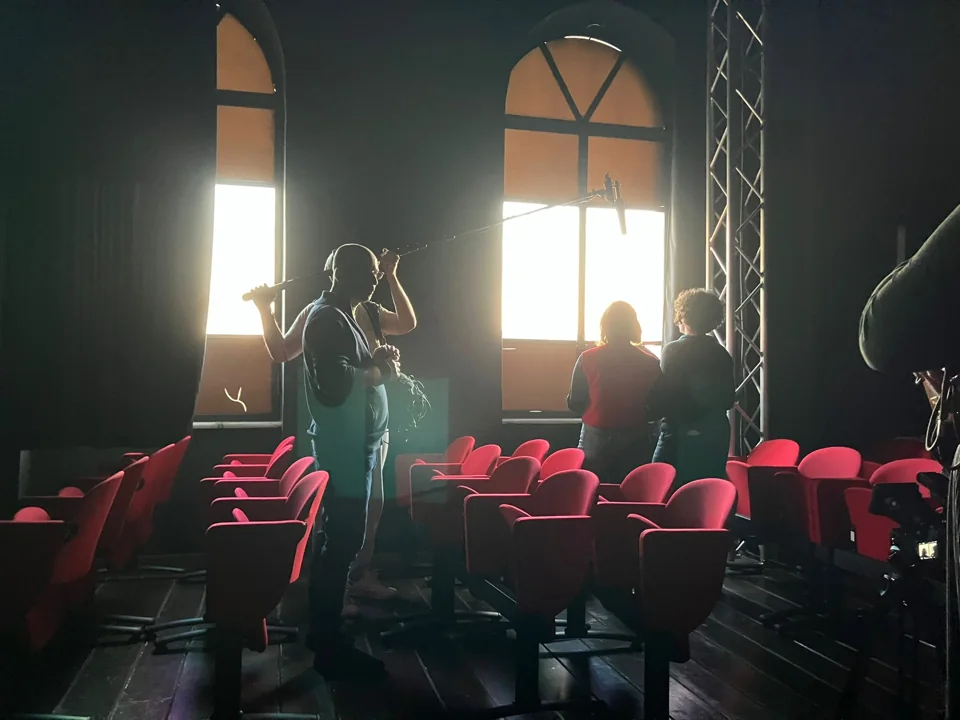
In February 2025, the academy hosted Il suono del set, a three-day workshop for students in Audiovisual Languages and Media Art. Organised by Antonio Trimani and Giovanni Verga with sound professional Michele Tarantola, it combined discussion with practical recording, mixing and post-production work. The official report describes exercises and attention to the relationship between visual and sonic elements in cinema and multimedia production.
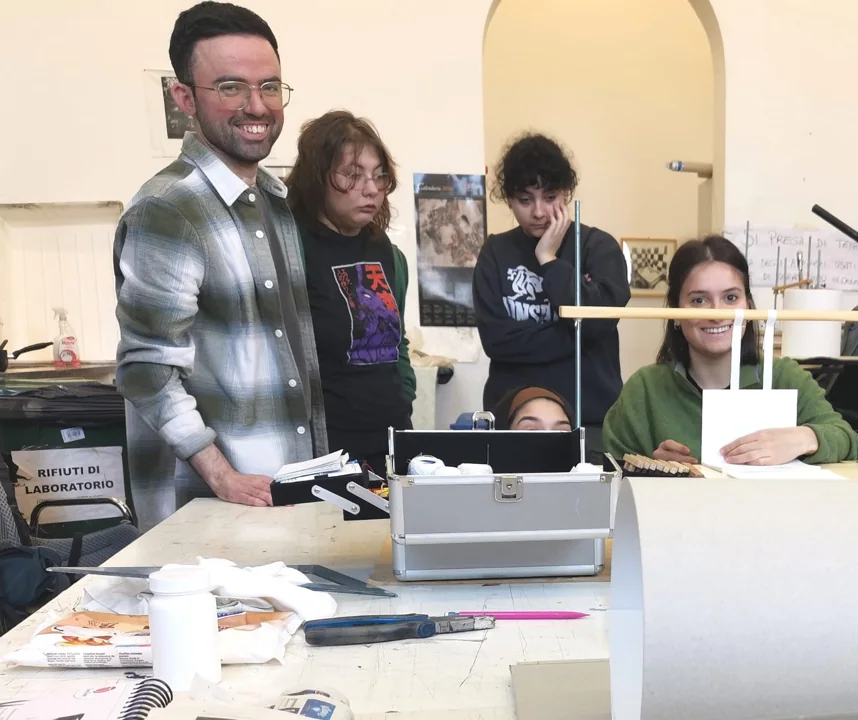
A separate bookbinding workshop took place from 10 to 12 February 2025 with Stefano Spilli, supported by graphic-art teachers Elisa Ottaviani and Patrizio Di Sciullo. Participants explored the graphic conception and physical construction of books, folders, cases and containers for prints and drawings. Tools and materials formed part of the learning process, connecting the structure of a publication with the work it holds. The two workshops illustrate different forms of practical learning within the academy.
Sources: Il suono del set workshop, February 2025 ↗ · Bookbinding workshop, February 2025 ↗
International exchange and public participation
The academy’s Erasmus programme supports study with partner institutions and traineeships in artistic and professional settings. Learning agreements establish the planned work before a period abroad, while records of completed study support credit recognition. The programme also includes opportunities for staff teaching and training, connecting student mobility with wider institutional exchange.
Public events provide another connection beyond regular classes. At the Summer Open Day on 8 July 2025, teachers welcomed prospective students and families, schools presented student work, and practical demonstrations accompanied exhibitions. The day included Temporanea 25, an exhibition of selected end-of-year work, and a renewed MACA display. Sound and audiovisual performances and a clarinet concert added to the programme, bringing several disciplines into a shared event open to the city.
Sources: Erasmus programme ↗ · Summer Open Day, July 2025 ↗