Visa
About Accademia di Belle Arti di Foggia
An art academy in central Foggia
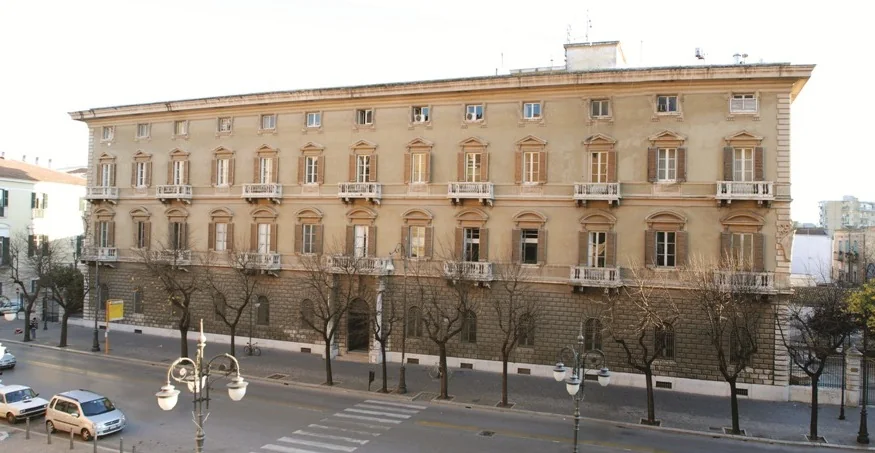
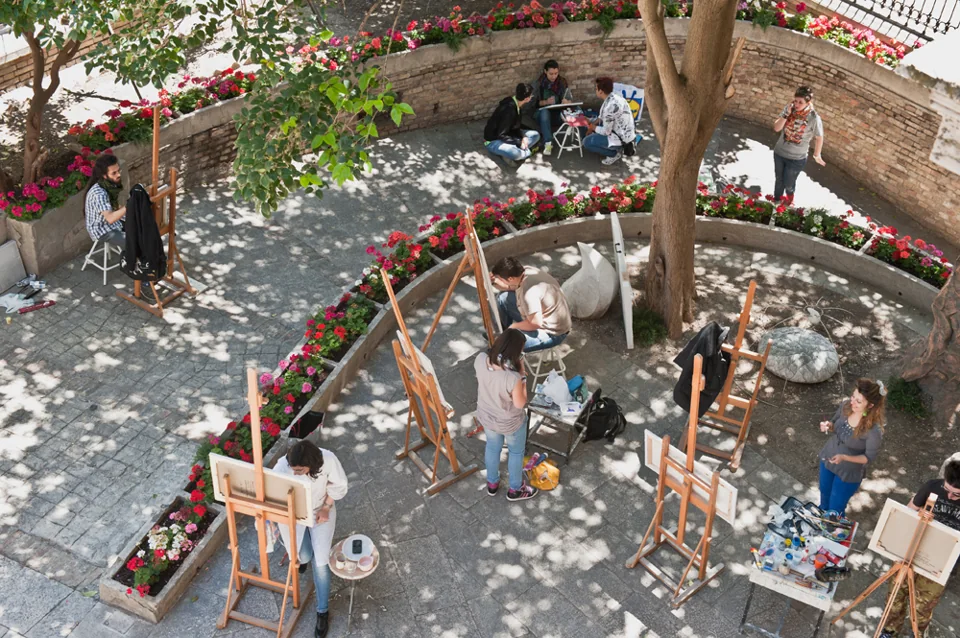
Accademia di Belle Arti di Foggia was founded in 1970. Its home is the former Bank of Italy building at Corso Garibaldi 35 in Foggia. This setting places the academy’s work within an established urban building, rather than a separate suburban campus. The academy’s institutional gallery shows the street façade of the palazzo and a garden where students work at easels, providing a view of both its architectural setting and practical artistic activity.
The academy describes its educational approach as connecting the study of tradition with experimental subjects and contemporary artistic languages. Its historical account emphasises European artistic education and engagement with contemporary poetic and aesthetic questions. Traditional disciplines therefore form part of a wider environment that also includes design, communication and work with newer media.
The academy’s historical account names painting, sculpture, decoration, scenography, graphic design, fashion and costume, and new technologies of art among its teaching areas. This breadth reflects its engagement with both visual arts and applied artistic production.
Sources: History ↗ · Visit the academy ↗
Academic pathways and artistic subjects
The 2026–2027 study guide sets out three-year first-level academic diplomas and two-year second-level academic diplomas. At first level, the visual arts offer includes painting, sculpture and decoration. Applied and project-based subjects include graphic design, fashion and costume, comics and illustration, interior design, and cinema, photography and audiovisual work. The guide also lists art education within communication and teaching of art.
At second level, the published offer includes painting and decoration, environmental art with space and stone design, cinema and new media art, graphic design, fashion and fibre art, comics and illustration, and product and space design with interior design. These are the programmes in the current annual guide; the academy’s older course overview uses some different titles.
The detailed painting curriculum illustrates the combination of studio practice and contextual study. It includes artistic anatomy, drawing, colour study, engraving, art history and perception, alongside multimedia installation, computer graphics and cultural marketing. Sculpture brings together stone techniques, foundry work, ceramics, mould-making and digital three-dimensional modelling. The plans specify credits, teaching hours and forms of assessment for individual subjects.
Sources: Study guide 2026–2027 ↗
An organised approach to inclusion
The academy maintains an inclusion group responsible for coordinating organisational, educational and psychological support for students with disabilities and specific learning disorders, and for their teachers. The published team brings together a disability delegate, a psychologist working with students, a psychologist supporting teaching staff and a student administration contact.
The inclusion page also provides practical documentation: an initial intake form, an individual plan, tutor reports, daily reporting material, a tutoring work plan and an individual study plan. This gives students and staff a common set of documents through which to arrange and record support, rather than relying only on informal conversations.
The published resources include both student-facing planning tools and documents for those delivering tutoring, supporting communication across the different roles involved.
Sources: Inclusion team and documents ↗
Individual planning and peer support
The inclusion guidelines revised on 30 June 2026 describe support as a collaborative process involving students, teachers, tutors and the coordinating team. Initial work identifies educational needs, existing learning strategies and any particular requirements associated with using materials or teaching equipment. The initial interview also explains the resources available within the academy.
An individual plan then identifies learning objectives, working time, relevant courses and teaching contacts, and any tutoring requirements. Discussion with teachers addresses teaching methods and suitable forms of examination. The plan is intended to reflect the student’s strengths and needs, with review and communication continuing during the course of study.
Peer tutors provide educational and relational support to help students participate in academic life. The guidelines also involve specialist external tutors. Confidentiality, secure handling of sensitive information and respectful communication are explicit principles of the scheme. The document sets out responsibilities for coordination and monitoring, making inclusion an ongoing part of academic organisation.
International study arrangements
The academy publishes separate instructions for international applicants and participants in the Turandot route. Its 2025–2026 instructions distinguish Universitaly pre-enrolment for the study visa process from the academy’s own admission and enrolment procedures. They also explain the Italian-language assessment and describe exemptions associated with recognised language qualifications.
For first-level admission, the instructions discuss a final secondary qualification based on at least twelve years of schooling, together with supporting documentation and an Italian translation. For second-level study, they describe a suitable foreign first-cycle qualification, a transcript showing examinations and grades, and descriptions of the subjects studied. The Turandot section explains the preparatory Italian-language course preceding admission tests. These published instructions provide dated context for the academy’s international arrangements; the annual study guide supplies the corresponding academic calendar and enrolment framework.
Sources: International student enrolment: 2025–2026 instructions ↗
A connection with doctoral research
In 2024 the academy announced participation, through an agreement with the University of Foggia, in the university’s cycle XL doctoral admission call for Medical Humanities and Welfare Policies. That announcement listed seven funded places and two unfunded places, with a July 2024 application deadline. It records a specific research collaboration linking the academy with an interdisciplinary university doctoral context. The historical call sits alongside the academy’s own first- and second-level artistic study routes, extending the institutional picture beyond studio courses alone.
Sources: Doctoral research collaboration: cycle XL announcement ↗