Visa

About Accademia di Belle Arti di Catania
Higher artistic education in Catania
The Accademia di Belle Arti di Catania is a state institution within Italy’s AFAM system of higher education in art, music and dance, overseen by the Ministry of Universities and Research. The academy was established on 17 December 1967 and began its first academic year in 1968–69. Its educational structure combines three-year first-level academic diplomas with two-year second-level programmes.
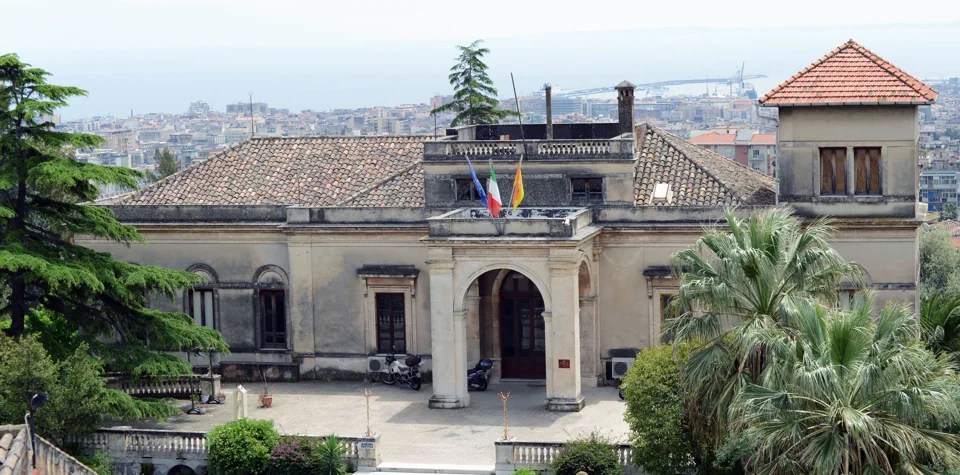
The academy’s mission links the transmission of artistic knowledge with the development of an individual method, style and professional direction. It emphasizes continuing study and research, creative engagement with contemporary life, and the production of exhibitions, publications, cultural activities and opportunities for discussion. Working with the surrounding territory is another stated responsibility. Its public mission also identifies equality, gender equality, peace and ecology as cultural concerns. The institution’s locations include Villa Pantò and the teaching site on via Raimondo Franchetti, both illustrated in its official institutional gallery.
Sources: Institutional history and mission ↗
Departments and artistic fields
Three departments organize the academy’s subject areas: Visual Arts; Design and Applied Arts; and Art Teaching and Communication. The published departmental structure identifies course coordinators and the teachers associated with each area, providing a route to the people responsible for particular programmes. It brings established studio disciplines together with design, moving images, communication and cultural education.
Visual arts provision includes painting, sculpture, decoration, graphic art and illustration. Second-level directions include painting and contemporary languages, urban decoration, and graphics, illustration and comics. Design and applied arts encompass scenography, visual communication design, publishing design, fashion, new art technologies, photography and cinema. Scenography includes a direction concerned with ancient drama. The communication and art-education area includes art teaching and cultural mediation, together with communication and enhancement of contemporary artistic heritage. This range allows the academy to approach artistic practice through making, staging, recording, communicating and interpreting.
Sources: Departments and courses ↗
Library and study resources
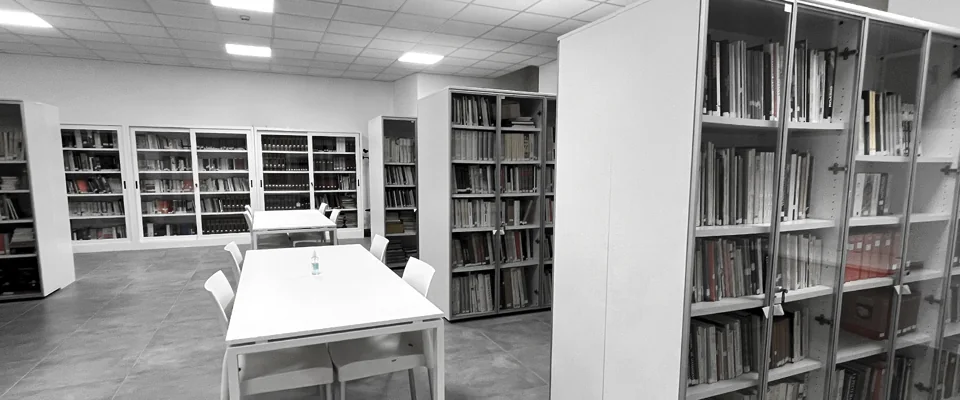
The academy library is located on the ground floor of the via Raimondo Franchetti site. Its published access information includes academy students, doctoral candidates, teaching staff and non-teaching employees who wish to consult or borrow material for study, research or personal interest. The library provides a place for independent work as well as access to its own holdings.
Users can consult materials, borrow books and request bibliographic information. They may also study with their own books and equipment. The library page links provincial and national SBN catalogues and supplies its regulations and contact details. The combination of consultation, lending and bibliographic assistance supports the reading and documentary work that accompanies studio practice and written research.
Sources: Library ↗
Erasmus and international mobility
The academy states that it has participated in Erasmus since 2000 and holds an Erasmus Charter for Higher Education valid through 2027. Its international page distinguishes student mobility for study, student traineeships, teaching mobility and staff training. It publishes calls and regulations, including material for the 2026–27 academic year, alongside information for incoming participants and partner institutions.
The page describes several purposes for study abroad: attending courses and examinations, researching a final thesis, or undertaking a traineeship. Workplace mobility requires an agreed training programme connecting the student, academy and host organization. Teaching and staff-training mobility likewise centres on an agreed work plan and the exchange of skills and practices. An Erasmus office coordinates the academy’s international arrangements. The published resources therefore address both students’ educational pathways and professional exchange among the people who teach and administer higher artistic education.
Sources: Erasmus mobility ↗
Inclusion and support for learning
The academy established a dedicated Inclusion Project working group in June 2023. Its account describes collaboration among teaching staff, administrative employees and external professionals to support students with disabilities and specific learning difficulties. Areas of work include coordination with autonomy and communication assistants, peer tutors and specialist tutors drawn from the teaching staff.
The project seeks teaching strategies that respond to individual learning circumstances, supported by exchange of information among the people involved in education. A listening service brings a psychologist together with members of the inclusion team to consider difficulties encountered during lessons, study preparation and the organization of learning. The service is described as free and confidential. The academy also emphasizes continuing professional development for the team, connecting practical assistance with improvements to teaching, organization and the search for effective responses to students’ needs.
Sources: Inclusion and learning support ↗
Workshops, masterclasses and curricular experience
The Liaison Office coordinates meetings, masterclasses, workshops and curricular placements. Its page provides regulations, a teaching plan and completion documentation for workshops, alongside placement agreements, training-project forms and a placement diary. These documents give practical and collaborative activity an institutional framework connected with the academy’s educational work.
Cooperation agreements with public bodies, private organizations, cultural associations and other partners undergo review for consistency with the academy’s educational, scientific and artistic objectives. The published procedure assigns academic considerations to the Academic Council and financial matters to the Administrative Council, with formal signature by the director. The office’s activity notices illustrate the variety of collaborative work, including animation in Blender, performance workshops, scenography placements and museum narratives. This connects students’ learning with practitioners, cultural institutions and projects beyond the regular timetable.