Visa

About Accademia di Belle Arti dell'Aquila
An academy of contemporary artistic study
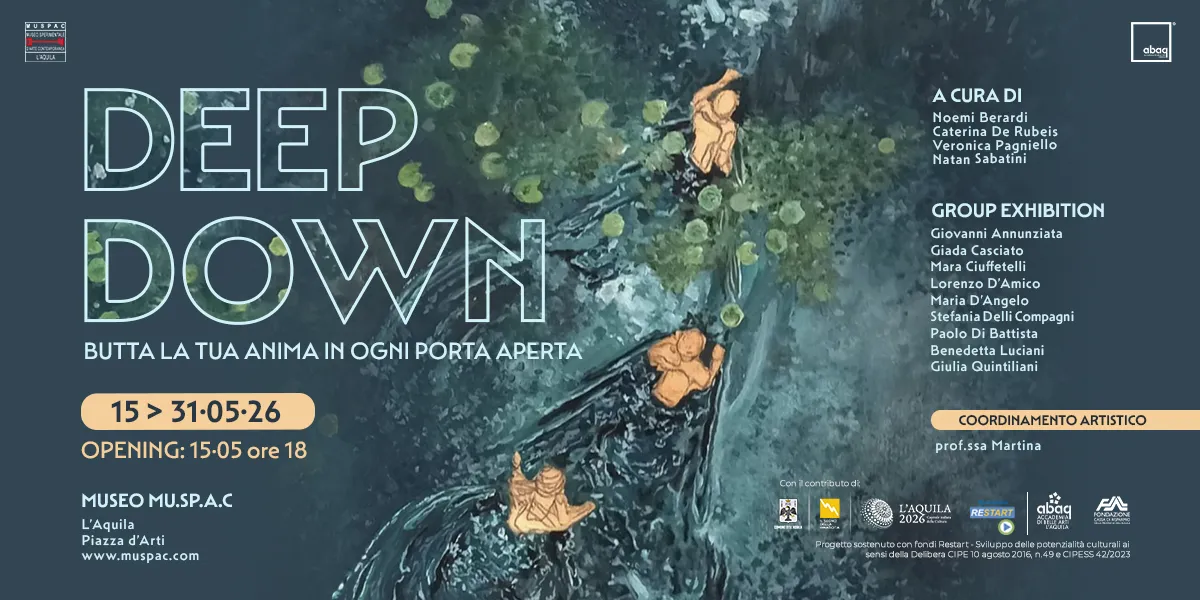
The Accademia di Belle Arti dell’Aquila, commonly known as ABAQ, is an Italian higher arts institution established in 1969. Its founding approach combined traditional artistic teaching with experimental courses intended to renew arts education. Contemporary artistic production and research have remained important parts of its institutional identity.
The academy’s current teaching framework encompasses visual and applied arts, restoration and cultural heritage conservation, and art education and communication. It offers three-year first-level diplomas, two-year second-level diplomas and five-year integrated restoration studies. Artistic practice is approached through the development of creative ideas, technical knowledge and individual expression. The academy’s course structure uses the European credit framework and includes the Diploma Supplement, connecting its programmes with the wider European higher education system.
Sources: EXPO ABAQ 2022 and institutional origins ↗ · Course structure ↗
A broad range of artistic disciplines
First-level studies include painting, sculpture, decoration, scenography, fashion and costume, photography, and art education and communication. Graphic disciplines extend into comics and visual storytelling, printmaking and illustration, and graphics and new media. The breadth of this provision allows traditional studio methods to sit alongside contemporary forms of visual narrative and design.
Second-level programmes provide further study in fields including visual arts, painting, sculpture, decoration for urban spaces, comics, visual communication design, motion and animation design, theatrical scenography, fashion and costume, and photography. The academy also participates as an associated institution in a national doctoral programme coordinated by the Naples fine arts academy, linking artistic research with a wider institutional network.
Sources: Course structure ↗
Restoration as an interdisciplinary field
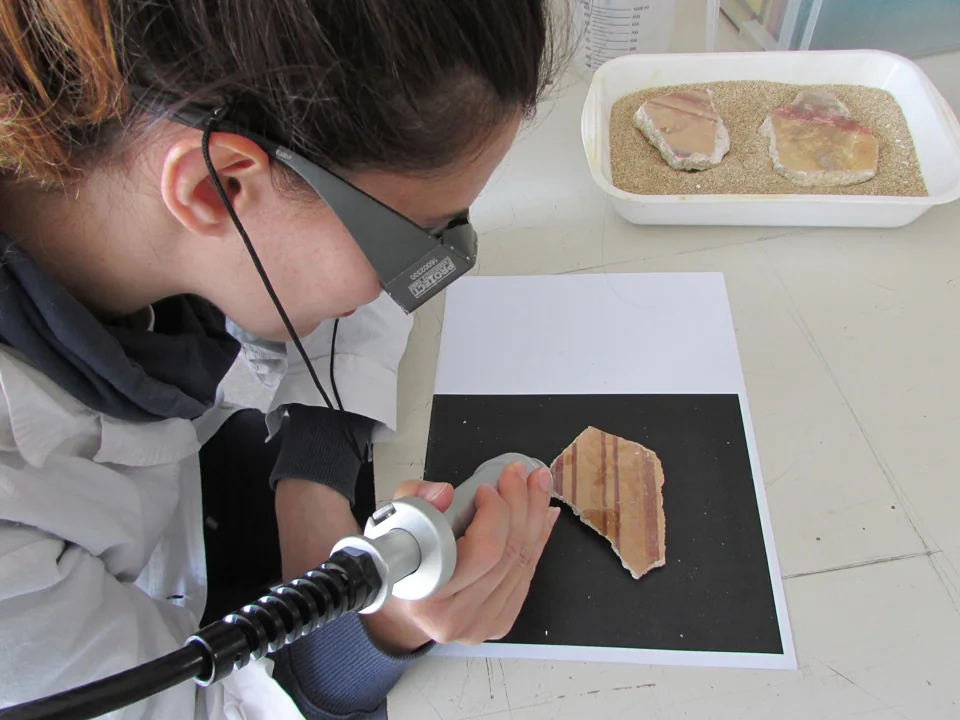
The integrated five-year restoration diploma brings scientific, historical and practical study together. Its two pathways address stone and related materials and architectural decorated surfaces; and paintings on wood or textile, wooden sculpture and furnishings, and worked or painted synthetic materials. The programme connects knowledge of an object’s construction with examination of its condition and the planning of conservation work.
Its educational objectives include chemistry, physics, biology and geology applied to restoration, drawing and graphic documentation, art history, material technologies and diagnostic investigation. Legal aspects of cultural heritage protection and safety accompany practical methods of maintenance and restoration. The school describes laboratory work, teaching sites and internships organised with public or private bodies. Documentation runs through the process, from preliminary historical research to records of treatment and subsequent maintenance planning.
Sources: Restoration diploma ↗
Photography and visual enquiry
First-level photography study develops knowledge of both analogue and digital processes. Students work with techniques of development and printing, digital image processing and the visual languages associated with photography. The programme connects technical competence with the capacity to design and produce artistic work and projects in particular places.
The course also includes communication and information management skills and the use of another European language within the relevant field. Its final assessment can take an artistic and project-based form, with work developed on an assigned theme, or a historical, theoretical, methodological or technical essay. This range of final work reflects the relationship between producing images and examining the ideas, histories and processes that inform them.
Sources: Photography first-level diploma ↗
Experimentation through the FabLab
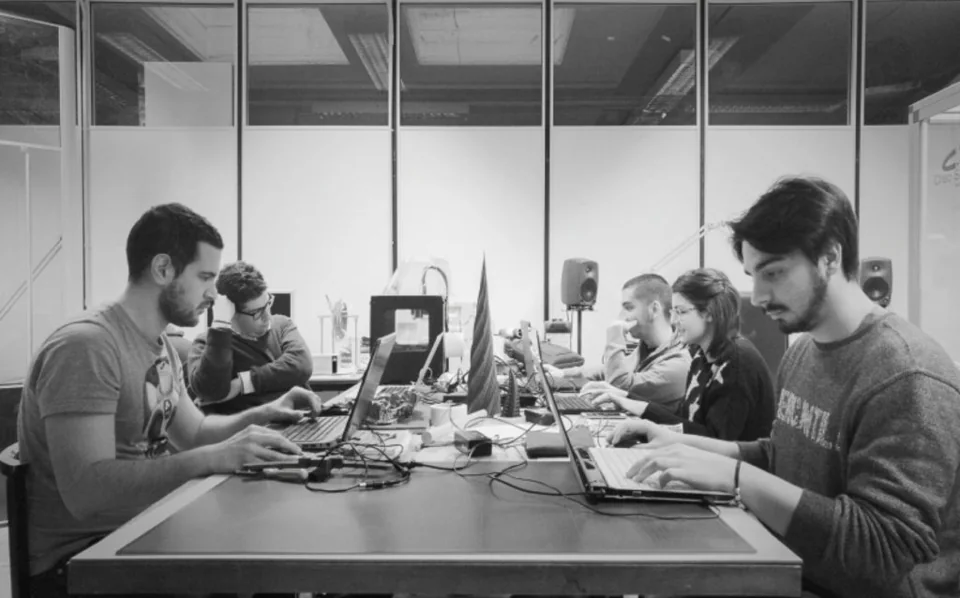
ABAQ’s FabLab began operating in November 2014 as a place for student experimentation and research. It is presented as an environment in which participants exchange knowledge and experience while developing projects. Its work connects courses and schools through resources for video documentation, web and graphic design, three-dimensional acquisition, modelling and rapid prototyping.
The laboratory’s published equipment account includes computer-controlled milling and laser cutting, fused-material three-dimensional printers and structured-light scanning. These processes allow digital designs to be translated into objects, and physical surfaces to be recorded as digital models. The emphasis is on investigating possible forms and techniques through shared project work, bringing digital production into contact with the academy’s broader artistic teaching.
Sources: ABAQ FabLab ↗
Library resources for study and research
The academy library specialises in visual arts history, theatre, cinema, photography, restoration, applied arts, architecture, philosophy, graphics and comics. It supports research and continuing study through consultation, bibliographic enquiries, loans and document delivery. Access extends to adult members of the public, while academy students and staff are registered as internal users.
Its holdings are being catalogued electronically, with records available through the Italian national library system and Biblioteche in Abruzzo. Digital lending through MLOL adds another route to resources for registered users. Periodicals complement the book collection, including publications concerned with art criticism, aesthetics and conservation. The library’s published services connect specialist documentary materials with the everyday needs of artistic and theoretical study.
Sources: Library ↗
International exchange and public presentation
The academy joined Erasmus activities in the 2000–2001 academic year. Its International Relations Office describes a network of more than seventy European partner institutions, alongside organisations hosting traineeships and professional training. Mobility encompasses student study and placements, staff teaching and staff training, supported by an institutional Erasmus commission and operational team.
Public exhibitions provide another setting for presenting academic work beyond the studios. EXPO ABAQ in June 2022 brought selected student projects from the 2021–2022 academic year to Palazzo dell’Emiciclo. Teachers selected works from different schools for an exhibition intended to communicate the academy’s practical and theoretical research. Such presentations connect the development of individual projects with encounters between students, their institution and public audiences.
Sources: International relations ↗ · EXPO ABAQ 2022 and institutional origins ↗