Visa
About Academy of Fine Arts of Perugia
An art academy in Perugia
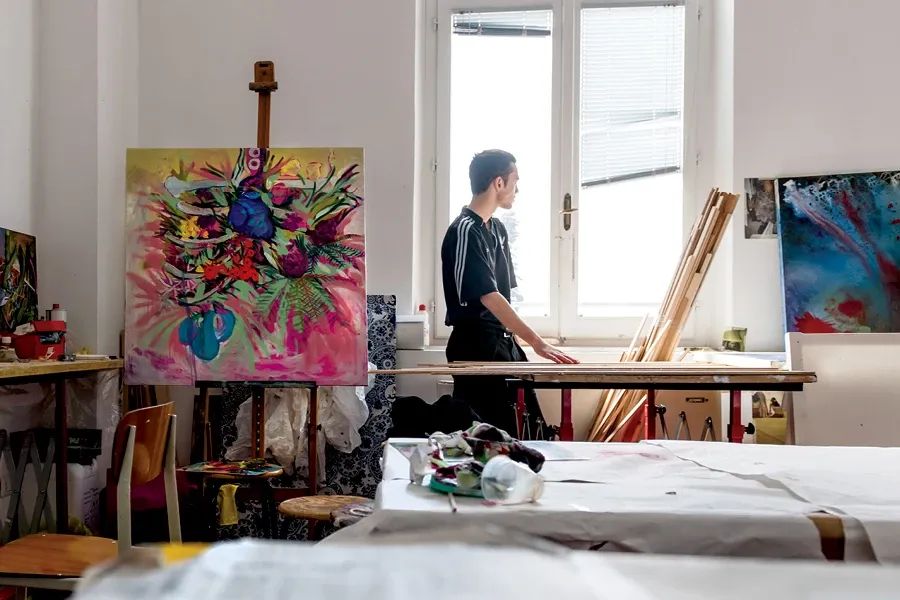
The Academy of Fine Arts of Perugia is the Accademia di Belle Arti Pietro Vannucci, an Italian institution combining advanced artistic education with the care of a substantial historical collection. Its principal address is Piazza San Francesco al Prato in Perugia. The academy belongs to Italy’s higher artistic education system, commonly known as AFAM, and became a state academy on 1 January 2023. Its contemporary teaching encompasses visual art, design, communication and performance-related disciplines, while its library and museum preserve material accumulated through centuries of teaching and collecting.
The current first-level offer comprises three-year programmes in painting, sculpture, scenography, graphic design, fashion design, sustainable product design, character design and gaming, cinema and audiovisual production, photography and social media for the arts, art graphics and illustration, and illustration and comics. Two-year second-level study includes visual and performing arts pathways alongside brand design, fashion design for knitwear, and sustainable product design. This combination brings traditional studio disciplines into the same institution as newer forms of visual communication.
Sources: About the academy ↗
Foundations and historical development
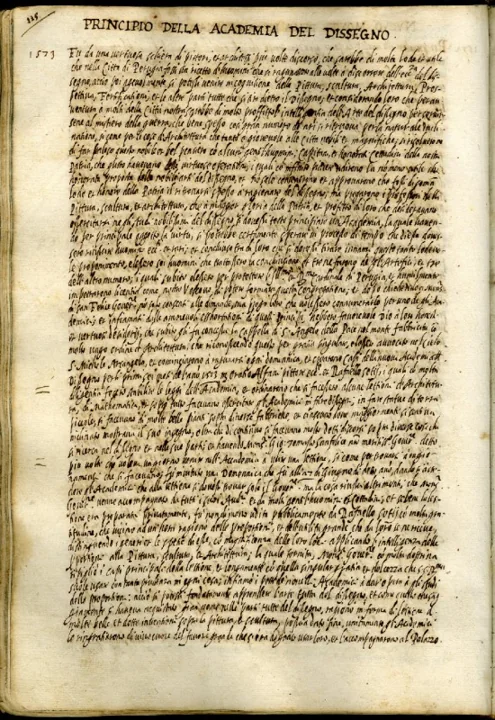
The academy traces its foundation to spring 1573, when artists associated with painter Orazio Alfani and architect and mathematician Raffaello Sozi established an academy of drawing. A manuscript account of its beginnings, the Principio dell’Academia del Dissegno, survives in Perugia’s Biblioteca Augusta. Drawing provided the common ground for discussion across painting, sculpture, architecture and related fields. The institution’s first printed constitution appeared in 1791 under director Baldassarre Orsini.
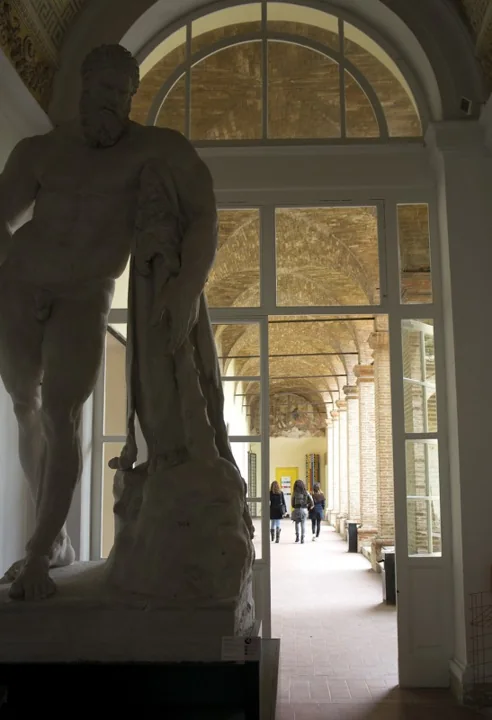
Around 1820, Tommaso Minardi reorganised both teaching and administration, developing the academy as a public educational institution and linking instruction with a museum and library. Scholarships helped promising students continue their studies in other Italian cities, particularly Rome. After occupying several earlier premises, the academy settled in the former convent of San Francesco al Prato in the early twentieth century. Its collections include plaster casts associated with works by Luca della Robbia, Michelangelo and Canova, drawings by Piranesi and Wicar, and paintings extending to Alberto Burri.
Sources: History ↗
Designing for environmental and cultural sustainability
The three-year sustainable product design programme treats sustainability as a question involving people and culture as well as environmental impact. Its teaching connects design laboratories and research with humanistic, artistic and anthropological study. Students are encouraged to consider products, systems and processes together, rather than treating an object’s appearance as an isolated design problem.
The published subject list makes that approach concrete. Ecodesign and sustainable materials sit alongside cultural anthropology, aesthetics, design history and contemporary architecture. Technical work includes modelling, computer-based drawing, three-dimensional rendering and digital modelling. Packaging, graphic design, product photography, design management and urban design extend the range of contexts in which students examine a proposal. The course therefore combines practical representation and material questions with the social and cultural interpretation of design.
Sources: Sustainable product design ↗
Characters, comics and digital worlds
Character design and gaming approaches the creation of characters across digital comics and videogames. The programme connects drawing and storytelling with digital production, reflecting the movement of characters between different media. Artistic anatomy and successive comics subjects provide a foundation in visual construction, while creative writing for screenplays, multimedia dramaturgy and storyboard work address narrative development.
Its curriculum also includes computer graphics, computer games, digital photography, three-dimensional rendering, digital animation and digital modelling. Courses in contemporary art, costume history and applied arts place those technical practices within a broader visual culture. Lettering, visual communication methodology and mass-media theory bring additional attention to how images are organised and interpreted. The resulting subject combination links character creation to both its artistic foundations and the tools used to develop contemporary digital experiences.
Sources: Character design and gaming ↗
A specialist library and public collections
The academy library began alongside its teaching activities and expanded considerably through nineteenth-century gifts from local scholars and collectors. It specialises in art history and related subjects, including an important early printed book collection. A further donation associated with painter and essayist Dante Filippucci added books, pamphlets and periodicals spanning art, philosophy, literature, cinema, photography and design.
Library holdings can be searched through the regional Umbrian catalogue. Its online functions include checking holdings, building bibliographies, saving searches and, through a reader account, requesting reservations for borrowing or consultation. Separate procedures address consultation of historical archives and older material. Alongside these resources, MusA, the academy museum, provides a public point of access to the institution’s artistic heritage, with visitor information and booking contacts published by the academy.
Sources: Library ↗ · Academy museum ↗
International study through Erasmus
Erasmus activity supports international study, teaching and training exchanges. Incoming students are nominated by their sending institution and prepare an Online Learning Agreement after acceptance, using the academy’s study plans to identify courses and credits. The published guidance allows adjustments to that agreement during the initial weeks after arrival, helping the planned study period align with the courses actually followed.
Teaching is in Italian, and the academy recommends B1 Italian for incoming students. Its Erasmus office provides practical assistance, including help with the accommodation search, while the guidance also points students toward ESN Perugia. Academic and institutional coordination are identified separately, giving exchange students contacts for both study arrangements and administrative matters. International mobility thus sits within the academy’s ordinary teaching structure, with course selection and language preparation forming central parts of the exchange experience.
Sources: Erasmus international mobility ↗