Visa
About Academy of Arts "George Enescu" Iasi
An arts university with a long local history
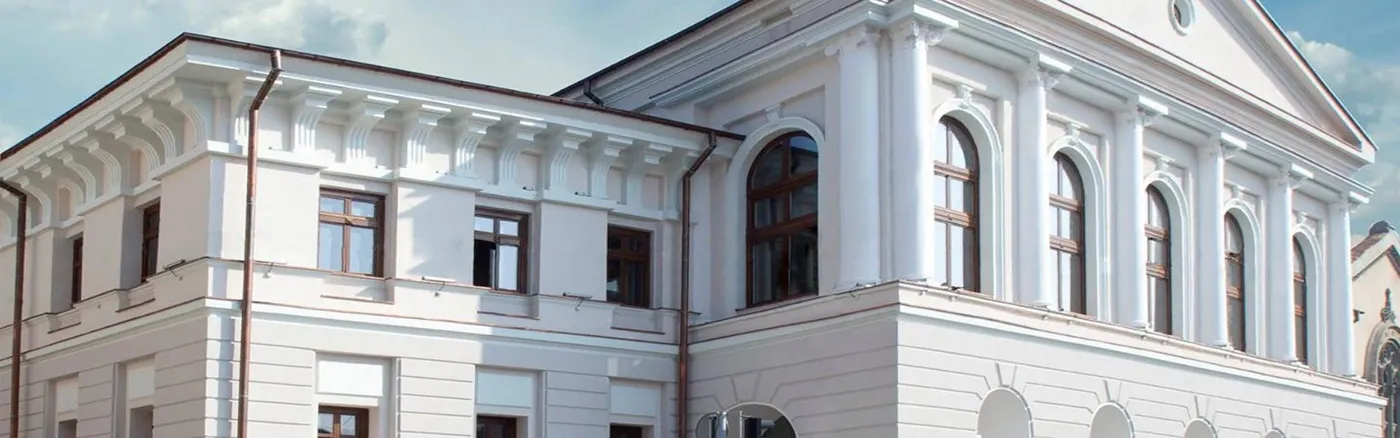
The institution historically known as the Academy of Arts George Enescu in Iași now operates as George Enescu National University of Arts, commonly abbreviated to UNAGE. It brings together music, theatre and visual arts education in the Romanian city of Iași. Its university museum traces the origins of local higher artistic education to the institutions established through decrees of Alexandru Ioan Cuza in 1860.
The museum's historical account follows the development of these separate artistic traditions and their reunion within the George Enescu Academy of Arts after 1989. The composer George Enescu holds a particular place in that history: he accepted the title of honorary rector in 1931 and agreed to the institution bearing his name. The present university preserves this connection while offering education and research across several artistic disciplines, combining longstanding regional traditions with contemporary academic and creative activity.
Sources: University Museum: European Echoes in the History of Arts Education ↗
Performance, composition and musical scholarship
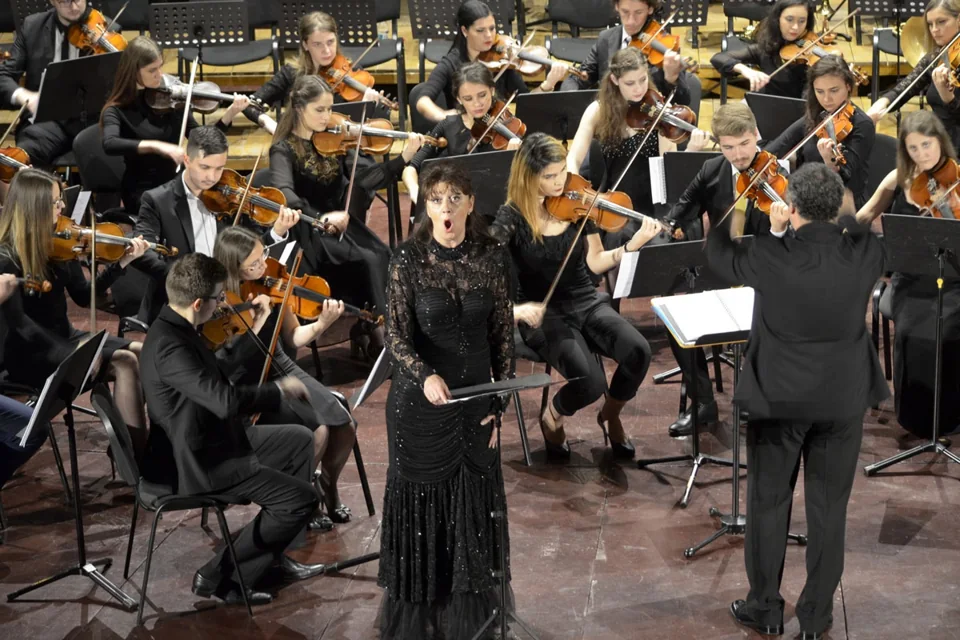
The music faculty combines instrumental and vocal performance with composition, conducting and theoretical study. Its undergraduate list includes singing, instrumental performance, classical composition, jazz and popular-music composition, choral and orchestral conducting, musicology, music and religious music. This structure places practical artistic work alongside the investigation of musical language, history and pedagogy.
The faculty also offers master's and doctoral study. Its postgraduate account distinguishes scientific research in musicology from professional doctoral work in creation and performance. Students can additionally follow teacher-education courses through the university's dedicated department. The faculty's stated mission encompasses education, artistic creation and scientific research, with the musical professions understood broadly enough to include performers, composers, conductors, scholars and cultural organisers. Its academic organisation therefore connects the performance stage with composition, written research and educational practice.
Sources: Faculty of Performance, Composition and Music Theory ↗
Theatre and the performing arts
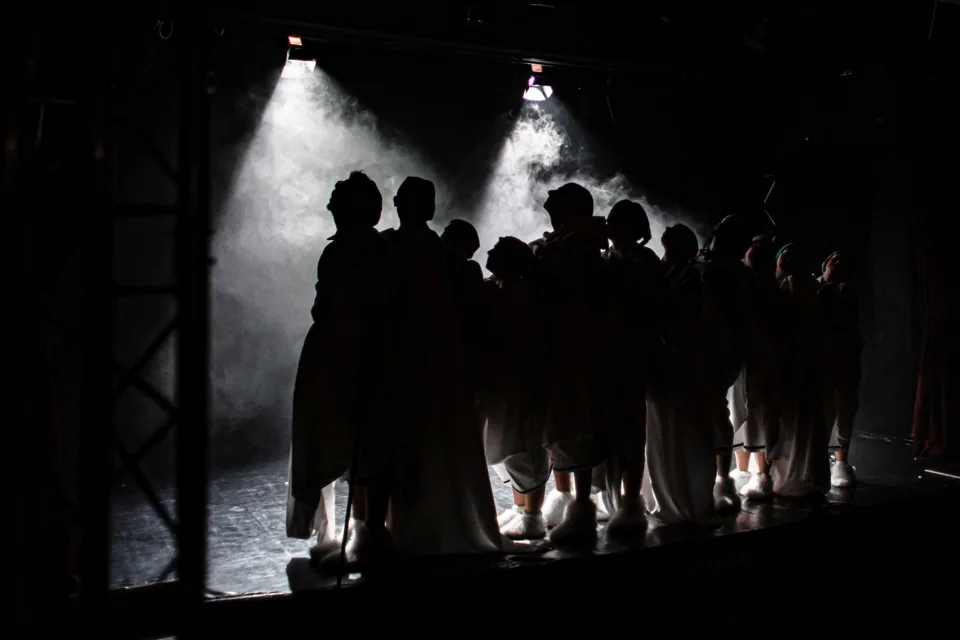
The Faculty of Theatre has operated in a reorganised form since 1990. Its areas include acting, puppetry and marionettes, theatre directing, choreography and cultural management through theatre studies. These subjects combine the creation of performance with its organisation, interpretation and relationship to wider cultural life.
At master's level, the faculty lists theatrical performing arts, artistic management and entrepreneurship, and applied theatre. Doctoral work includes a scientific route in theatre studies and professional research associated with acting, puppetry and directing. The faculty also describes academic meetings that connect experienced researchers and practitioners with doctoral students and recent graduates. Such events developed from national symposia into an international conference format. The theatre school thus supports several forms of artistic and intellectual participation, from developing a performance to researching its methods, history and social significance.
Sources: Faculty of Theatre ↗
Visual arts, design and conservation
The Faculty of Visual Arts and Design offers a wide group of creative disciplines. Its undergraduate subjects include painting, sculpture, graphics, photography and video, mural art and ceramics, environmental and product design, graphic design, fashion and textile design. Conservation and restoration, art pedagogy, and art history and theory are also represented.
Master's provision allows further study in visual-art theory and practice, painting, contemporary sculpture, illustration and animation, photography and video, public-space art, fashion, design and restoration. The faculty also supports doctoral research through scientific and professional routes. These academic directions bring together making, interpretation and the care of cultural objects. They allow the visual arts to be approached through studio practice, historical understanding, design problems and systematic investigation within the same faculty.
Sources: Faculty of Visual Arts and Design ↗
Specialist library and media resources
The university library supports the different requirements of music, theatre, art and teacher education. Its services include a central library, documentary collections and a visual-arts branch associated with the faculty on Sărărie Street. The visual-arts collections cover art history and technique, architecture, sculpture, graphics, drawing, painting, photography, video, pedagogy and related cultural subjects.
A media library and recording studio extend the resources beyond printed material. The published description identifies audio and video collections in formats including compact discs, DVDs, vinyl records and magnetic tape, together with electronic books. It also describes arrangements for recording important university events and booking studio sessions. Reading rooms and borrowing services give students access to these specialised collections, connecting performance and creative production with the documentary and scholarly material needed to study them.
Sources: Library Information ↗
Interdisciplinary artistic research
The Multidisciplinary Research Institute in Art links the university's research centres and doctoral schools. Its mission is to support investigation across artistic fields and develop regional, national and international partnerships. The institute describes using the university's human expertise and cultural resources to strengthen work relevant to academic, social and economic contexts.
Its research areas include curatorial criticism, contemporary art historiography, exhibition history, embodiment and performance, sound art, art and ecology, and images circulating through internet and social media culture. Conferences, seminars, exhibitions, publications, workshops and performance events are identified as ways to develop this intellectual activity. The institute's remit therefore includes both written scholarship and forms of artistic experimentation. It also emphasises professional ethics, freedom of expression, equal opportunities and respect for intellectual property within the research community.
English-language study options
UNAGE's international programme information identifies two undergraduate routes taught in English. Painting is offered through the Faculty of Visual Arts and Design, while Cultural Management and Theatre Studies belongs to the Faculty of Theatre. Both are described as three-year bachelor's programmes.
The university states that their application periods and admission examinations follow arrangements comparable to the Romanian-language programmes. These options give the university's international provision a concrete form within its existing faculties rather than creating a separate school detached from the wider institution. They also reflect two different sides of its artistic profile: the development of visual practice through painting, and engagement with theatre through cultural organisation and analysis. Alongside the Romanian-language academic offering, they form part of the university's teaching environment in Iași.
Sources: Programmes in English ↗