Visa

Oxford is best explored as a working city of separate institutions
Oxford offers the pleasure of moving between very different worlds on foot: a library reading room, a museum collection, a market passage and a meadow-side path. The famous buildings are close enough for a satisfying city break, but their visitor arrangements do not operate as one combined attraction.
Allow two full days for a first visit, adding time for a deeper museum interest or an excursion. A day trip can still work well if you choose one main booking and leave room to walk. For anyone considering moving here, add a weekday for housing and commuting checks.
Oxford's history: teaching since at least 1096
The University's own history makes a useful distinction: there is no clear foundation date, but evidence places teaching in Oxford in 1096. The institution developed over centuries, and its buildings are part of a living educational and research environment.
That helps explain the city you visit today. Gates, reading rooms and dining halls have everyday purposes alongside their architectural appeal. Some spaces welcome sightseeing, while others have restricted access or close for academic use. Read signs and booking descriptions carefully, and give students, staff and worshippers room to go about their day.
Getting your bearings beyond the central landmarks
Begin with Broad Street, Radcliffe Square and the adjoining streets, locating your booked entrance before settling into a longer walk. The difference between a building's best-known façade and its visitor meeting point can matter when a tour starts promptly. Keep your first route simple, with time to notice courtyards, stonework and changing views rather than moving continuously between timed appointments.
The tourism board's city orientation information also identifies Jericho, Summertown and Cowley Road as areas beyond the main shopping streets. Use those names to broaden your search for food or accommodation, then check the exact address and route. They do not describe interchangeable bases, and an Oxford postal address alone does not establish that you can comfortably walk everywhere. If your stay centres on a particular workplace, hospital or campus, plan around that destination instead of assuming the historic centre is automatically the best place to sleep.
Choose the Bodleian visit that actually enters your priority building
The thirty-minute Bodleian tour starts from £12.50 per person and takes visitors into Duke Humfrey's Library, with the Divinity School included when open. Its minimum age is eleven; under-sixteens need an accompanying adult. The route involves stairs and has no lift. Check that this particular experience suits everyone in your party before treating it as a standard family museum stop.
The sixty-minute tour starts from £17.50 and adds spaces including Convocation House and Chancellor's Court. Its tickets are released online in advance, whereas the shorter tour also has tickets reserved for the day. Those different sales arrangements matter: a sold-out advance allocation for one product is not evidence that every library visit is unavailable. Follow the current instructions for your chosen tour and its closure calendar.
Neither of these daily options should be mistaken for the Radcliffe Camera and City of Oxford Walking Tour. That separate weekend experience costs £30, lasts ninety to 120 minutes and combines time inside the Camera with a city walk. Tickets require advance online booking. The Camera is a working reading room, so an attractive exterior photograph does not imply that visitors can simply walk through its door.
Christ Church: read the time slot as carefully as the price
The multimedia visitor information lists different weekday and weekend tariffs. For Michaelmas term, 4 October–12 December 2026, on-the-day adult tickets are £22.95 on weekdays and £24.95 at weekends; buying in advance saves £2 per ticket. These are dated rates, not a year-round flat admission fee. The multimedia guide forms part of the visit, and the college releases the following week's tickets on Fridays at about 10am.
Use the known-closures calendar alongside the booking system. Christ Church is a working college and cathedral: the Hall closes for student meals, and worship or other activities can restrict individual spaces. A cheaper or available time slot may therefore provide a different experience from the one you had in mind. Decide whether the Hall, cathedral or broader college visit is your priority before choosing the appointment. Do not build an itinerary that assumes all areas stay open throughout the sightseeing day.
The Ashmolean: free entry, with specific gallery closures
The Ashmolean's current visit page confirms free general admission without booking for individuals. Groups need to book, and ticketed exhibitions have separate arrangements. This makes the museum a useful choice for a substantial indoor visit, but “free” should not lead you to treat it as a ten-minute filler. Choose a collection or subject that interests you and give it enough time to become more than a sequence of rooms.
At the October 2026 review, Western Art galleries 63, 65, 66 and 67 are closed for essential work until the end of the month. Other dated room closures are also listed. If a particular artist or object is the reason for your visit, check its availability before travelling; the museum remaining open does not mean every gallery is accessible. Keep the live closure list alongside the floor plan when deciding what you can realistically see.

Natural history offers another substantial museum option
The Museum of Natural History currently opens daily from 10am to 5pm, with last admission at 4.45pm, and closes on 24–26 December. Standard entry is free and unticketed; organisations or groups of more than ten need a booking. Its Parks Road location makes it a distinct outing, rather than something to assume you will automatically pass while crossing the central shopping streets.
Choose it for an interest in the natural world or as an alternative when a historic-library tour's age or stair restrictions do not suit your party. Review the museum's access information for your own needs. Allow time for a few subjects rather than promising to finish every display before another appointment. A flexible museum afternoon can be particularly useful after an uncertain arrival, provided you still respect the final-admission time and any current operational notices.
Christ Church's landscape deserves time of its own
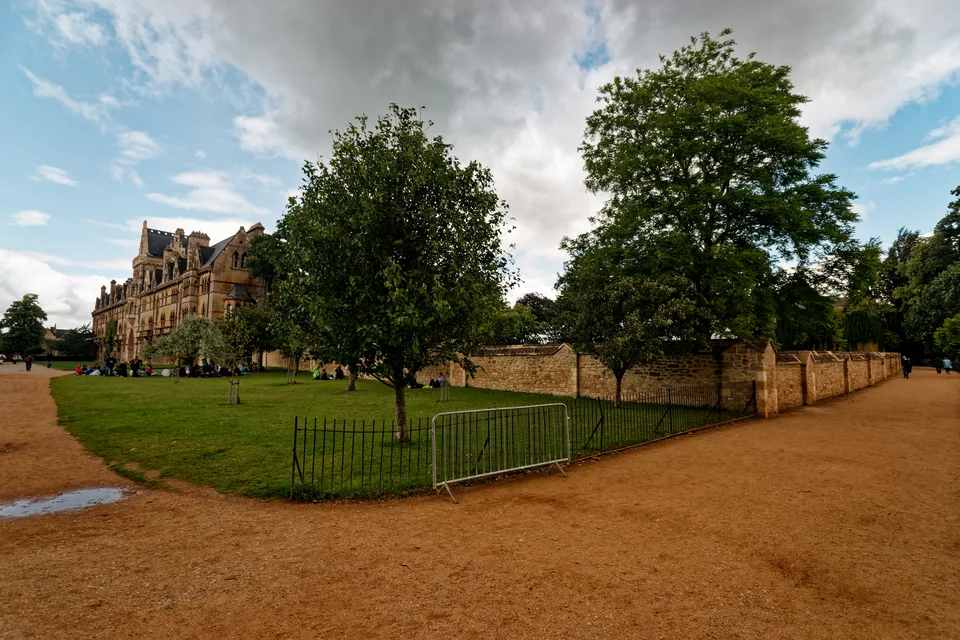
The college's landscape information describes meadow paths including Broad Walk and routes beside the Cherwell and Thames. These provide a useful contrast to indoor sightseeing and a way to understand the setting of the college buildings. A walk here is an experience to plan in its own right, rather than simply a shortcut towards the next ticket desk.
Separate the accessible visitor routes from private gardens and academic spaces. Follow current signs and any closures, particularly after poor weather, and choose footwear for the actual path surface. Keep children close around the water and do not build a route that depends on entering a private gate. For a short stay, an unhurried outdoor interval can be more rewarding than adding a third paid interior to an already full day. Leave enough daylight and energy for the return to your accommodation.
The Covered Market: food and shopping with individual opening hours
The Covered Market's history reaches back to the 1770s. Today its trader directory combines places to eat with produce, gifts, clothing and other independent businesses. Use it for a lunch stop, a practical purchase or a browse between visits, rather than assuming every stall sells the same kind of souvenir. Compare current menus, portion sizes and prices to find a meal that suits your time, appetite and budget.
The building's hours and each trader's hours are different questions. Some businesses may close before the wider market, so check directly if you are travelling for a particular shop or an evening meal. Take time to compare a takeaway with a seated lunch, including drinks and any extras. For food allergies or other dietary requirements, speak to the business preparing the food; a cuisine label cannot establish suitability. If buying produce for an apartment stay, confirm what cooking equipment and storage you actually have.
Where to stay: choose the arrival and evening you want
The regional accommodation directory includes hotels, B&Bs, self-catering and college accommodation. Check the address carefully because Oxfordshire listings extend beyond Oxford city. For a short break, a central room may save repeated journeys, while a property farther out can work well when it has a convenient connection to your actual plans. Compare the full cost, including transport, breakfast and any parking charge.
Before booking a historic building, ask about stairs, lift access and the particular room's bathroom. For a college stay, confirm dates, reception arrangements and facilities rather than assuming it operates like a conventional hotel throughout the year. An apartment may provide useful space for a family or a longer visit, but inspect the stated cooking, laundry and check-in arrangements. If quiet sleep matters, ask about the room's position relative to roads and evening businesses. Keep cancellation terms in view when the trip depends on one scarce tour slot.
Rail arrival: Oxford and Oxford Parkway are different stations
Oxford station is on Park End Street and uses the code OXF. Oxford Parkway, code OXP, is at Water Eaton to the north. Read the actual station on your ticket and plan the final connection from there. A lower fare or apparently suitable train does not settle the question of which arrival is convenient for your address.
National Rail's Parkway information currently reports that the lifts between platforms one and two are out of order. This specific notice matters more than the station's general step-free classification if your journey requires those lifts. Check the current situation and assistance options before travelling. For either station, use your real travel date to review departures, engineering work and the last suitable return. Allow for the walk, luggage storage and any local connection before booking an attraction soon after arrival. Keep the same margin on departure rather than using every final minute for sightseeing.
Heathrow and Gatwick: match the coach to the terminal
The Airline's Heathrow information describes direct Oxford coaches serving Terminal 5 and the Central Bus Station. Terminals 2 and 3 are reached from the Central Bus Station; Terminal 4 requires a transfer. The operator estimates around eighty minutes from Oxford to Terminal 5 and ninety to the Central Bus Station, subject to traffic. These figures are not a flight-to-hotel estimate or a guaranteed connection.
The same operator also publishes Gatwick services. Compare your actual flight terminal, coach stop and final Oxford address when choosing a journey. Read the conditions of fixed and flexible tickets before paying, especially if a delayed flight could change your departure. Keep a substantial margin before flight check-in and allow for the transfer within the airport. If travelling with a wheelchair or other assistance needs, contact the operator about arrangements in advance. Quote-check the relevant route instead of treating a generic advertised starting fare as an available price for every airport journey.
Park-and-ride: buy the combined product deliberately
The current Oxford Bus Company information lists five park-and-ride sites and a £3 combined ticket covering sixteen hours' parking and bus travel for up to five people of any age travelling together. Select the parking-and-bus option at the machine or through RingGo, and retain the purchase evidence for the outward and return bus journeys. A parking-only product is not necessarily the same purchase.
Choose the site from your approach road and the bus route you need, then check the day's timetable and final departure. Avoid assuming a ticket covers overnight parking or an airport journey. Once in central Oxford, walking can connect many sights, with buses useful for destinations farther away. For a relocation visit, test the exact service and final walk at your normal commuting time. A route that suits a relaxed midday outing may provide a different experience before an early shift or after a late finish.
Driving restrictions changed in September 2026
The county council's traffic-filter information explains the change introduced on 28 September 2026, replacing the temporary congestion charge. Car drivers cannot simply pay the former £5 charge to pass a filter. Check whether a permit applies and plan a route that avoids restricted points where necessary. The filters do not mean the entire city is inaccessible by car, but they can change the route to a perfectly reachable destination.
Separately, the zero-emission-zone pilot charges according to vehicle emissions when a vehicle is used in the zone between 7am and 7pm daily. The published bands are £0 for zero-emission vehicles, £2 for the ultra-low category, £4 for the low-emission category and £10 for other vehicles, with relevant discounts and exemptions. Check your vehicle and the map through the council's resources. Paying a ZEZ charge does not establish permission to cross a traffic filter, use a bus gate or park. Keep access permission, emissions charges and parking as three distinct checks.
A budget built from the choices that matter
Oxford's paid college and library visits can form the largest admission expenses in a short stay. Balance them against the free standard museum options rather than buying several tours simply because their names are familiar. Compare the actual itinerary: one carefully selected library tour plus an extended museum visit may suit your interests better than several short appointments. Leave time for the streets and landscape between them.
Work out accommodation, arrival transport, local journeys, meals and admissions separately. Do not treat a minimum advertised tour price or a dated term-time tariff as the cost of every future visit. An apartment's useful facilities, breakfast included for every guest or a genuinely convenient location can change the total more than a small room-rate difference. Leave a reserve for a changed connection or an extra meal, and decide what you want to spend on shopping before entering the market's passages.

Weather and seasons: protect the outdoor part of the day
The Met Office's regional climate resources emphasise how variable UK weather can be. Their regional summaries draw on historical averaging periods, so use them for context and check the forecast close to your visit. Spring and summer offer longer daylight for streets and meadow paths; autumn and winter still suit museums and architectural interiors, provided you give outdoor plans room to change.
Pack a waterproof layer and shoes suited to wet pavements and paths. In winter, place your longer walk earlier and keep the final hours for a confirmed indoor visit or a meal. In warm weather, allow water and breaks rather than filling every daylight hour. Check the opening days and visitor availability of your priorities alongside room prices: a date that looks attractive for accommodation may provide fewer suitable tour slots.
A realistic two-day first visit
On day one, begin with a short central orientation walk, then take the Bodleian experience you have actually booked. Leave enough time to find its meeting point. Use the market area for lunch and spend the afternoon at the Ashmolean, choosing available galleries around current closures. Keep the evening flexible if you arrived that morning. On a weekend, a Radcliffe Camera tour can replace the shorter library experience rather than being added on top of it.
On day two, give Christ Church a slot that matches the spaces you want to see, then take a suitable meadow walk. Choose the Museum of Natural History for the afternoon if your party still wants another substantial indoor activity. For younger children, adjust the first day around the library tours' minimum age. For a single day, choose one main booking, one walk and a meal.
Moving to Oxford: test the home-to-destination journey
For a possible move, begin with the actual workplace, campus or hospital entrance and compare routes from several addresses. Include the final walk, crossings and any change of bus. If you plan to drive, apply the current traffic-filter rules to that precise journey. Do the test at the time you would normally travel, not only during a quiet weekend afternoon.
At a viewing, examine ventilation, heating, signs of damp, storage and the included appliances. For a shared property, clarify which rooms and facilities the agreement covers, how bills are divided and who arranges repairs. Check broadband at the address, bicycle storage if needed and the practical route to groceries. Calculate rent, council tax where applicable, utilities and commuting together. Students should also compare their institution's accommodation and advice with the private market. A convenient short-stay room is useful for reconnaissance, but does not by itself establish that a neighbourhood suits your daily life.
Licensing and tenancy rights need current evidence
Oxford City Council's selective-licensing information explains its citywide scheme for relevant private rentals outside HMO licensing. Ask about the appropriate licence for a prospective home and verify the arrangement with the council. The council explicitly says it does not inspect before issuing a selective licence, so a licence alone should not replace your own checks of condition and management.
Use the government's current tenant overview for England's changes from 1 May 2026. Most existing assured shorthold tenancies became rolling assured periodic tenancies, while different rules apply to arrangements such as lodgings and student halls. Section 21 no-fault eviction ended, subject to transitional provisions for some earlier cases. An older local checklist describing fixed six- or twelve-month lets may therefore be unsuitable. Read the agreement, payment terms and applicable guidance before transferring money; obtain advice about the particular arrangement when something is unclear.
Healthcare, household tasks and permission to move
The NHS GP-registration guidance explains how to find and register with a surgery. Normally you do not need identity, address or immigration-status evidence to register yourself, although extra documents can be relevant when registering a child or resolving records. GP registration does not determine every entitlement to free hospital treatment. Arrange continuing healthcare and appropriate cover before arriving, alongside the practical work of utilities, meter readings and household services.
For immigration, the Standard Visitor rules distinguish a visit from taking employment or making the UK your main home through repeated trips. The standard visitor visa currently costs £135 for up to six months. Nationality and status determine whether you need a visa, an ETA, or neither; the ETA currently costs £20 for each applicable traveller, including children, and does not guarantee admission. Employment and longer formal study require the relevant work or Student visa assessment. A rental contract or sightseeing booking creates no independent residence right.
Nearby alternatives and useful next steps
Keep another destination as a deliberate extension rather than a hurried extra between Oxford appointments. VisaWand's Bath city guide offers a comparison for an architecture and heritage break, while the London guide helps with a trip including the capital. Check the actual route and travel time before deciding that combining places improves your available day.
For broader planning, use the UK country guide, the location directory and the UK destination and consultant listings. The directory identifies places; it does not establish that every settlement already has a completed guide. If seeking professional immigration advice, check relevant authorisation, experience, the written scope and fee. Bring a specific proposed activity, nationality and timeframe so the consultation can address your decision, rather than assuming that a general interest in Oxford settles the route you need.
Official planning resources
Reviewed 16 October 2026. Use the official resources linked throughout this guide for admission, transport, housing and immigration decisions. Prices, services and rules can change; confirm the details relevant to your dates. Photography illustrates the locations and is not a live view.
View all official resources
- University of Oxford: history
- Experience Oxfordshire: city orientation
- Bodleian Libraries: 30-minute tour
- Bodleian Libraries: 60-minute tour
- Bodleian Libraries: Radcliffe Camera and city tour
- Christ Church: multimedia visits and prices
- Christ Church: known closures
- Ashmolean Museum: plan your visit
- Museum of Natural History: visit
- Christ Church: gardens and landscape
- Oxford Covered Market: history
- Oxford Covered Market: traders and hours
- Experience Oxfordshire: accommodation
- National Rail: Oxford station
- National Rail: Oxford Parkway station
- The Airline: Heathrow connections
- The Airline: Gatwick connections
- Oxford Bus Company: park-and-ride
- Oxfordshire County Council: traffic filters
- Oxfordshire County Council: zero-emission zone charges
- Met Office: regional climates
- Oxford City Council: selective rental licensing
- GOV.UK: tenant rights
- NHS: registering with a GP
- GOV.UK: Standard Visitor rules
- GOV.UK: electronic travel authorisation
- GOV.UK: work visa routes
- GOV.UK: Student visa
Plan the next part of your journey
Explore the United Kingdom guide, browse other cities or compare consultants for your travel and relocation questions.