Visa
Manchester rewards a trip built around your interests
Manchester makes most sense as a city to use: follow an industrial story through a museum and canalside walk, spend an afternoon inside a remarkable library, or organise a weekend around football and dinner. It offers enough for a substantial city break without requiring a succession of expensive attractions. The useful question is which version of the city you want, because a match weekend, an architectural visit and a reconnaissance trip before moving need different bases and schedules.
Start with two full days for the central sights, adding time for a stadium visit or another destination. Resist filling every spare hour: opening days and the location of your accommodation matter more than a long checklist. For a prospective move, reserve a separate weekday to test the commute and inspect housing.
Read the industrial landscape beyond its handsome buildings
The Science and Industry Museum's account of Manchester's industrial growth explains how cotton manufacturing accelerated the town's expansion in the early nineteenth century. Mills, warehouses, machinery and trading networks transformed its working life. That growth also involved severe inequality: factory labour at home and enslaved people producing cotton overseas were part of the same economic system. The architecture is therefore an entry into a complicated history, rather than simply a backdrop for attractive photographs.
Carry that context into the streets. Look at the size and arrangement of older commercial buildings, then compare them with modern housing and offices. A short walk becomes more interesting when you ask what a building once stored, made or sold. Avoid assuming every converted brick building was a cotton mill; the industrial economy required many different kinds of premises, and an individual building's story needs its own evidence.
Choose areas by the journeys you will actually make
Use Visit Manchester's neighbourhood directory to orient yourself around the Northern Quarter, Chinatown, the Village, Spinningfields, Oxford Road and the historic centre. These names help organise a visit, but they are not interchangeable hotel locations. Read the street address and map the route from your arrival station before deciding that an accommodation description of “city centre” answers every practical question.
A Northern Quarter base suits a visit focused on exploring its streets and eating nearby; around Deansgate, check the particular walking route to the library and Castlefield. Oxford Road deserves consideration when your plans repeatedly involve that corridor. Near a nightlife venue, ask about room position and windows rather than assuming an upper floor guarantees silence. Manchester's visitor information covers the wider region too: a listing in Greater Manchester does not establish that an attraction is within the City of Manchester or close to your hotel.
The cathedral offers a different pace
The cathedral's visitor information lists general visiting from 9.30am to 4pm Monday–Saturday and noon to 4pm on Sundays, subject to services and events. Entry is free, with a suggested £5 donation. That distinction matters when calculating costs: a donation request is not an admission tariff. This remains a working church, so adjust photography and conversation to the activity taking place around you.
Combine it with a walk through the surrounding historic quarter rather than making a special cross-city journey for a guaranteed guided tour. Volunteer tours may be available, but are not assured. The cathedral currently has no visitor toilets inside; its information points to nearby facilities instead. For a family or anyone with access requirements, that small operational detail can be more useful than adding another landmark to the day's list.

Castlefield: waterways and an elevated garden
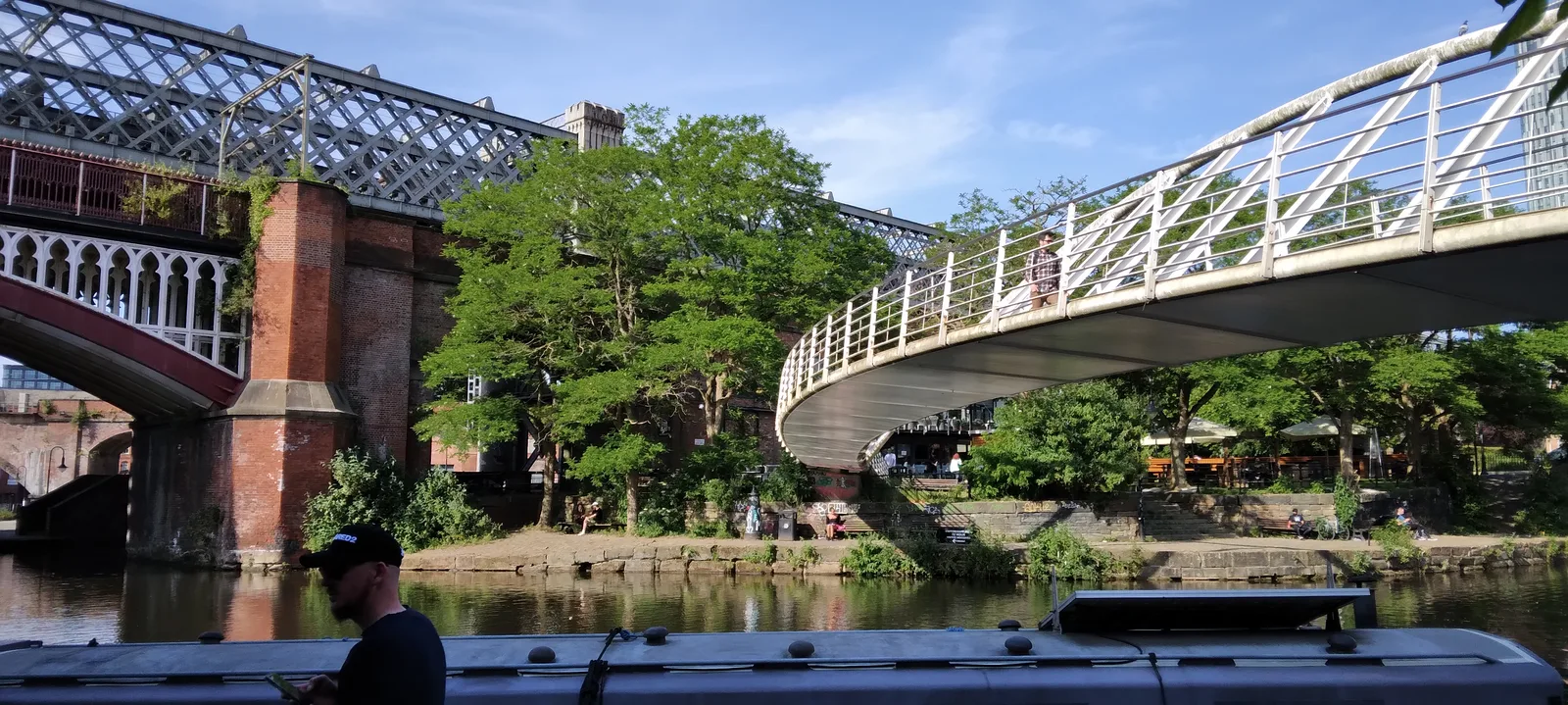
Allow time around Castlefield before or after the museum, separating the public streets and waterside routes from attractions with opening hours. The National Trust's Castlefield Viaduct occupies a railway structure built in 1892 and used until 1969; its garden opened in 2022. It currently welcomes walk-up visitors Wednesday–Sunday, 10am–5pm, without booking. Treat that as a scheduled stop, not an outdoor space guaranteed to be accessible every evening.
The access notice deserves particular attention. Some lifts serving the area are out of order, and the Trust identifies alternatives via Deansgate station's platform-two bridge or the tram stop; those lifts are managed separately. Check the route shortly before travelling if step-free access is essential. Cycling is not allowed on the viaduct itself. Bring what you need for the visit rather than expecting a café on the structure, and keep children close around the wider area's roads and water.
Science and Industry Museum: plan around the buildings open
The Science and Industry Museum offers free standard admission, with advance booking recommended. Normal opening is 10am–5pm daily, excluding 24–26 December and 1 January; some exhibitions and events carry separate charges. Its Liverpool Road setting makes it a natural partner for a Castlefield walk, but allow enough time for a proper visit rather than treating it as a brief stop between photographs.
The current restoration information matters. Parts of the historic site are unavailable while work continues, and the Air and Space Hall is permanently closed. Do not plan around old photographs or an itinerary that assumes every former gallery remains accessible. Choose from the current programme and check the map before promising a particular part of the site to children or anyone making a special journey. The museum has no on-site parking, so include the final walk or public-transport connection in the day's plan.
Power Hall has reopened, with an important demonstration caveat
Power Hall: The Andrew Law Gallery is open again following repair and conservation work, and entry is included in the free museum admission. Its engines make the relationship between Manchester's industrial buildings and the machinery inside them much easier to grasp than a general description of the city's manufacturing past.
At the time of review, however, the museum reports a technical problem with its electric boiler and says its steam engines cannot operate temporarily. Electrically driven engine demonstrations and talks still take place, subject to change. If seeing steam machinery running is the reason for your journey, confirm the current notice first. Keep the visit worthwhile on the basis of the collection, interpretation and available demonstrations rather than assuming every machine will be moving.
John Rylands Library needs the right day of the week
The John Rylands Library's own visitor page gives Wednesday–Saturday opening, 10am–5pm, with final entry at 4.40pm. Admission is free and individual visitors do not need to book, although queues can form at busy times. This is a significant planning detail for a Sunday-to-Tuesday stay: the building should not appear as a reliable open interior on those days.
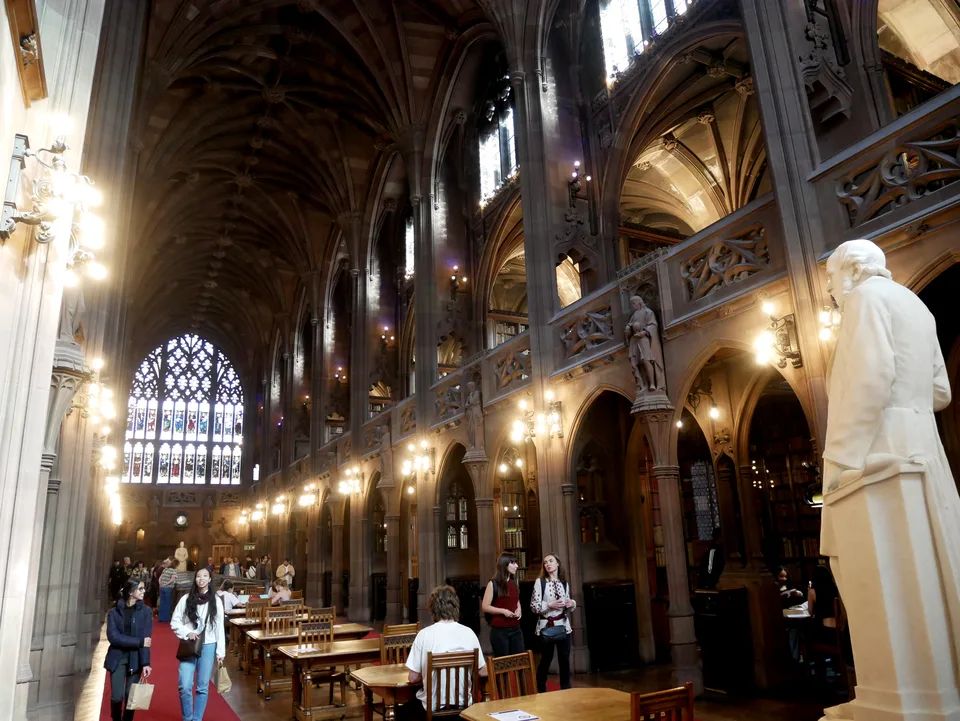
Opened in 1900, the neo-Gothic library combines architectural interest with rare books, manuscripts and changing displays. Check the current exhibition programme if a particular subject matters to you, and use the detailed access information when planning with mobility or sensory needs. A sightseeing visit does not establish permission to use research collections or reading-room services; those have their own arrangements. The shop currently takes card payments only, which is useful to know if buying a book or card is part of your visit.
Airport arrival: rail time is only part of the journey
The airport's rail information describes journeys to Manchester Piccadilly of around twenty minutes, with trains normally about every ten minutes. That is the railway journey, not a flight-to-hotel estimate. Allow for the walk from your arrival terminal, border checks where applicable, baggage, waiting and the final transfer from Piccadilly to your accommodation.
Choose the actual train and ticket against your arrival date rather than relying on an undated last-service claim. If the journey depends on a late connection, work out the fallback and check the property's check-in arrangements before booking. Piccadilly can be a convenient arrival point, but it is not automatically the nearest station to every address described as central. Compare the complete route, especially with heavy luggage or access needs, before deciding that the shortest advertised train time provides the simplest arrival.
Bus and tram fares: understand the product you are buying
The Bee Network's bus ticket information currently lists a £2 adult hopper fare allowing transfers within sixty minutes, and a £5 adult day ticket. The day product expires at 3.59am the following morning; it is not a rolling twenty-four-hour pass. Calculate the trips you intend to make before paying for broader coverage. A walkable sightseeing day and a series of journeys across the region require different budgets.
With contactless bus and tram travel, tap in when boarding a bus, but do not tap out. On trams, tap in before boarding and out at your final stop, using exactly the same card or device; changing between trams does not require an intermediate tap. Each adult needs a separate payment card or device. Keep a phone charged for inspection and avoid alternating between a physical card and its mobile-wallet version. These arrangements do not mean that every railway journey is included.
Check the travel notice for your actual dates
At the October 2026 review, TfGM's current travel information warns of major works from 19 October to 1 November 2026, with no trams on the Eccles, Trafford Centre and Altrincham lines and changes elsewhere. This is a dated disruption, not a permanent description of the network. Follow the operator's current replacement arrangements when it affects your trip, especially for an evening return or an appointment with a fixed start time.
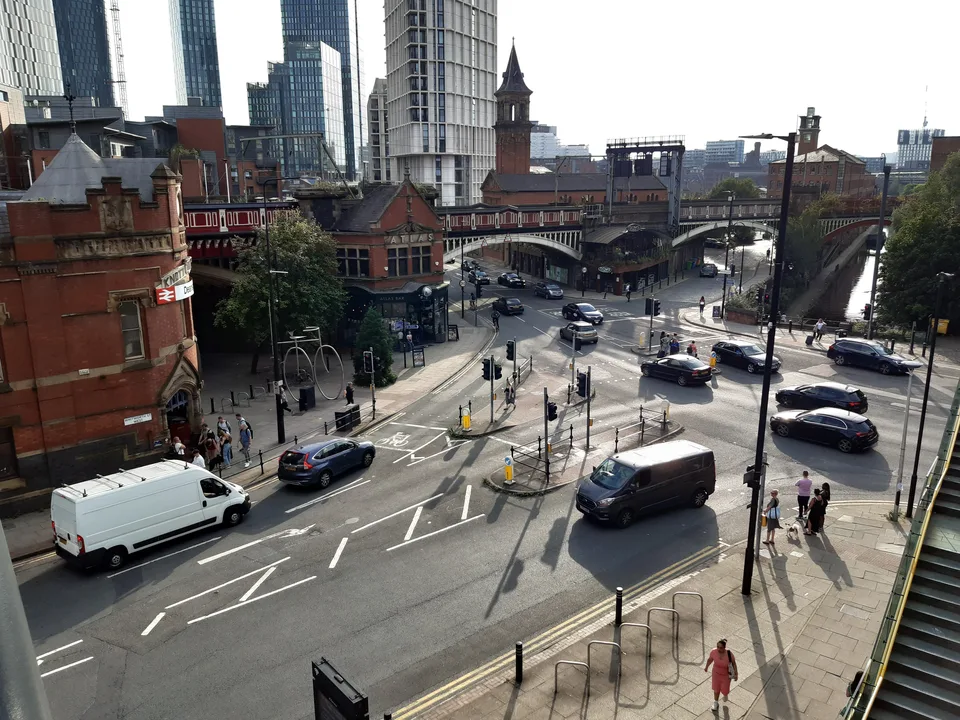
Build the route around the destination's exact address. A station name, neighbourhood name and venue entrance can be different points on a map. Allow a margin for walking, crossings and waiting, and check the final service before committing to late plans. A car is a choice to evaluate against parking and the whole journey, rather than an automatic requirement for a central stay.
Football: secure the experience before the room
For a visit built around Manchester United, use the club's official museum and stadium-tour page to check availability. Tours do not operate on home matchdays, and fixture or operational changes can affect arrangements. A stadium tour and a match ticket are separate purchases; booking one does not provide the other. Confirm the actual product and date before buying accommodation that cannot be cancelled.
The club asks tour visitors to arrive at least twenty minutes before their slot. Give yourself additional time if you want to see the museum first, and follow the booking's current arrival instructions. Keep a substantial part of the day free rather than fitting a timed tour between tight connections. For accommodation, compare the complete journey to the stadium and back, including the final walk, instead of choosing a room solely because it advertises a football connection.
Eating beyond a single signature dish
Rusholme's Curry Mile on Wilmslow Road is useful precisely because the name does not describe everything on offer. Visit Manchester's account includes South Asian and Middle Eastern cooking, shawarma, Turkish bakeries, sweet shops and grocers selling ingredients such as spices and lentils. It can be a destination for dinner or a practical shopping stop during a longer stay, rather than a requirement to eat the same kind of meal repeatedly.
Choose a restaurant from its current menu, opening hours and suitability for your party. Confirm allergies directly and ask specific questions about preparation; a cuisine label does not establish that an individual dish is safe. For a quick lunch, compare the total price of a takeaway and a sit-down meal, including drinks. If staying in an apartment, inspect the cooking facilities before budgeting on daily self-catering: a kitchenette photograph does not establish the presence of a usable hob or enough utensils.
Where to stay and how to keep spending realistic
For a short stay, weigh a central hotel against the cost and time of travelling from a cheaper room farther away. An apartment may suit a family needing separate sleeping space, while a conventional hotel can simplify a late arrival. Check lift access, luggage storage, reception hours and cancellation terms. “Parking available” needs a price and location, and “breakfast included” needs confirmation for every person on the reservation.
Build a budget from accommodation, arrival transport, local journeys, meals and the activities you will actually buy. The free standard museum visit, library and cathedral make it possible to plan a worthwhile day with limited admission spending. Football, special exhibitions, shopping and evening events can change that calculation substantially. Quote-check your own dates rather than treating an annual average room price as an available offer. Leave a reserve for a changed train, wet-weather activity or a meal when your original plan proves impractical.
Seasons: plan for variability, not a weather stereotype
The Met Office's regional climate resources describe the influence of Atlantic weather and the differences between low ground and surrounding uplands. Their linked regional overview uses historical observations, so it should not be mistaken for today's forecast or a new set of city-centre averages. Pack a waterproof layer and shoes suitable for wet pavements, and keep an indoor alternative alongside a canal walk.
Spring and summer provide more daylight for an unhurried outdoor itinerary; winter calls for a shorter outdoor programme and more attention to evening travel. Autumn can still suit museums and architecture, provided you leave room to change the order of activities. Choose dates around the opening days of your priorities and the event calendar, then check the forecast close to departure.
A realistic two-day first visit
On day one, start with the cathedral during its visiting hours and continue through the historic centre. Leave time for lunch, then visit John Rylands Library if your day falls Wednesday–Saturday. Keep the rest of the afternoon for the streets around Deansgate rather than adding a distant appointment. Choose dinner near your accommodation if you have arrived that morning; this gives the day some resilience against a delayed train or flight.
On day two, make the Science and Industry Museum the main appointment. Check the demonstrations and exhibitions you want before deciding how long to stay. Continue into Castlefield, adding the viaduct when its opening and access arrangements suit. In poor weather, shorten the outdoor part instead of racing through the museum to preserve an arbitrary route. A stadium tour deserves an additional half-day or a deliberate substitution. On Sunday–Tuesday, reorganise the library stop around its closure rather than arriving at the door with a rigid itinerary.
Moving: inspect the home and test the ordinary weekday
A relocation visit needs a different checklist from a holiday. Travel from each prospective address to the actual workplace or campus at the time you would normally commute. Repeat the journey in the evening, and assess the final walk in bad weather. Compare total monthly costs and time before choosing between a central flat and a home farther out. A pleasant weekend around the canal does not answer how the same address works for a household on an early shift.
At a viewing, examine heating, ventilation, signs of damp, windows, storage and the available work space. Ask which furnishings and appliances are included, how repairs are reported and who manages the building. Check broadband availability for the address rather than the neighbourhood, and itemise energy, water, council tax and any charges excluded from rent. For children, investigate the applicable school-admission process before treating a nearby school as an assured place. Keep temporary accommodation long enough to make these checks without signing under arrival-day pressure.
Rental rules changed in May 2026
The council's tenant guidance on the Renters' Rights Act explains changes introduced on 1 May 2026, including rolling arrangements for most tenancies and the end of Section 21 evictions. Do not rely on an old checklist assuming a standard fixed-term assured shorthold tenancy. The guidance also covers rent increases, bidding restrictions and rent requested in advance; the rules about advance rent should not be confused with a tenancy deposit.
Read the actual agreement, verify who is entitled to let the property and keep a record of payments and its condition. If a proposed term conflicts with the current guidance, resolve it before transferring money. Exact rights depend on the arrangement, so a general city article cannot determine every lodger, student or other housing case. Ask the council or an appropriate adviser about the particular problem rather than accepting a confident informal explanation from an interested party.
Healthcare and the household basics
Use NHS information on hospital services to understand eligibility before assuming that moving into a rental automatically makes all treatment free. Ordinary residence and other applicable rules matter; visitors and recent arrivals can face charges. Emergency-department treatment being free does not make subsequent hospital admission free. Arrange appropriate cover and clarify any continuing treatment or prescription needs before departure.
During the first days, establish where to obtain routine healthcare and medicines, check your mobile connection, and record meter readings when taking responsibility for utilities. Agree how parcels, refuse and building access work. These modest tasks deserve space in a relocation schedule: repeated small uncertainties can make the first week harder than the headline move. Keep copies of your housing agreement, identity documents and relevant immigration permission available for legitimate administrative checks.
Entry permission is different from permission to move
The UK's Standard Visitor rules distinguish a temporary visit from employment and residence. Visits are usually permitted for up to six months, subject to individual circumstances; the standard six-month visitor visa currently costs £135. Nationality and immigration status determine whether you need that visa, an ETA or neither. Visitor permission generally does not allow UK employment or self-employment, apart from specific permitted exceptions, and repeated visits cannot be used to make the UK your main home.
For eligible travellers who need one, the official electronic travel authorisation currently costs £20. Each applicable traveller, including children, needs their own; approval does not guarantee admission. Use the official application information and verify your passport details. Plan work through the relevant UK work route and longer formal study through the applicable Student visa requirements. Neither a tourist booking, an offer of accommodation nor a university enquiry establishes permanent residence. Check the conditions attached to your particular permission before accepting work or committing to a move.
Other places to consider, and useful next steps
Leave another destination for a separate day when you want a broader north-west England trip. VisaWand's Liverpool destination page offers a starting point for exploring that alternative; confirm the actual trains and the sights you want before combining cities. London's city guide is useful for comparing the capital with Manchester, particularly if your decision involves several possible UK bases. Avoid assuming that either choice suits the same budget or commute.
For national context, continue with the UK country guide, the UK location directory and the UK destination and consultant listings. The directory helps find places; its inclusion of a settlement does not itself mean a completed article exists. If you seek professional immigration help, check the adviser's relevant authority and the service's scope. Bring a specific question, nationality, proposed activity and timeframe so that advice can address the decision you actually face.
Official planning resources
Reviewed 16 October 2026. Use the official resources linked throughout this guide for admission, transport, housing and immigration decisions. Prices, services and rules can change; confirm the details relevant to your dates. Photography illustrates the locations and is not a live view.
View all official resources
- Science and Industry Museum: Manchester industrial history
- Visit Manchester: neighbourhoods
- Manchester Cathedral: plan your visit
- National Trust: Castlefield Viaduct
- Science and Industry Museum: plan your visit
- Science and Industry Museum: restoration and closures
- Science and Industry Museum: Power Hall
- John Rylands Library: visiting
- Manchester Airport: rail connections
- Bee Network: bus tickets
- Bee Network: contactless travel
- Bee Network: current travel and ticket information
- Manchester United: museum and stadium tours
- Visit Manchester: Rusholme and the Curry Mile
- Met Office: regional climate information
- Manchester City Council: renters rights
- NHS: hospital services and eligibility
- GOV.UK: Standard Visitor rules
- GOV.UK: electronic travel authorisation
- GOV.UK: work visa routes
- GOV.UK: Student visa
Plan the next part of your journey
Explore the United Kingdom guide, browse other cities or compare consultants for your travel and relocation questions.