Visa
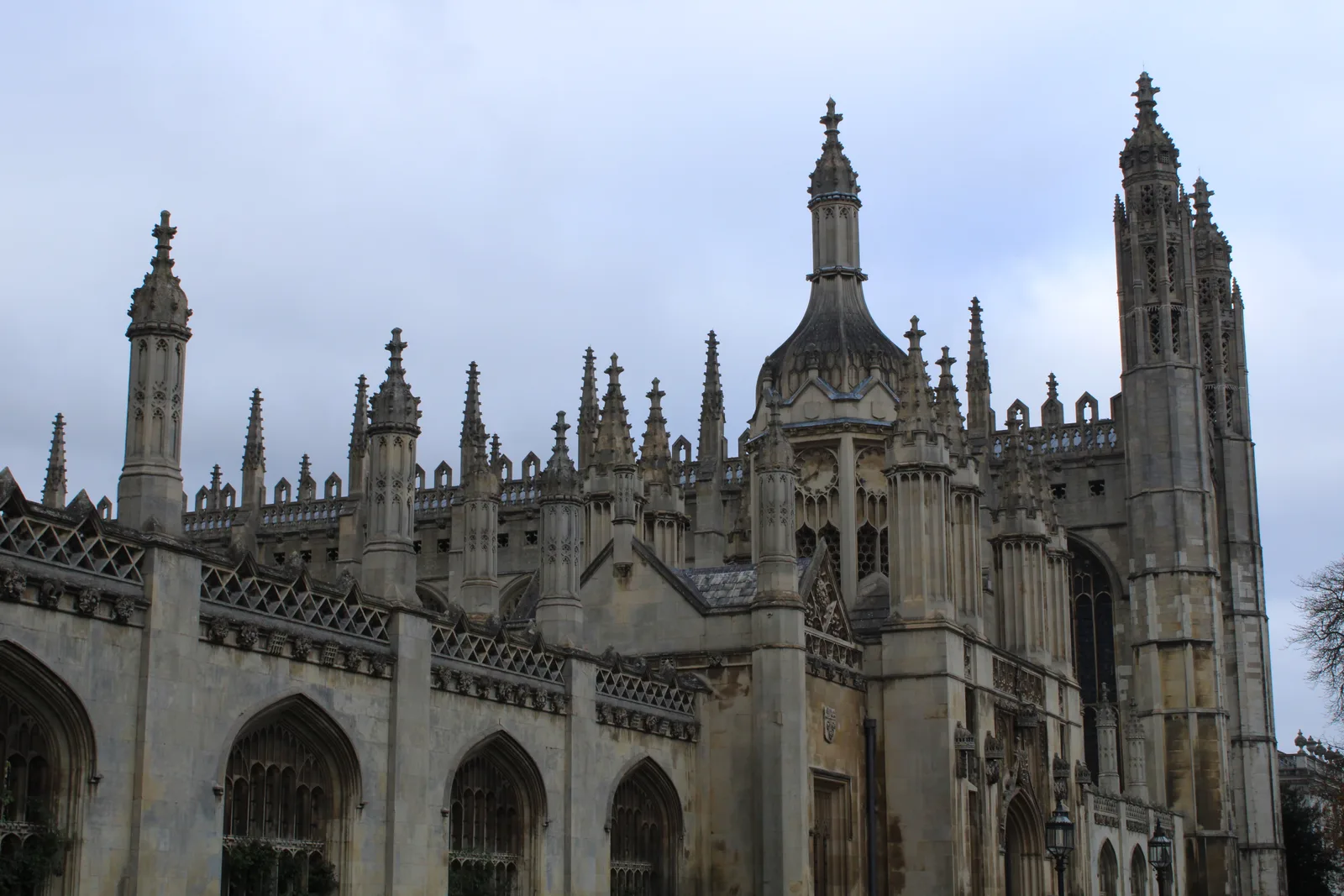
Cambridge rewards a stay beyond the college photograph
Cambridge is a city to explore at walking pace, with a river journey, a remarkable chapel and museum collections providing very different ways into its character. The attraction is not simply a row of old buildings. It is the relationship between narrow central streets, college grounds, public collections and the everyday places where people shop, commute and meet. Two full days give you room to enjoy that variety without turning every hour into an appointment.
A day trip works if you choose one principal interior and leave time outside. Stay overnight if you want both the river and substantial museum time, or if a particular timed visit matters. Anyone weighing a move should add a normal working day to test the journey to their actual destination. The historic centre, a university department and a hospital campus can represent quite different daily routines.
A commercial town before the University
The University's account of Cambridge's early records describes a thriving commercial community by 1200, with markets predating the Norman Conquest. Scholars fleeing hostility in Oxford settled here in 1209. That history helps explain why the city is more than a university campus: trade, transport and local life have always mattered alongside scholarship.
The University's historical timeline dates Peterhouse, its first college, to 1284 and the laying of King's College Chapel's first stone to 1446. Today's visitor encounters institutions built up over centuries, rather than a single attraction designed around a central entrance. Academic buildings remain workplaces and homes. Check each college's public arrangements and follow the marked visitor route; an open gateway or photogenic courtyard does not automatically establish public access.
Finding your bearings: the centre, Quayside and Mill Road
King's Parade makes a useful starting point for understanding the historic core. Plan a walk around the streets that connect your chosen college, the market and a river departure point, with time for pauses rather than several consecutive guided tours. Photographing the exterior can be rewarding even when you decide against another paid interior.
The tourism board's guide to shopping areas identifies Bridge Street and Magdalene Street around Quayside, and Mill Road and Romsey for international restaurants and food shops. These offer useful alternatives to eating every meal beside the most famous colleges. For accommodation, compare the precise address with your evening plans and arrival station. A property described as being in Cambridge may suit a particular workplace very well while adding journeys to the central sights. Test the route instead of judging convenience from the city name alone.
King's College Chapel: know what the ticket includes
The King's visitor route includes the chapel and its grounds, with views towards the River Cam and the Backs. Inside, the fan vault, sixteenth-century stained glass and Rubens' Adoration of the Magi give you specific reasons to linger. Other college buildings are excluded from the standard visit: students live and study there throughout the year.
Use the college's date-specific opening and ticket page before fixing the rest of your day. Its early-booking offer ends on Sunday night for the following week, so compare the actual date and checkout price rather than assuming any advance purchase receives the same discount. Visitor capacity is limited. The Turing sculpture is outside the normal route and needs a separate advance request for chaperoned access, subject to availability; access is unavailable during the usual April–June quiet period. Do not buy a standard ticket expecting to add it spontaneously on arrival.
The Fitzwilliam: build a museum visit around your interests
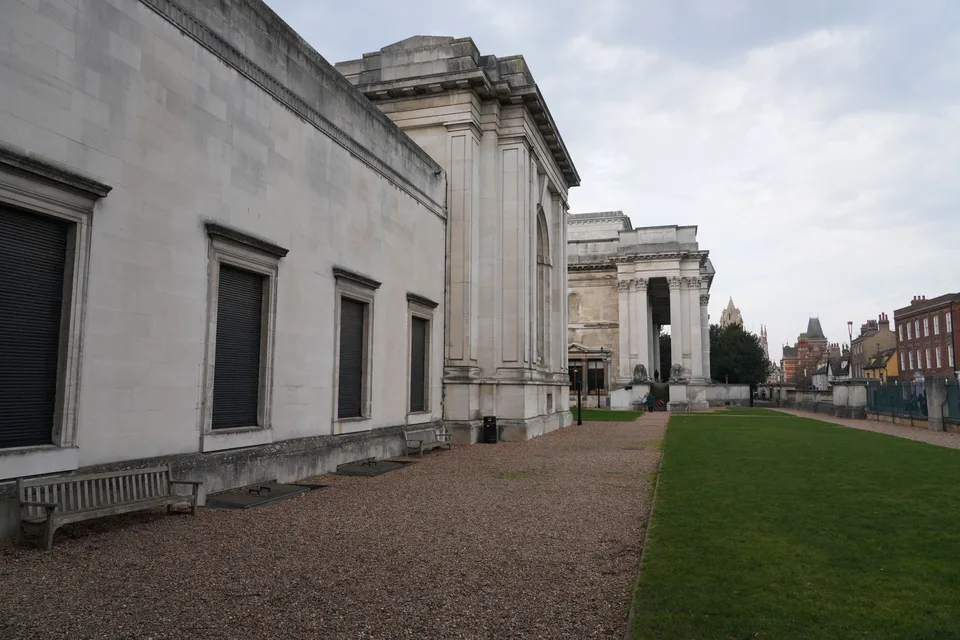
The Fitzwilliam Museum offers free general entry and collections ranging from ancient Egyptian objects to modern and contemporary art. Its Trumpington Street location makes it a substantial destination in its own right. Choose a period, material or exhibition that interests you, then leave time to discover something outside that initial plan.
Normal opening is Tuesday–Saturday, 10am–5pm, and Sundays and bank holidays, noon–5pm; last entry is 4.40pm. Check holiday exceptions and separate exhibition arrangements. At the October 2026 review, the William Morris and Pre-Raphaelite exhibition is advertised for 23 October onwards, so an earlier visitor should not plan around seeing it. The museum estimates a twenty-minute walk from Cambridge station and identifies the U bus as an alternative. It has no visitor car park. If travelling with children under twelve, note the requirement for an accompanying adult over eighteen.
Kettle's Yard: the house and exhibitions are separate visits
At Kettle's Yard, the former home of Jim and Helen Ede displays art and objects in a domestic setting. A house ticket reserves timed entry; an exhibition ticket covers the separate galleries. Booking one does not include the other, even though temporary exhibitions are free. This distinction matters when deciding how much of your afternoon to allocate.
The standard adult house price is £13 without the optional donation, or £14.50 with it; visitors aged twenty-five and under enter free. Opening is Tuesday–Sunday, 11am–5pm, with the last house entry at 4.15pm. Mondays, including bank holidays, are closed. Arrive ten to fifteen minutes before your slot. Bags, including handbags, are not allowed in the house, storage is limited and there are no lockers. The house is not fully wheelchair accessible and is unsuitable for buggies, so discuss your needs before booking rather than discovering the constraints at the door.
Punting: compare the product and the departure point
A punt journey along the College Backs offers a different view of the architecture, but shared chauffeured tours, private boats and self-hire are different purchases. A shared tour buys places alongside other passengers; a private tour reserves the boat. Compare the group total, duration, seating and cancellation terms before choosing.
Scudamore's shared College Backs tour (source unavailable) lasts approximately forty-five minutes and can depart from either Mill Lane or Quayside. Your confirmation specifies the station. Its punts accommodate up to twelve passengers across four benches, and under-sixteens need an accompanying adult. The operator allows rescheduling until one hour before departure, with a fare difference payable where relevant; refunds have a separate forty-eight-hour deadline and an administration deduction. Read those terms if your visit depends on a train connection or changeable weather. A river tour passes college buildings, but does not substitute for admission to their interiors or gardens.
The Botanic Garden: an outdoor visit near the station
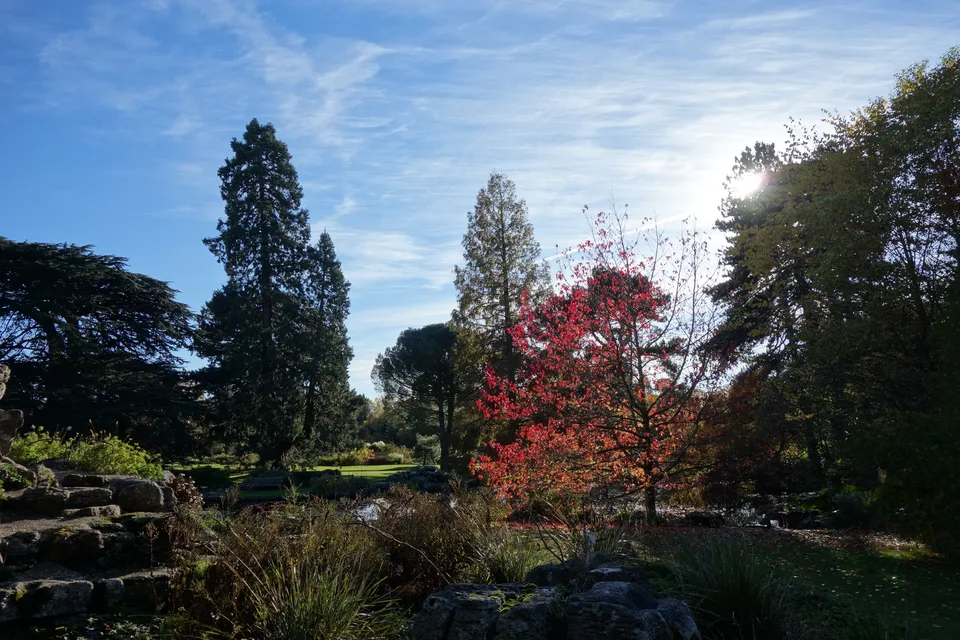
The Cambridge University Botanic Garden provides a quieter counterpoint to college sightseeing. Its entrances are at Brookside on Trumpington Road and Station Road Gate on Hills Road. The garden estimates five minutes on foot from Cambridge station and fifteen from the city centre, making it useful on an arrival or departure day if your luggage arrangements allow.
Standard adult admission is £8.60; £9.50 includes an optional donation. Children aged sixteen and under enter free. Advance tickets offer a ten per cent discount on standard admission, with special-event exclusions. October opening is 10am–5pm, shortening to 4pm from November through January; last paid admission is thirty minutes before closing. The published Christmas closure runs from 24 December 2026 to 1 January 2027 inclusive. Check current notices too: the garden has cancelled its 2026 Apple Day because insufficient heritage apples were available after the summer drought. An old events listing would therefore make a poor basis for booking a trip.
Food and shopping: use the market, then look beyond it
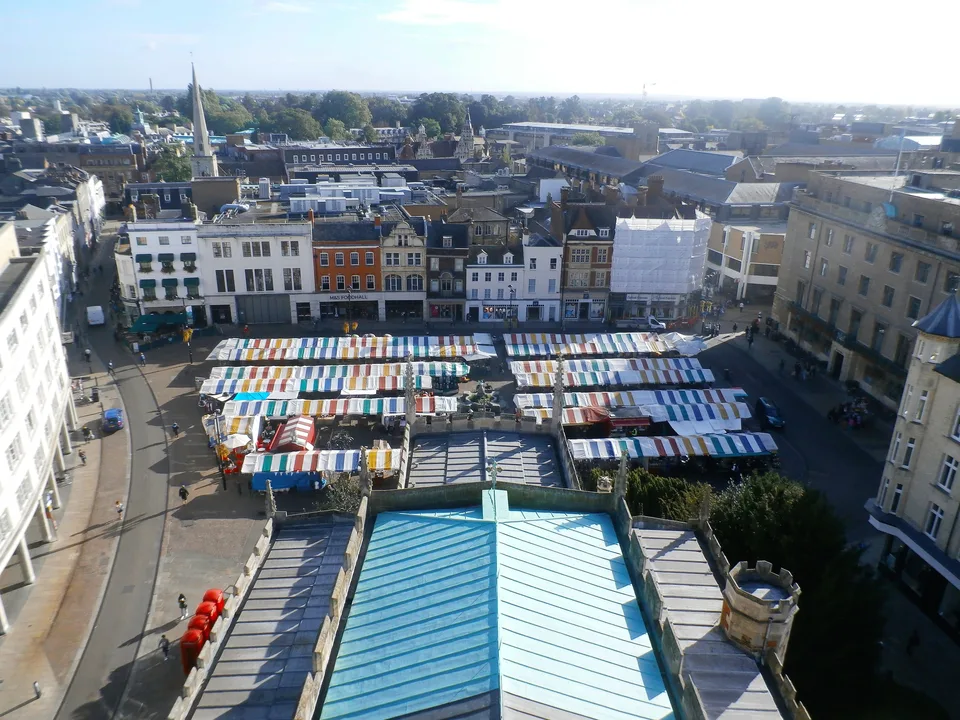
Cambridge Market operates on Market Hill from 10am to 4pm daily, except Christmas Day, Boxing Day and New Year's Day. Its mix includes street food, ingredients, plants, books, clothing and art. It works well as a flexible lunch stop between appointments, but allow time to compare what is actually trading that day.
Mill Road offers another useful food-shopping direction, particularly for an apartment stay. Check current menus, opening times and dietary information with the businesses themselves. Compare the complete price of a meal, including drinks and any service charge, before deciding whether a quick takeaway or seated lunch suits the day. For souvenirs, choose something you want to carry home rather than treating every museum shop as another required stop. Produce purchases are most useful when your accommodation provides the storage and cooking facilities you need.
Market improvements are proposals with a changing timetable
The council's Civic Quarter market update describes improvements to surfaces, stalls and public spaces. Its September 2026 account says planning applications have been approved, with a further autumn decision on proceeding. Work may begin in January 2027; temporary trading locations form part of the proposals.
That does not mean the market has already closed or moved. For a future visit, check the council update alongside the ordinary market page, particularly if the market is a major reason for your trip. Construction arrangements can affect an otherwise sensible walking route or the location of a particular trader. Avoid booking an accommodation package solely because an older photograph shows the market immediately outside its window. Ask about the current surroundings and cancellation terms if street works would materially affect your stay.
Choosing accommodation for the stay you actually want
A central hotel or guesthouse can simplify a short sightseeing break by reducing journeys between your room, evening meal and attractions. A room near the railway station may be convenient for an early departure or a longer visit involving frequent rail travel. Compare the entire trip rather than assuming the closest property to a famous college is always the best value.
Visit Cambridge's college-accommodation listings include vacation rooms and some accommodation available more widely through the year. Confirm the particular building, bathroom, breakfast and reception arrangements; a college booking does not promise unrestricted access to every courtyard or facility. Ask about stairs and lifts in older properties. For apartments, check laundry, cooking equipment, heating and the full price after fees. Families should verify age restrictions and bed arrangements directly, while light sleepers should ask about the room's position relative to roads and evening venues.
Arriving by rail: choose the correct Cambridge station
Cambridge station is the main station on Station Road. Do not expect to emerge beside King's Chapel: allow time for the onward walk or bus. Compare the actual service, ticket conditions and final arrival point before committing to a timed visit soon after your train is due.
Cambridge South opened on 28 June 2026 beside the Biomedical Campus, serving nearby hospitals and research destinations. Great Northern now advertises direct King's Cross connections to Cambridge South, with some journeys taking as little as forty-five minutes. That minimum is not the duration of every train. For a hospital appointment or prospective job, South may be more useful than the main station; for central sightseeing, check the onward journey carefully. Cambridge North is another distinct station name, so read the destination on your ticket rather than treating all Cambridge arrivals as interchangeable. Review engineering work and the last suitable return for your travel date.
Airport connections: Stansted by train, Heathrow by coach
Greater Anglia publishes direct Cambridge–Stansted Airport services, with up to two trains an hour on weekdays. Its advertised starting fare is expressed as an each-way amount based on a return purchase, so it should not be treated as the price of a standalone single. Quote the journey you will actually make, including the airport-to-accommodation connection.
For Heathrow, National Express lists services via Cambridge Parkside and Trumpington Park & Ride, serving Heathrow's Central Bus Station and Terminal 5 on the advertised routes. Its fastest quoted journey, two hours fifteen minutes, starts at Trumpington rather than applying to every Cambridge departure. Confirm the exact stop and terminal when booking. Parkside is a coach stop, not Cambridge railway station. Allow time for baggage reclaim and border formalities after landing, or a generous margin before flight check-in on departure. Compare flexible-ticket conditions when a delayed flight could otherwise leave you buying another journey.
Park-and-ride and local journeys
Stagecoach's Cambridge Park & Ride information lists five sites: Babraham Road, Madingley Road, Milton, Newmarket Road and Trumpington. Since 22 February 2026 the adult return is £4.50, alongside up to eighteen hours of free parking. Each fare-paying adult can take up to four children aged five to fifteen for £1 each; under-fives travel free.
The return is valid to and from the site where it was purchased, not between different sites, and it is not valid on Busway services. Choose a site on your approach road, check the stops and last bus, and keep the ticket conditions separate from parking arrangements. Walking is practical for many central sights; use the day's bus timetable for longer trips. A sightseeing return ticket should not be assumed to provide unlimited travel across the wider transport network or a suitable product for every daily commute.
Cycling and the practicalities of a daily route
A bicycle can make sense for exploring farther afield or commuting, but choose the route and storage arrangements before treating it as a complete transport solution. Check crossings, junctions, lighting and the final approach to your building. If cycling is unfamiliar, a first sightseeing day on foot gives you time to understand the streets without simultaneously negotiating traffic.
The council's cycle-security guidance recommends recording frame details and photographs, using strong locks and securing the frame and wheels to an appropriate fixed stand. It also points to BikeRegister. Ask about secure storage at home and work, and include locks, maintenance and any insurance in the cost. Do not assume a courtyard or station cycle park makes a bicycle theft-proof. On shared paths, leave pedestrians space and adjust your speed to conditions rather than treating every riverside route as a fast commuting corridor.
Budgeting and choosing the season
Start with accommodation and arrival transport, then add the paid experiences you actually want. Cambridge offers free museum options alongside paid college, garden and river visits. Combining one carefully chosen booking with a museum and a walk can provide a satisfying day without buying multiple tours. Keep food, shopping and contingency money separate so a cheap room rate does not disguise an awkward or expensive overall itinerary.
The Met Office's regional climate information is useful background, but historical averages cannot settle the weather for your dates. Longer spring and summer daylight helps with outdoor plans; colder months suit museum visits if you respect shorter garden hours and early darkness. Carry a waterproof layer and shoes suitable for wet paths. Check your priority institutions' actual opening days before choosing the cheapest travel dates, especially around Mondays, holidays and academic closures.
A realistic two-day itinerary
On day one, orient yourself around King's Parade, take your booked chapel visit and leave room for the market at lunchtime. Choose a punt departure that gives you an unhurried walk to the correct station. Use the remainder of the afternoon for central streets rather than adding another time-critical booking. If weather disrupts the river plan, check the operator's terms and available museum hours.
On day two, give the Fitzwilliam a substantial morning, then choose either the Botanic Garden or Kettle's Yard according to your interests. Trying to fit both around a late train can leave each feeling abbreviated. This sequence works best when their published opening days align: on Sunday the Fitzwilliam opens at noon, and Kettle's Yard closes on Monday. For a single day, select one interior, one outdoor experience and a meal. A relocation visit needs additional time for viewings and a normal commuting journey.
Moving here: connect the housing search to the workplace
Begin with the exact workplace or study address. Cambridge South's opening is particularly relevant to Biomedical Campus journeys, but a station connection alone does not settle the final walk, shift pattern or weekend service. Test the proposed route at the time you expect to travel. Compare housing costs with commuting costs and the time you would spend travelling each week.
At viewings, inspect ventilation, damp, heating, appliances and the space for everyday belongings. In shared accommodation, clarify which facilities you can use, who pays each bill and how repairs are reported. Check broadband availability at the address, grocery access and bicycle storage. Record whether rent includes utilities and council tax where applicable. Students should compare their institution's accommodation advice with private options before sending money. A short reconnaissance stay can help you investigate, but its holiday atmosphere is only one part of the decision.
Housing rights and essential services
Use the city's private-rental resources for repairs, safety and deposit information. Its HMO licensing page explains when shared properties need a licence, including relevant homes occupied by five or more people in two or more households. Check the register where applicable. National tenancy guidance changed from 1 May 2026: most assured shorthold tenancies became rolling assured periodic tenancies, while lodgings, student halls and social housing have different rules. Establish which arrangement you are considering.
Before move-in, clarify utilities, meter readings, payment dates and repair contacts. Use NHS guidance to register with a GP; normally identity, address or immigration-status documents are not required to register yourself, although children's registration can involve additional evidence. GP registration does not establish entitlement to every hospital service. Arrange continuing prescriptions and appropriate healthcare cover before travelling, and keep important documents accessible during the move.
Tourism, study, employment and settlement need different permissions
The Standard Visitor rules cover tourism and specified other activities, including some business, academic and study visits. They do not provide general permission to take UK employment or make the country your main home through successive visits. Check the particular activity rather than assuming that every university-related visit falls under the same rules.
Nationality and existing status determine whether you need a visa, an electronic travel authorisation, or neither. An ETA currently costs £20 for each applicable traveller, including children, and does not guarantee admission. For employment, review the relevant work-visa routes; for a qualifying course, assess the Student visa requirements with your institution. Neither a tourist booking nor a rental contract creates residence rights. Permanent settlement is a separate eligibility question, not an automatic outcome of spending time in Cambridge. Use official application channels and obtain advice about your specific circumstances when needed.
Grantchester and other places to consider
For an outdoor extension, Grantchester Meadows connects the Cambridge and Grantchester landscape along the Cam. The managing charity distinguishes a surfaced Newnham–Grantchester path from an unsurfaced riverside route that can become wet or flood. Choose according to conditions and mobility. Its water-quality warning means a pleasant riverside walk should not be presented as an assurance that swimming is safe.
VisaWand's Oxford city guide provides another university-city comparison, while the London guide helps with a wider itinerary. Use the UK country guide, location directory and UK destination and consultant listings for further planning. The directory identifies locations without promising completed articles for every settlement. Before booking advice, check the consultant's relevant authorisation, experience, written scope and fee, and bring a specific proposed activity and timeframe.
Official planning resources
Reviewed 16 October 2026. Use the official resources linked throughout this guide for admission, transport, housing and immigration decisions. Prices, services and rules can change; confirm the details relevant to your dates. Photography illustrates the locations and is not a live view.
View all official resources
- University of Cambridge: early records
- University of Cambridge: history
- Visit Cambridge: shopping areas
- King’s College: what your visit includes
- King’s College: opening times and tickets
- Fitzwilliam Museum: plan your visit
- Kettle’s Yard: plan your visit
- Scudamore’s: shared College Backs punt tours (source unavailable)
- Cambridge University Botanic Garden: visiting
- Cambridge City Council: Cambridge Market
- Cambridge City Council: market proposals
- Visit Cambridge: college accommodation
- National Rail: Cambridge station
- Greater Anglia: Cambridge South station
- Great Northern: Cambridge South
- Greater Anglia: Cambridge–Stansted Airport trains
- National Express: Cambridge–Heathrow coaches
- Stagecoach: Cambridge Park & Ride
- Cambridge City Council: cycle security
- Met Office: regional climate information
- Cambridge City Council: private rented accommodation
- Cambridge City Council: HMO licensing
- GOV.UK: current private-tenancy rights
- NHS: registering with a GP
- GOV.UK: Standard Visitor rules
- GOV.UK: electronic travel authorisation
- GOV.UK: work visas
- GOV.UK: Student visa
- Cambridge Past, Present & Future: Grantchester Meadows
Plan the next part of your journey
Explore the United Kingdom guide, browse other cities or compare consultants for your travel and relocation questions.