Visa


About Artesis Plantijn University of Applied Sciences and Arts Antwerp
A merged institution with Antwerp roots
Artesis Plantijn University of Applied Sciences and Arts Antwerp, commonly known as AP Hogeschool, brings professional higher education and artistic education together in Antwerp, Belgium. The institution began teaching under its combined name in the 2013–2014 academic year, following the merger of Artesis Hogeschool Antwerpen and Plantijn-hogeschool of the Province of Antwerp.
Both predecessor institutions had themselves emerged from earlier reorganisations. Hogeschool Antwerpen was established in 1995 through the combination of sixteen municipal and community education institutes, and adopted the Artesis name in October 2008. Plantijn was also formed in 1995, bringing provincial institutes together with the Antwerps Hoger Instituut SPM. A further change came in the 2019–2020 academic year, when HBO5 and specific teacher-training provision were incorporated into AP’s educational portfolio. The institution’s present identity therefore combines several distinct educational traditions.
Sources: Institutional history ↗
Professional programmes and schools of arts
AP offers study routes across business, care, communication, education and science, alongside visual and performing arts. Its programme structure distinguishes associate programmes from professional bachelor programmes and the provision of its schools of arts. Language is an important feature of that structure: associate programmes are taught in Dutch, and professional bachelor programmes are mainly Dutch-taught.
The Royal Academy of Fine Arts Antwerp and the Royal Conservatoire Antwerp are AP’s two schools of arts. Their provision includes programmes taught in Dutch and English. The university also distinguishes full degree study from exchange study. Degree students enrol for a complete programme leading to an AP diploma, while exchange students spend a limited period at AP within studies based at their home institution. This allows the same institutional setting to accommodate sustained degree pathways and shorter periods of international academic exchange.
Sources: Degree programmes ↗ · International degree and exchange study ↗
Educational outlook and institutional values
AP describes itself as a pluralistic institution, with a vision that connects individual development to collective progress. Its educational framework emphasises opportunities for people with different backgrounds and talents to develop their abilities. Support, inclusion and an environment in which students can follow their own path are central elements of this stated approach.
The institution places critical thinking and sustainable action alongside specialised professional knowledge. Its vision also gives attention to interpersonal skills and continuing development, while the schools of arts pursue artistic excellence and relevance in local and international contexts. Five Dutch values are brought together in the acronym APERO: ambitious, passionate, genuine, respectful and open. The accompanying institutional statement relates these values to integrity, respectful communication, feedback, teamwork and responsibility. Together, these principles describe the environment AP seeks to create for both students and employees.
Sources: AP DNA: mission and values ↗
Libraries for professional and artistic study
AP’s campus libraries support different fields through physical and digital collections. The Spoor Noord library provides books, testing resources, teaching methods and educational games, alongside databases, electronic books and digital learning platforms for teacher education. The Meistraat library closed, with its collections and study workplaces transferred to Noorderplaats from August 2026.
The Royal Academy’s library at Mutsaardstraat covers artistic practice and theory, including painting, drawing, graphic design, photography, jewellery, sculpture, installation, performance and fashion. The Royal Conservatoire library holds scores, music books, manuscripts, early printed works, recordings and other objects. Its collections also encompass poetry, theatre, art and dance. AP students and staff are automatically members of the campus libraries. Through the Antwerp university association, their institutional cards also provide access to borrowing arrangements at participating campus libraries, extending the resources available for academic and creative work.
Sources: Campus libraries ↗
Student guidance and support
The Student Center brings AP’s student-facing services together. Academic guidance includes help with planning and study methods, as well as individual adjustments connected with circumstances such as learning difficulties or participation in high-level sport. Students can also approach staff for personal conversations and psychosocial support during their studies.
The centre’s activities include training sessions and talks on subjects such as loneliness and managing stress. Financial guidance addresses study grants, tuition reductions, child benefits and the interaction between study and social benefits. Internationalisation staff support opportunities for study and placements abroad, as well as international experiences on campus. Student-life enquiries cover culture, sport, leisure, associations and entrepreneurship. The centre is based at Campus Spoor Noord–Lichttoren on Ellermanstraat, with a contact service that directs questions and appointment requests to the appropriate member of staff.
Sources: Student Center ↗
Practice-oriented research and collaboration
AP’s research framework connects its position in metropolitan Antwerp with collaboration across Flanders and beyond. Practice-oriented scientific research is organised around questions arising in professional fields and society. Researchers work with companies, organisations, educational institutions and other knowledge partners to develop new approaches and usable knowledge.
The published research objectives emphasise cooperation with stakeholders and the communication of results beyond the immediate project team. AP also describes support for beginning researchers, research embedded in wider teams and room for experimentation. Flexibility in the deployment of people and resources forms part of its research policy. Digital processes are another stated priority, covering research-data management, administration and communication, with attention to privacy and data integrity. This approach positions research as a continuing institutional activity linked to professional practice, rather than as a separate addition to classroom teaching.
A network of city campuses
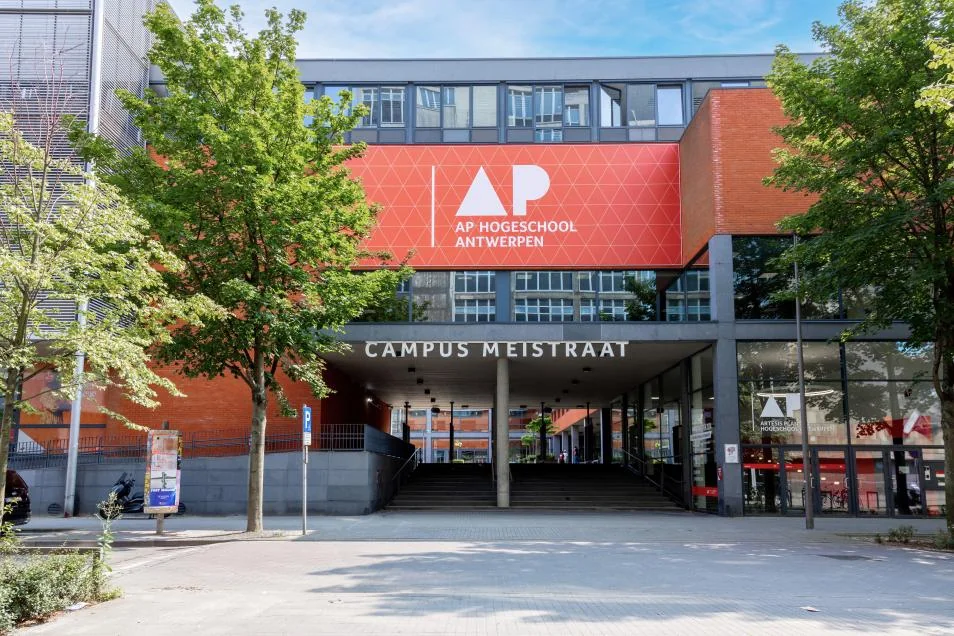
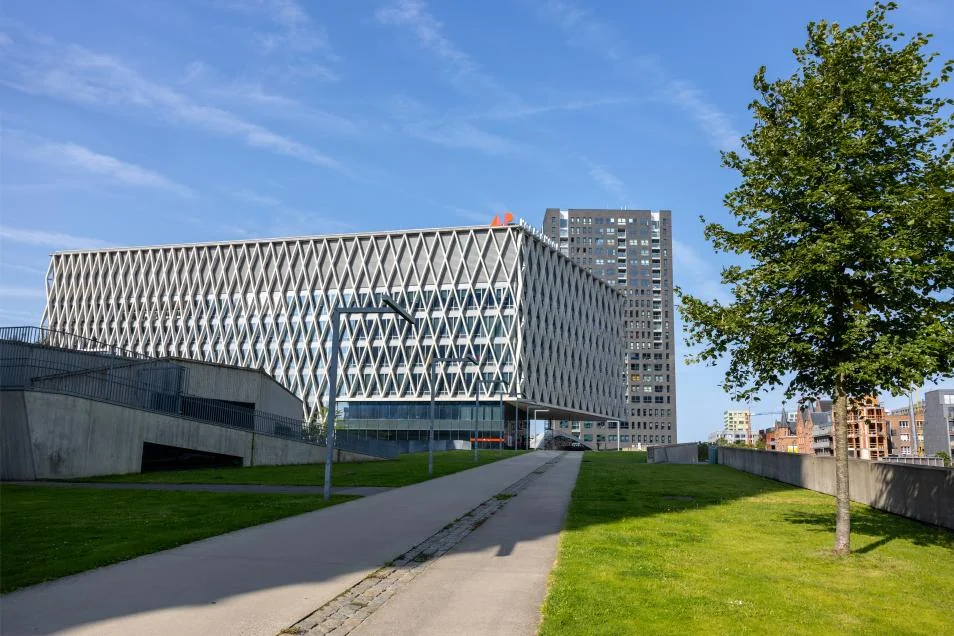
AP operates through several Antwerp locations rather than a single enclosed campus. Its campus directory includes Meistraat, Lange Nieuwstraat and the Spoor Noord sites at Noorderplaats, Ellermanstraat, Lichttoren and Viaduct. Other locations include deSingel, Mutsaard, Keizerstraat, Mode and Hallen. The variety of addresses reflects the institution’s combination of professional disciplines and artistic education within the city.
The official campus pages offer virtual tours through lecture theatres, classrooms and practical teaching rooms. They also provide location-specific information for travelling to each site. AP has announced that its Mechelen and Turnhout campuses are being phased out by the 2027–2028 academic year. At those locations, the remaining entry route described in the campus notice is the one-year shortened educational bachelor in secondary education. The notice directs prospective students interested in other programmes towards the Antwerp campuses.
Sources: Campus network ↗